

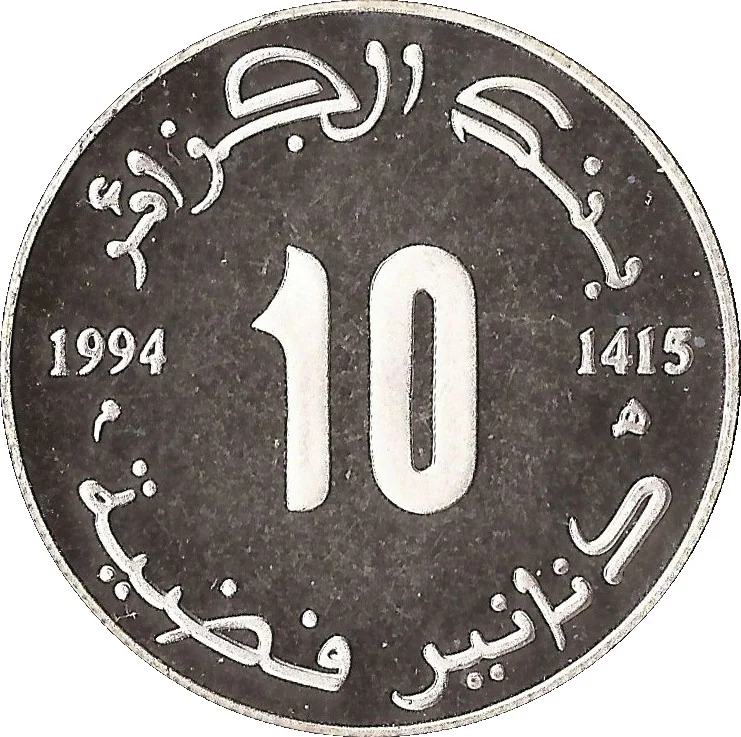
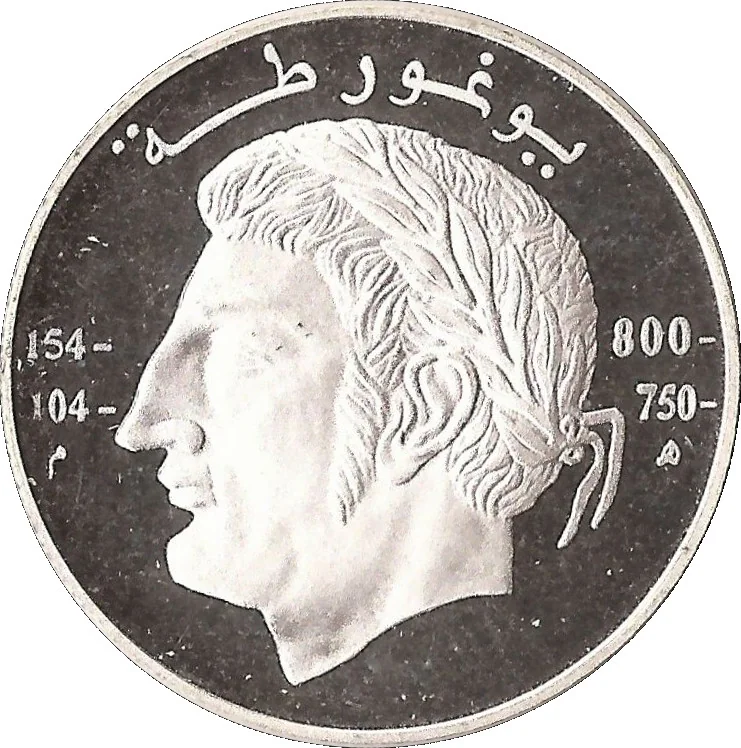
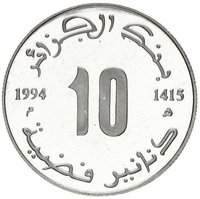
10 dinars – Algeria
Add to wishlist
Non-circulating coins
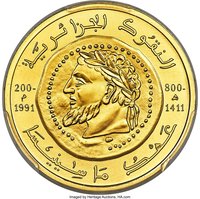
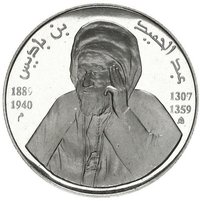
Commemoration: Jugurtha
Algeria
Context
Year: 1994
Islamic (Hijri) Year:: 1415
Issuer: Algeria
Issuing organization: Bank of Algeria
Period:
(since 1962)
Currency:
(since 1964)
Total mintage: 5,000
Material
References
KM: #
Numista: #64416
Value
Exchange value: 10 DZD
Bullion value: $30.91
Obverse
Reverse
Edge
Reeded
Mintings
| Year | Mint Mark | Mintage | Quality | Collection |
|---|---|---|---|---|
| 1994 | — | 5,000 |
Historical background
In 1994, Algeria faced a profound currency and economic crisis, the culmination of years of structural imbalances, political instability, and a severe debt burden. Following a contentious cancellation of elections in 1992, the country was engulfed in a violent civil conflict, which crippled economic activity and devastated investor confidence. Externally, a sharp decline in global oil prices—hydrocarbons being the source of over 95% of export earnings—drastically reduced foreign currency reserves, leaving Algeria unable to service its massive external debt or fund essential imports.
This dire situation forced the government to seek assistance from the International Monetary Fund (IMF) and the World Bank in April 1994. In exchange for a $1.8 billion standby agreement, Algeria committed to a rigorous structural adjustment program. The centerpiece of this reform was a massive devaluation of the Algerian dinar, which was officially devalued by over 40% against the US dollar. This move aimed to correct a grossly overvalued exchange rate, eliminate a rampant black market for foreign currency, and boost non-hydrocarbon exports by making them cheaper on the global market.
The 1994 devaluation was a watershed moment, marking Algeria's decisive turn from a state-controlled, socialist-inspired economy toward a market-oriented system. While the immediate effect was a surge in inflation and increased hardship for the population due to more expensive imports, the reforms ultimately stabilized the macroeconomic framework. The devaluation, combined with fiscal austerity and the rescheduling of foreign debt, allowed Algeria to rebuild its foreign reserves and slowly reintegrate into the global financial system, setting the stage for a period of economic recovery later in the decade as oil prices recovered.
This dire situation forced the government to seek assistance from the International Monetary Fund (IMF) and the World Bank in April 1994. In exchange for a $1.8 billion standby agreement, Algeria committed to a rigorous structural adjustment program. The centerpiece of this reform was a massive devaluation of the Algerian dinar, which was officially devalued by over 40% against the US dollar. This move aimed to correct a grossly overvalued exchange rate, eliminate a rampant black market for foreign currency, and boost non-hydrocarbon exports by making them cheaper on the global market.
The 1994 devaluation was a watershed moment, marking Algeria's decisive turn from a state-controlled, socialist-inspired economy toward a market-oriented system. While the immediate effect was a surge in inflation and increased hardship for the population due to more expensive imports, the reforms ultimately stabilized the macroeconomic framework. The devaluation, combined with fiscal austerity and the rescheduling of foreign debt, allowed Algeria to rebuild its foreign reserves and slowly reintegrate into the global financial system, setting the stage for a period of economic recovery later in the decade as oil prices recovered.
💎 Very Rare