

2 forint – Hungary
Add to wishlist
Hungary
Context
Years: 1962–1966
Issuer: Hungary
Period:
(1949—1989)
Currency:
(since 1946)
Demonetization: 30 June 1971
Total mintage: 18,585,000
Material
Diameter: 25 mm
Weight: 4.9 g
Thickness: 1.4 mm
Shape: Round
Composition: Nickel brass
Magnetic: No
Technique: Milled
Alignment: Medal alignment
flip
References
KM: #
Numista: #6409
Value
Exchange value: 2 HUF
Obverse
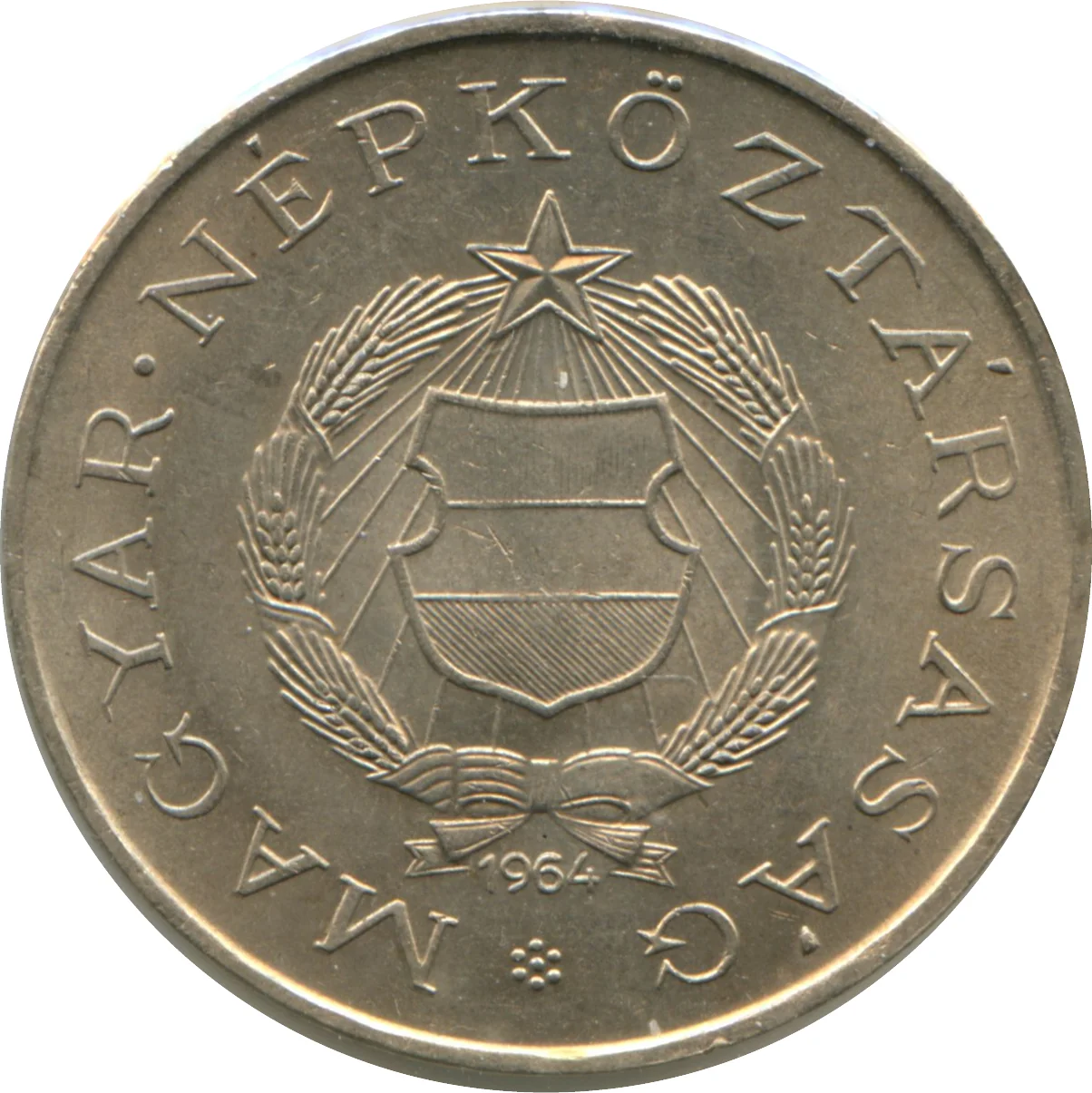
Description:
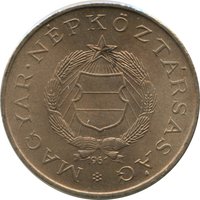
Shield encircled by a wreath, topped by a star.
Inscription:
MAGYAR · NÉPKÖZTÁRSASÁG
1964
1964
Translation:
HUNGARIAN PEOPLE'S REPUBLIC
1964
1964
Script: Latin
Language: Hungarian
Designer: Iván István
Reverse
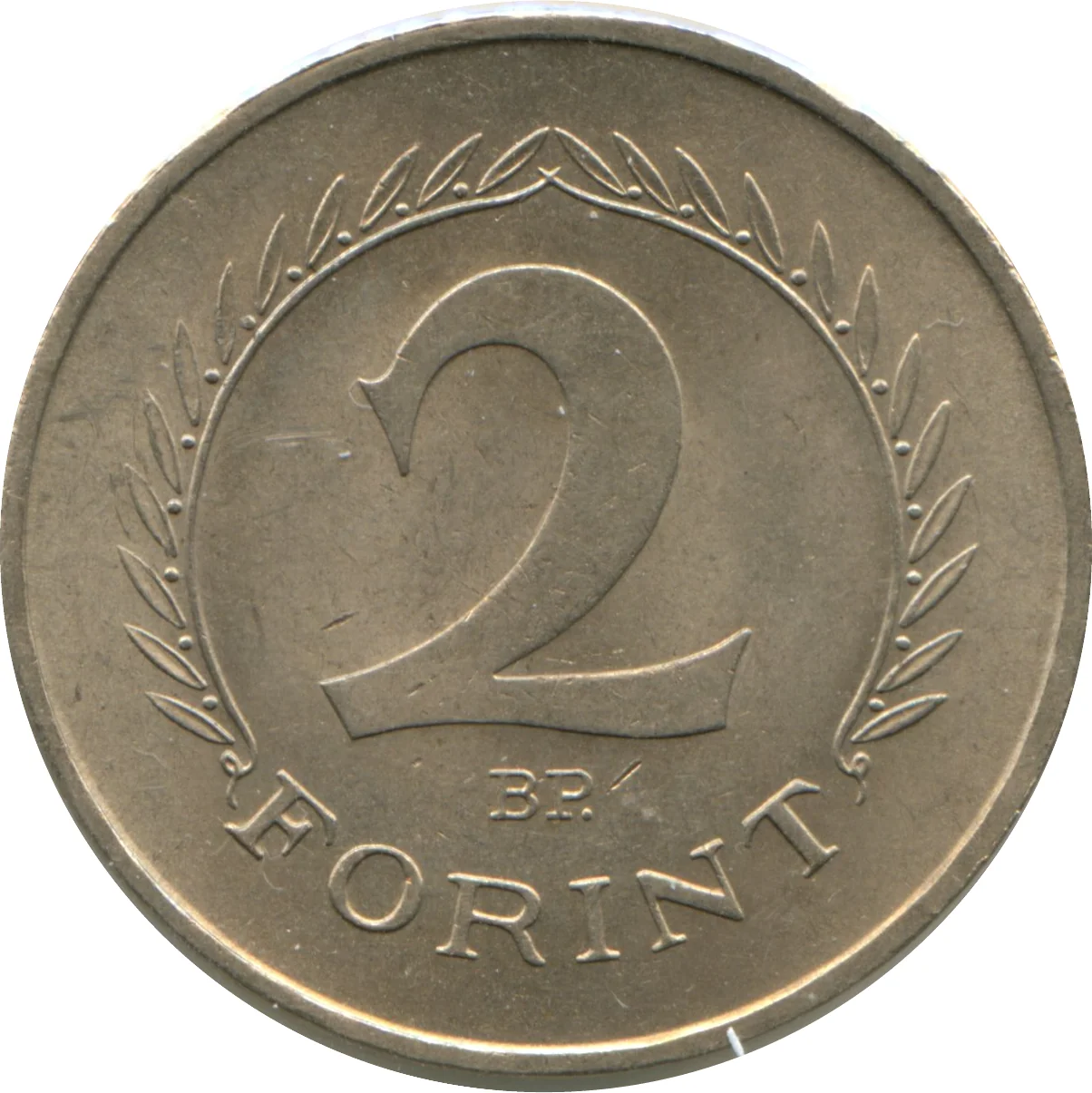
Description:
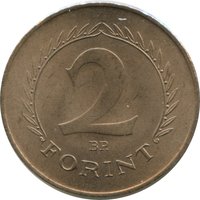
Value in wreath, mintmark below
Inscription:
2
BP.
FORINT
BP.
FORINT
Script: Latin
Designer: Iván István
Edge
Smooth with wavy pattern (10 times)
Mints
| Name | Mark |
|---|---|
| Hungarian mint | BP. |
Mintings
Historical background
In 1962, Hungary operated under a complex and tightly controlled socialist currency system, a direct legacy of its post-war Soviet-style economic planning. The official currency was the Forint (HUF), which was non-convertible; its exchange rate was set arbitrarily by the state and bore little relation to its actual purchasing power or international market value. This created a stark duality: a domestic economy where prices and wages were administratively fixed, and an isolated external sector where foreign trade was conducted through state monopolies and bilateral clearing agreements with other Eastern Bloc countries.
The year fell within a period of relative economic consolidation following the upheaval of the 1956 Revolution. The Kádár regime, having crushed the uprising, was in the process of implementing its "Goulash Communism" policy, which included cautious economic reforms aimed at improving living standards and efficiency. However, the monetary system remained rigid. A critical feature was the existence of separate, preferential exchange rates for tourists and for specific trade transactions, alongside the artificial official rate. This multi-tiered system was designed to extract hard currency from Western visitors while masking the true economic inefficiencies and subsidization within the Comecon trading bloc.
For the average Hungarian citizen in 1962, access to hard Western currencies like US Dollars or Deutschmarks was virtually impossible through legal channels, giving rise to a active black market. The state strictly criminalized unauthorized foreign exchange dealings. Economically, the inflexible currency regime was a significant obstacle to meaningful international integration or market-based reform, locking Hungary into a system of planned production and distribution that prioritized political control over economic rationality. This monetary isolation would persist until the systemic changes of the late 1980s.
The year fell within a period of relative economic consolidation following the upheaval of the 1956 Revolution. The Kádár regime, having crushed the uprising, was in the process of implementing its "Goulash Communism" policy, which included cautious economic reforms aimed at improving living standards and efficiency. However, the monetary system remained rigid. A critical feature was the existence of separate, preferential exchange rates for tourists and for specific trade transactions, alongside the artificial official rate. This multi-tiered system was designed to extract hard currency from Western visitors while masking the true economic inefficiencies and subsidization within the Comecon trading bloc.
For the average Hungarian citizen in 1962, access to hard Western currencies like US Dollars or Deutschmarks was virtually impossible through legal channels, giving rise to a active black market. The state strictly criminalized unauthorized foreign exchange dealings. Economically, the inflexible currency regime was a significant obstacle to meaningful international integration or market-based reform, locking Hungary into a system of planned production and distribution that prioritized political control over economic rationality. This monetary isolation would persist until the systemic changes of the late 1980s.
🌱 Very Common