

40 para – Ottoman Empire
Add to wishlist
Turkey
Context
Year: 1921
Islamic (Hijri) Year:: 1336
Country: Turkey
Issuer: Ottoman Empire
Ruler: Mehmed VI Vahideddin
Currency:
(1844—1923)
Demonetized: Yes
Total mintage: 6,520,000
Material
Diameter: 24 mm
Weight: 6 g
Thickness: 2 mm
Shape: Round
Composition: Copper-nickel
Technique: Milled
Alignment: Medal alignment
flip
References
KM: #
Numista: #6407
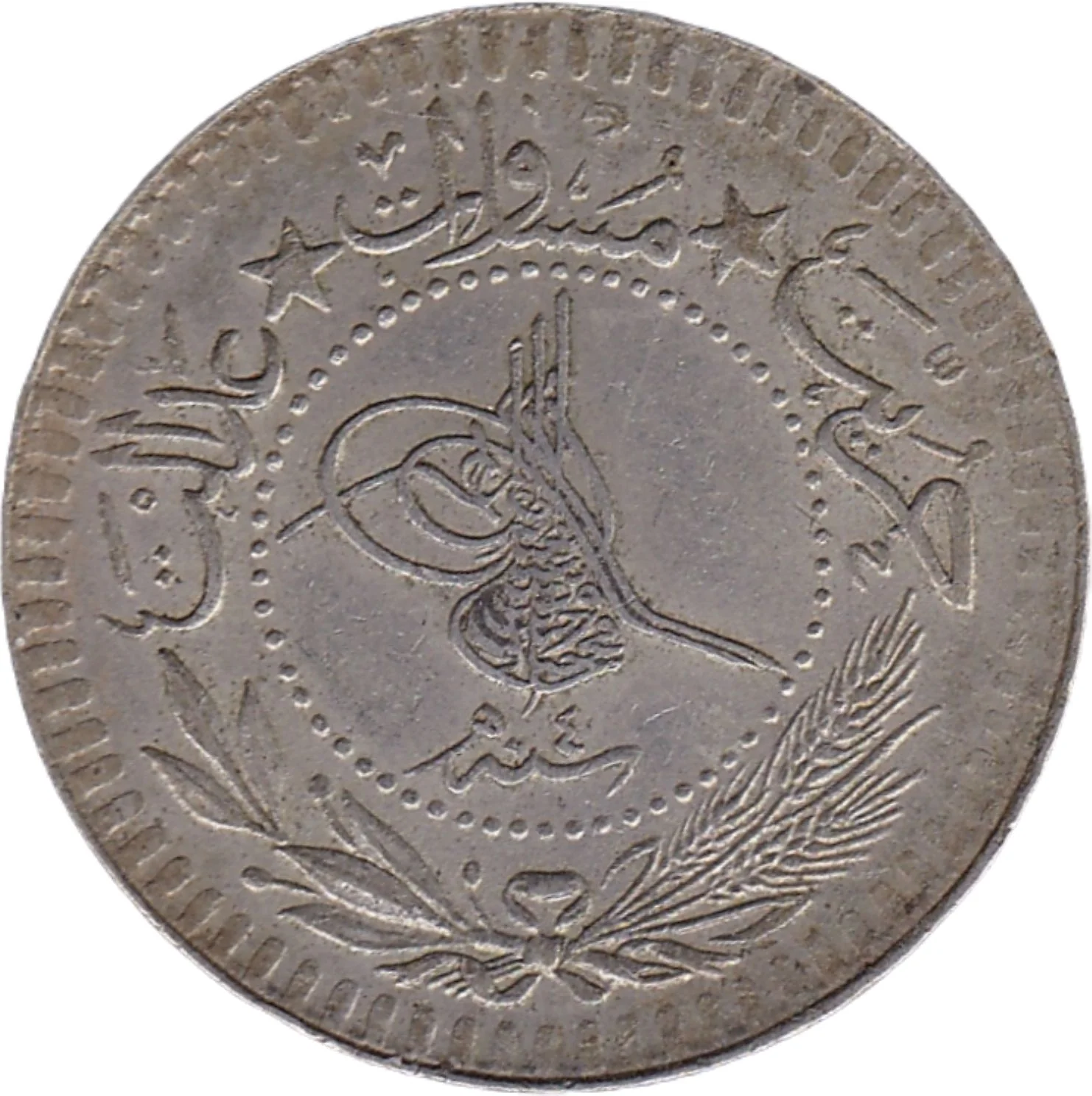
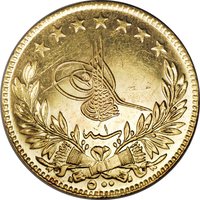
Obverse
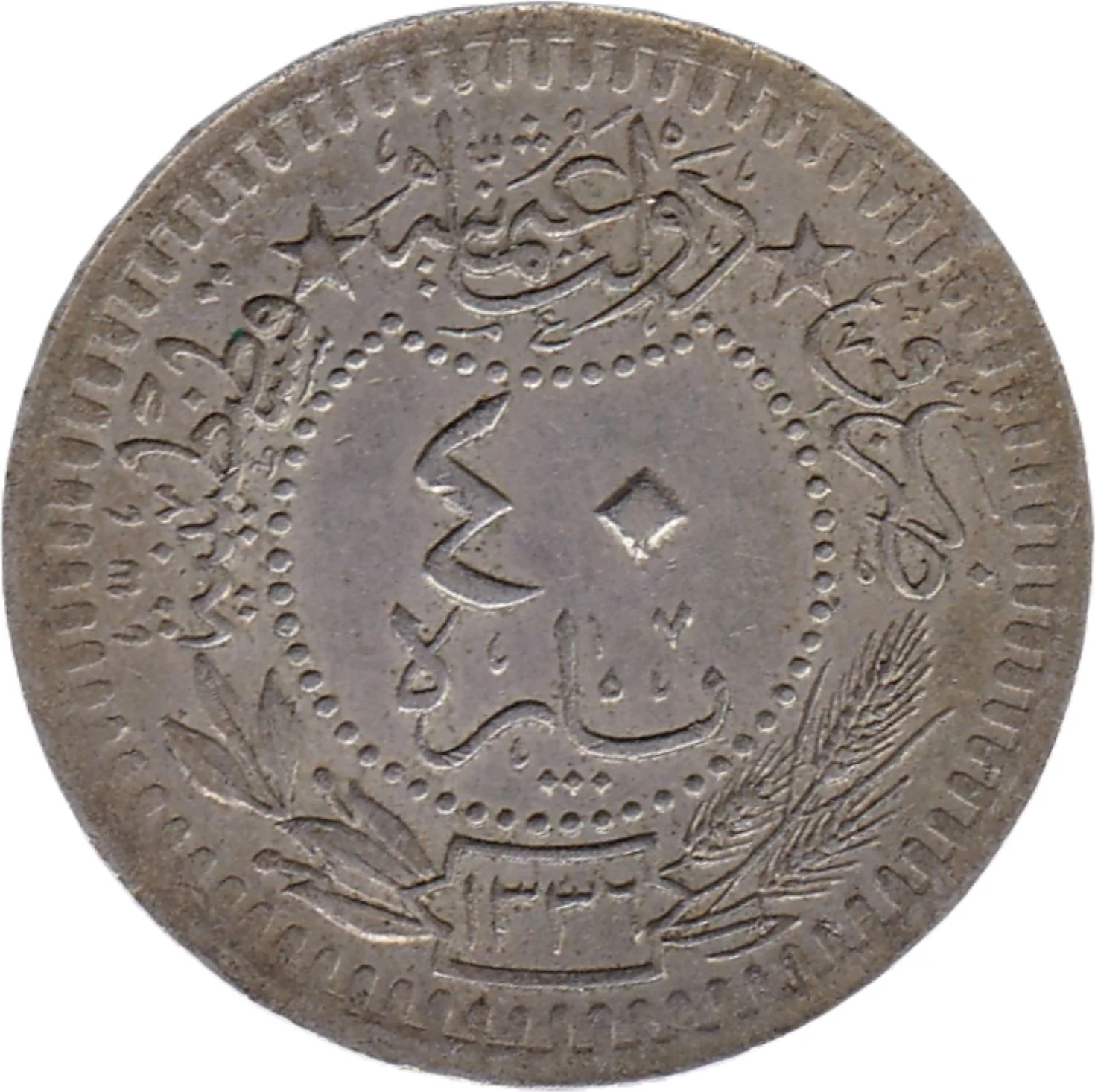
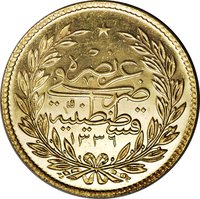
Reverse
Description:
Beaded circle over sprigs.
Inscription:
دولة عثمانية
ضرب في ☆ - ☆ قسطنطينية
٤٠
پاره
١٣٣٦
ضرب في ☆ - ☆ قسطنطينية
٤٠
پاره
١٣٣٦
Translation:
Struck in Constantinople
40
Pieces
1336
40
Pieces
1336
Script: Arabic
Language: Ottoman Turkish
Edge
Plain
Mints
| Name | Mark |
|---|---|
| Constantinople | — |
Mintings
| Year | Mint Mark | Mintage | Quality | Collection |
|---|---|---|---|---|
| 1921 | ٤ | — | ||
| 1921 | — | 6,520,000 |
Historical background
By 1921, the Ottoman Empire’s currency situation was one of profound crisis and fragmentation, a direct reflection of its collapsing political authority. The empire, defeated in World War I and under Allied occupation, saw its monetary sovereignty shattered. The official currency, the Ottoman lira (kaime), was severely depreciated due to years of financing war deficits through excessive printing, leading to hyperinflation and a collapse in public confidence. In Constantinople, the occupied capital, a multitude of foreign currencies—including British pounds, French francs, and Greek drachma—circulated freely, often preferred over the nearly worthless paper money issued by the Ottoman government.
The situation was further complicated by the Turkish War of Independence, raging in Anatolia since 1919. The Ankara-based Grand National Assembly, led by Mustafa Kemal (Atatürk), had established a rival government that actively sought to create its own financial system. In 1921, this new authority began issuing its own paper notes, the first Turkish lira, to fund the nationalist struggle. These banknotes, though crude and initially lacking solid backing, served as a critical instrument of economic sovereignty and propaganda, circulating alongside the old Ottoman currency and various foreign and local monies in the territories under nationalist control.
Thus, 1921 represented a period of chaotic duality in currency. Two distinct paper currencies—the discredited Ottoman lira from the Sultan’s government in Constantinople and the emerging Turkish lira from the nationalist movement in Ankara—competed for legitimacy. This monetary split mirrored the political struggle for the empire’s future, with the old imperial currency system in its death throes and a new national one being forged in the midst of war, setting the stage for the complete monetary reform that would follow the Republic’s establishment in 1923.
The situation was further complicated by the Turkish War of Independence, raging in Anatolia since 1919. The Ankara-based Grand National Assembly, led by Mustafa Kemal (Atatürk), had established a rival government that actively sought to create its own financial system. In 1921, this new authority began issuing its own paper notes, the first Turkish lira, to fund the nationalist struggle. These banknotes, though crude and initially lacking solid backing, served as a critical instrument of economic sovereignty and propaganda, circulating alongside the old Ottoman currency and various foreign and local monies in the territories under nationalist control.
Thus, 1921 represented a period of chaotic duality in currency. Two distinct paper currencies—the discredited Ottoman lira from the Sultan’s government in Constantinople and the emerging Turkish lira from the nationalist movement in Ankara—competed for legitimacy. This monetary split mirrored the political struggle for the empire’s future, with the old imperial currency system in its death throes and a new national one being forged in the midst of war, setting the stage for the complete monetary reform that would follow the Republic’s establishment in 1923.
🌱 Common