

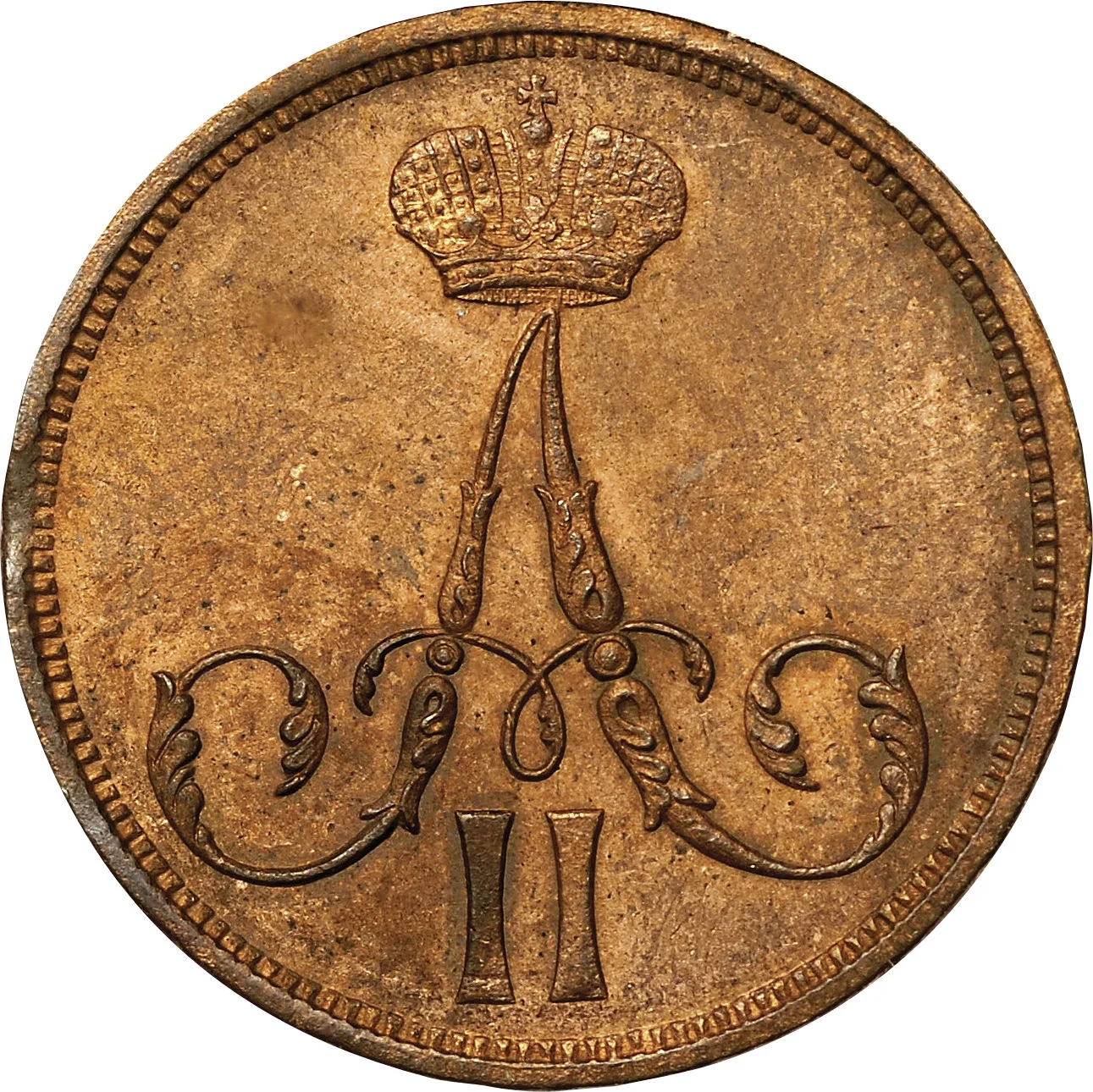
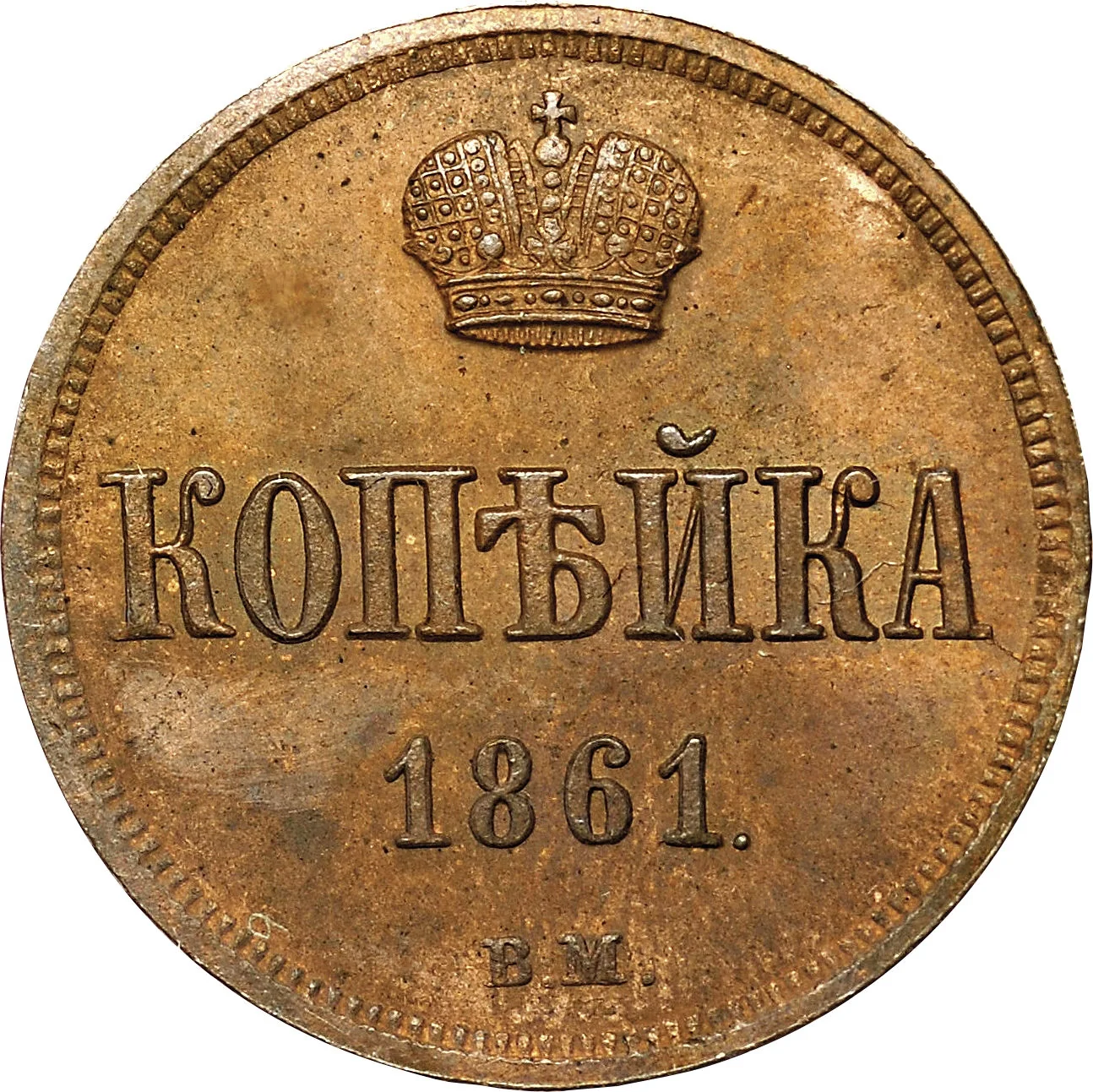
1 kopeck – Russian Empire
Add to wishlist
Russia
Context
Years: 1861–1864
Country: Russia
Issuer: Russian Empire
Ruler: Alexander II
Currency:
(1700—1917)
Demonetized: Yes
Total mintage: 7,800,000
Material
References
Y: #
Numista: #63932
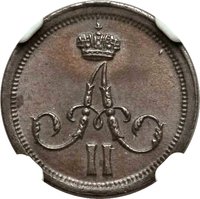
Obverse
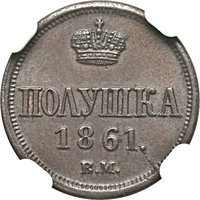
Reverse
Edge
Plain
Mints
| Name | Mark |
|---|---|
| Mint of Poland | В.М. |
Mintings
Historical background
By 1861, the Russian Empire's currency system was a complex and strained mechanism, still fundamentally rooted in the silver standard established under Nicholas I. The primary circulating coins were silver rubles, supplemented by copper kopeks and paper credit notes (kreditnye bilety) issued by the State Loan Bank. However, these paper notes were not fully convertible to silver, having been introduced to finance the Crimean War (1853-1856). This created a dual system where the paper ruble traded at a significant discount to the silver ruble, leading to exchange rate instability and public distrust in the fiduciary currency.
The financial demands of the recent war had severely depleted the state treasury and driven massive deficit spending, exacerbating the long-standing problem of inflation. The government, under Tsar Alexander II, was acutely aware that the currency instability posed a direct threat to its ambitious modernization agenda, most immediately the impending Emancipation Reform of 1861. The planned abolition of serfdom required enormous state expenditure to compensate landowners, which in turn risked further devaluation of the paper currency if not managed with extreme fiscal caution.
Thus, the currency situation in 1861 was one of precarious transition. The state stood on the brink of a major social transformation while grappling with a fragile and overextended monetary system. The need for comprehensive financial reform, including a return to full metal convertibility to stabilize the economy and attract foreign investment, was widely recognized by enlightened officials. However, the immediate priority was to navigate the fiscal shocks of emancipation without triggering a complete loss of confidence in the paper ruble, setting the stage for the major monetary reforms that would follow in the coming decades.
The financial demands of the recent war had severely depleted the state treasury and driven massive deficit spending, exacerbating the long-standing problem of inflation. The government, under Tsar Alexander II, was acutely aware that the currency instability posed a direct threat to its ambitious modernization agenda, most immediately the impending Emancipation Reform of 1861. The planned abolition of serfdom required enormous state expenditure to compensate landowners, which in turn risked further devaluation of the paper currency if not managed with extreme fiscal caution.
Thus, the currency situation in 1861 was one of precarious transition. The state stood on the brink of a major social transformation while grappling with a fragile and overextended monetary system. The need for comprehensive financial reform, including a return to full metal convertibility to stabilize the economy and attract foreign investment, was widely recognized by enlightened officials. However, the immediate priority was to navigate the fiscal shocks of emancipation without triggering a complete loss of confidence in the paper ruble, setting the stage for the major monetary reforms that would follow in the coming decades.
⭐ Somewhat Rare