

5 Zlotys (March Constitution) – Poland
Non-circulating coins
Commemoration: 4th Anniversary of the March Constitution
Poland

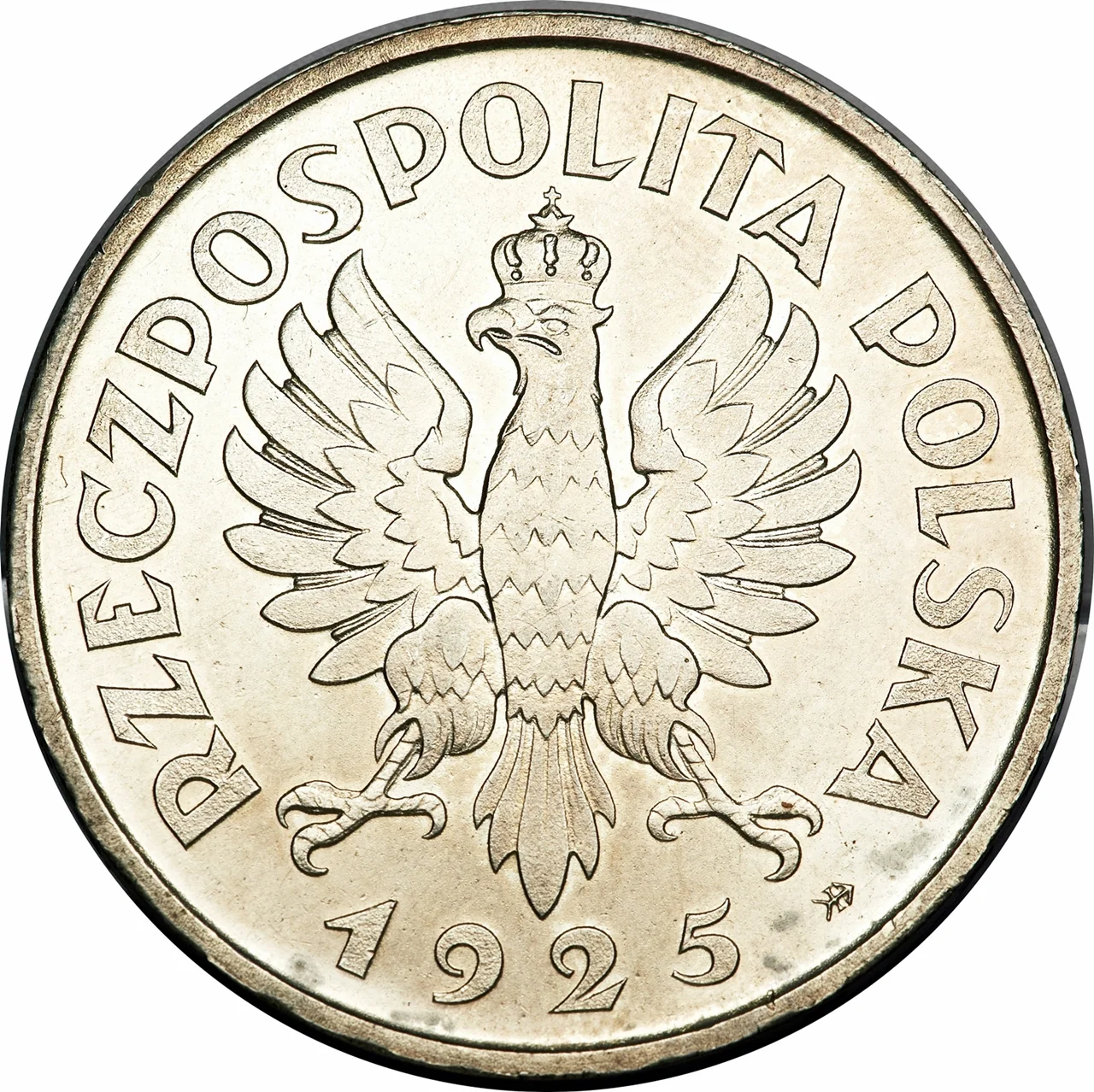
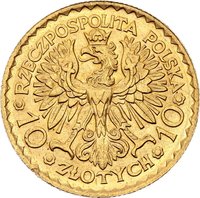
Obverse
Description:
Majestic crowned eagle in flight.
Inscription:
RZECZPOSPOLITA POLSKA
1925
1925
Translation:
REPUBLIC OF POLAND
1925
1925
Script: Latin
Language: Polish
Engraver: Stanislaw Lewandowski
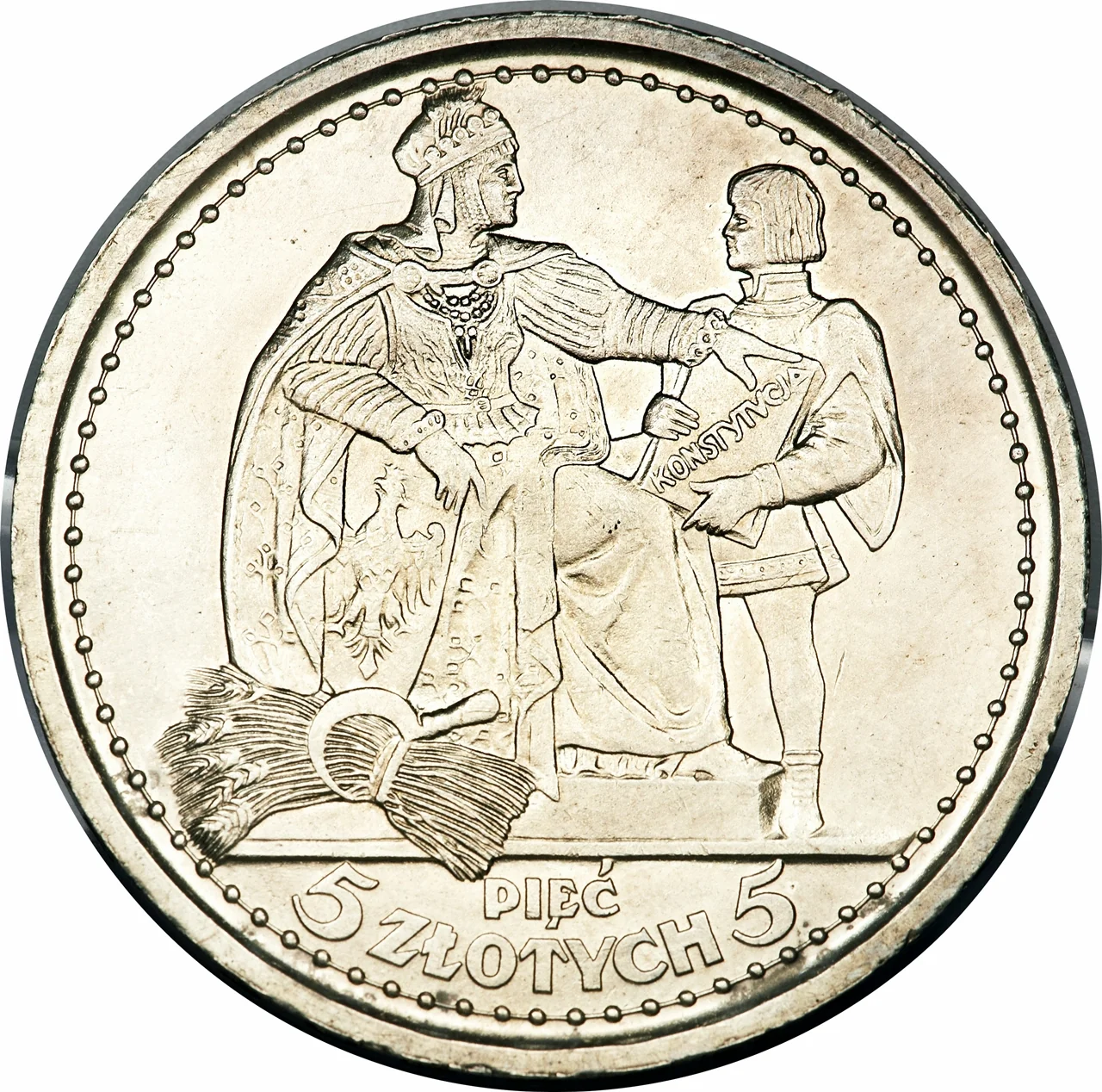
Reverse
Description:
100 pearls in a circle.
Inscription:
5 Zlotych 5
Script: Latin
Engraver: Stanislaw Lewandowski
Edge
Lettered
Legend:
SALUS REIPUBLICAS SUPREMA LEX
Mints
| Name | Mark |
|---|---|
| Mint of Poland | — |
Mintings
| Year | Mint Mark | Mintage | Quality | Collection |
|---|---|---|---|---|
| 1925 | — | — |
Historical background
In 1925, Poland faced a severe currency crisis that threatened the economic stability achieved in the early years of its rebirth. Following independence in 1918, the country had grappled with hyperinflation driven by wartime destruction, reconstruction costs, and a lack of unified fiscal policy. To combat this, Finance Minister Władysław Grabski implemented a sweeping reform in 1924, introducing a new national currency, the złoty, to replace the depreciated Polish mark. The złoty was placed on a gold standard, pegged to both the US dollar and gold, which initially restored confidence, stabilized prices, and attracted foreign investment.
However, the underlying fundamentals for sustaining the gold peg were weak. Poland's trade balance was deeply negative, as the country needed to import crucial machinery and goods for modernization, while its agricultural exports faced stiff competition and falling prices on the world market. This drained gold and foreign currency reserves. Furthermore, the government, continuing to run a budget deficit, resorted to borrowing from the Bank of Poland, which increased the money supply and undermined the złoty's gold backing. A poor harvest in 1924 exacerbated the outflow of reserves, creating a growing gap between the official gold-backed rate and the market's perception of the currency's value.
By mid-1925, the situation became untenable. As reserves plummeted, the Bank of Poland could no longer defend the fixed peg. In July 1925, the government was forced to suspend gold convertibility and effectively devalue the złoty, abandoning the cornerstone of the Grabski reforms. The crisis led to a sharp economic downturn, a return of inflation, and the collapse of Grabski's government. It exposed the fragility of Poland's interwar economy, highlighting the challenges of maintaining monetary stability without sufficient industrial exports and fiscal discipline, a lesson that would shape financial policy for the remainder of the decade.
However, the underlying fundamentals for sustaining the gold peg were weak. Poland's trade balance was deeply negative, as the country needed to import crucial machinery and goods for modernization, while its agricultural exports faced stiff competition and falling prices on the world market. This drained gold and foreign currency reserves. Furthermore, the government, continuing to run a budget deficit, resorted to borrowing from the Bank of Poland, which increased the money supply and undermined the złoty's gold backing. A poor harvest in 1924 exacerbated the outflow of reserves, creating a growing gap between the official gold-backed rate and the market's perception of the currency's value.
By mid-1925, the situation became untenable. As reserves plummeted, the Bank of Poland could no longer defend the fixed peg. In July 1925, the government was forced to suspend gold convertibility and effectively devalue the złoty, abandoning the cornerstone of the Grabski reforms. The crisis led to a sharp economic downturn, a return of inflation, and the collapse of Grabski's government. It exposed the fragility of Poland's interwar economy, highlighting the challenges of maintaining monetary stability without sufficient industrial exports and fiscal discipline, a lesson that would shape financial policy for the remainder of the decade.
💎 Extremely Rare