

50 Pence – United Kingdom
Non-circulating coins
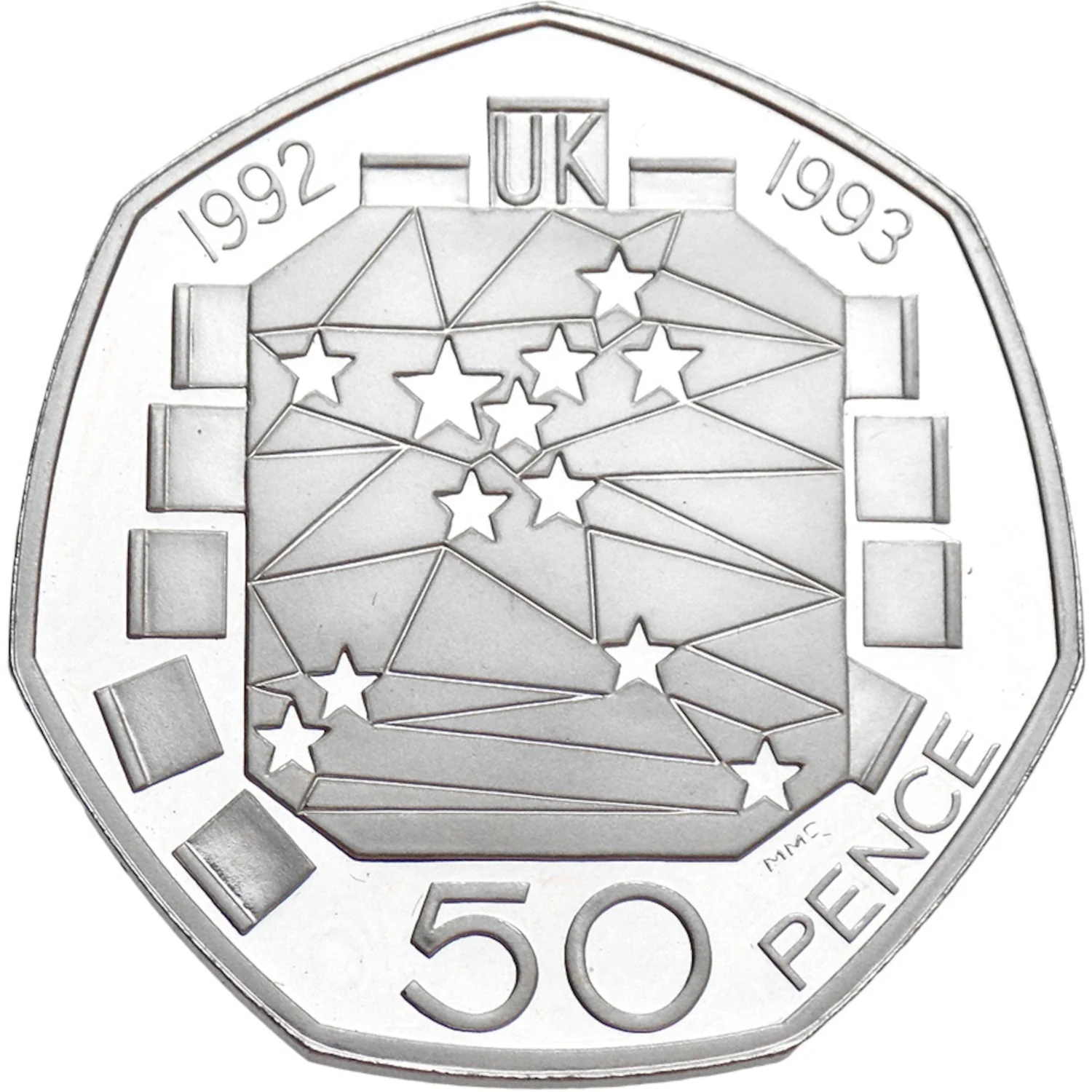
Commemoration: British Presidency of European Council of Ministers
United Kingdom
Context
Year: 1992
Issuer: United Kingdom 
Ruler: Elizabeth II
Currency:
(since 1971)
Demonetization: 28 February 1998
Total mintage: 10,993
Material
Diameter: 30 mm
Weight: 28 g
Silver weight: 25.90 g
Thickness: 5 mm
Shape: Equilateral curve heptagon
Composition: 92.5% Silver
Magnetic: No
Technique: Milled
Alignment: Medal alignment
flip
References
KM: #Click to copy to clipboardP15
Numista: #63348
Value
Exchange value: 0.50 GBP = $0.68
Bullion value: $74.13
Inflation-adjusted value: 1.37 GBP
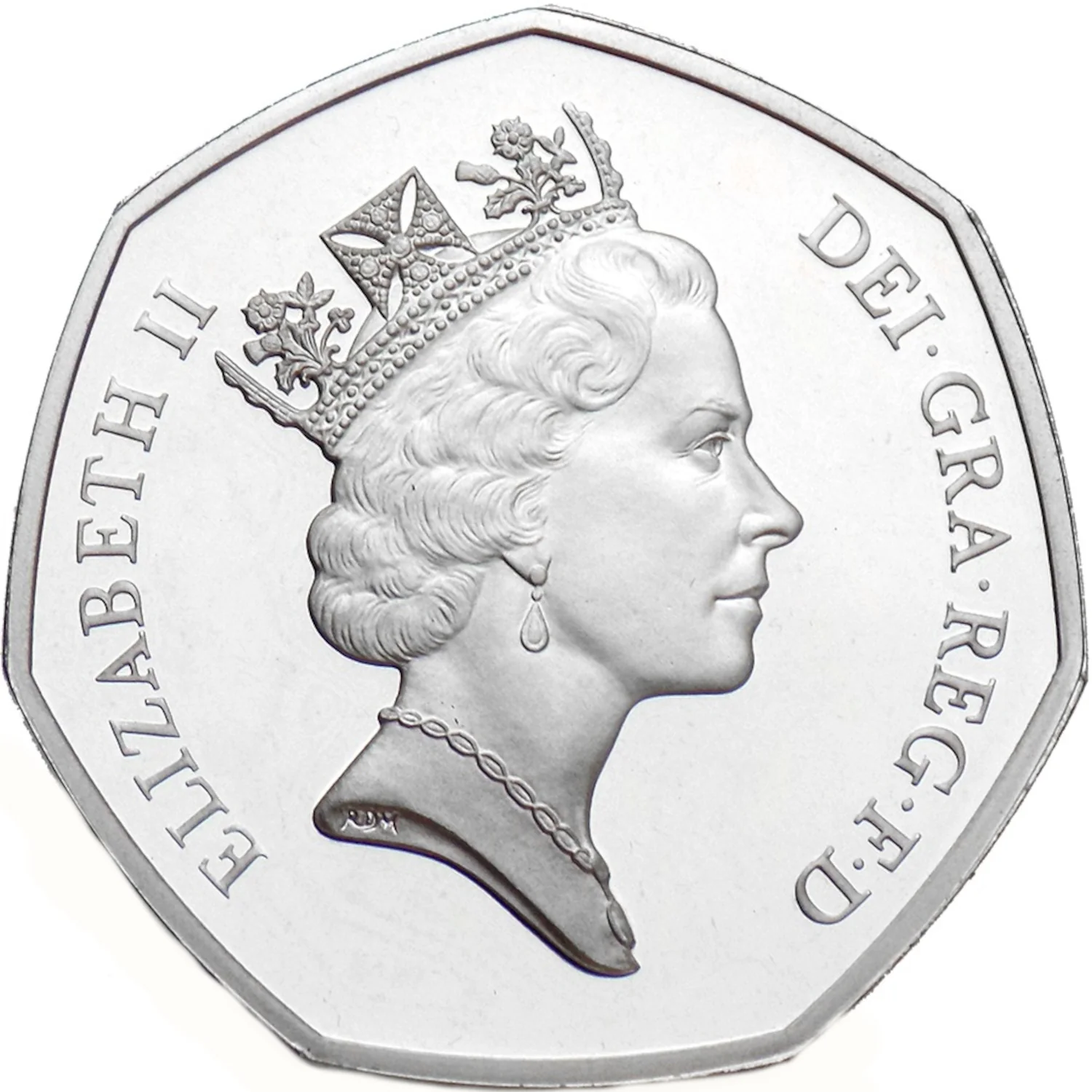
Obverse
Description:
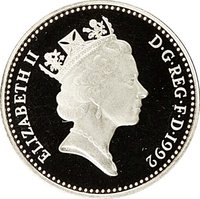
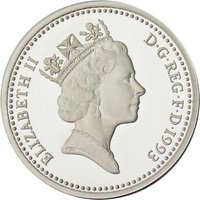
Queen Elizabeth III crowned right, wearing the George IV State Diadem.
Inscription:
ELIZABETH II DEI·GRA·REG·F·D
RDM
RDM
Translation:
Elizabeth II by the Grace of God Queen Defender of the Faith
Script: Latin
Language: Latin
Engraver: Raphael David Maklouf
Reverse
Description:
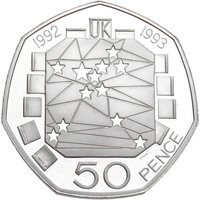
A conference table seen from above, surrounded by twelve chairs for the Council of Ministers. The UK sits at the head. The table features twelve stars placed at the capitals of member states, connected by lines symbolizing the Community's trade links.
Inscription:
1992 1993
UK
MMD
50 PENCE
UK
MMD
50 PENCE
Script: Latin
Engraver: Mary Milner Dickens
Edge
Plain
Mints
| Name | Mark |
|---|---|
| Royal Mint | — |
Mintings
| Year | Mint Mark | Mintage | Quality | Collection |
|---|---|---|---|---|
| 1992 | — | 10,993 | Proof |
Historical background
In 1992, the United Kingdom was a member of the European Exchange Rate Mechanism (ERM), a system designed to reduce exchange rate volatility and pave the way for a single European currency. The UK had joined in October 1990, committing to keep the pound sterling trading within a narrow band (6% fluctuation) against the German Deutsche Mark (DM). This policy aimed to import the anti-inflationary credibility of Germany's Bundesbank, but it came at a high cost: UK interest rates were effectively set to defend the exchange rate peg, not to address domestic economic conditions. With the UK in a deep recession, the high interest rates required to make the pound attractive were crippling to businesses and homeowners, creating a severe policy dilemma.
The situation became unsustainable in the summer and early autumn of 1992. Financial markets, led by speculators like George Soros, began a massive assault on the pound, believing the UK government could not maintain the peg amidst recessionary pressures. They engaged in "short-selling" sterling, betting its value would fall. The UK Treasury and the Bank of England spent billions in foreign reserves in a futile attempt to buy pounds and prop up its value. A last-ditch effort saw the government raise interest rates from 10% to 12% and then announce a planned hike to 15% on September 16th, a day now known as "Black Wednesday."
Ultimately, the market pressure was overwhelming. Realising the devastating economic cost of defending the indefensible, Chancellor Norman Lamont announced the UK's withdrawal from the ERM on the evening of September 16, 1992. Interest rates were swiftly lowered, and the pound was allowed to float freely, depreciating significantly. While politically humiliating for the Conservative government, the devaluation provided a substantial economic stimulus, paving the way for a recovery. The event profoundly shaped British scepticism towards European monetary integration, directly leading to the UK's decision to opt out of the euro.
The situation became unsustainable in the summer and early autumn of 1992. Financial markets, led by speculators like George Soros, began a massive assault on the pound, believing the UK government could not maintain the peg amidst recessionary pressures. They engaged in "short-selling" sterling, betting its value would fall. The UK Treasury and the Bank of England spent billions in foreign reserves in a futile attempt to buy pounds and prop up its value. A last-ditch effort saw the government raise interest rates from 10% to 12% and then announce a planned hike to 15% on September 16th, a day now known as "Black Wednesday."
Ultimately, the market pressure was overwhelming. Realising the devastating economic cost of defending the indefensible, Chancellor Norman Lamont announced the UK's withdrawal from the ERM on the evening of September 16, 1992. Interest rates were swiftly lowered, and the pound was allowed to float freely, depreciating significantly. While politically humiliating for the Conservative government, the devaluation provided a substantial economic stimulus, paving the way for a recovery. The event profoundly shaped British scepticism towards European monetary integration, directly leading to the UK's decision to opt out of the euro.
💎 Very Rare