

1 Sovereign – British colonies
Australia
Context
Years: 1857–1870
Country: Australia 
Issuer: British colonies
Ruler: Victoria
Currency:
(1788—1966)
Total mintage: 24,432,000
Material
References
KM: #Click to copy to clipboard4
Numista: #6331
Value
Bullion value: $1223.14
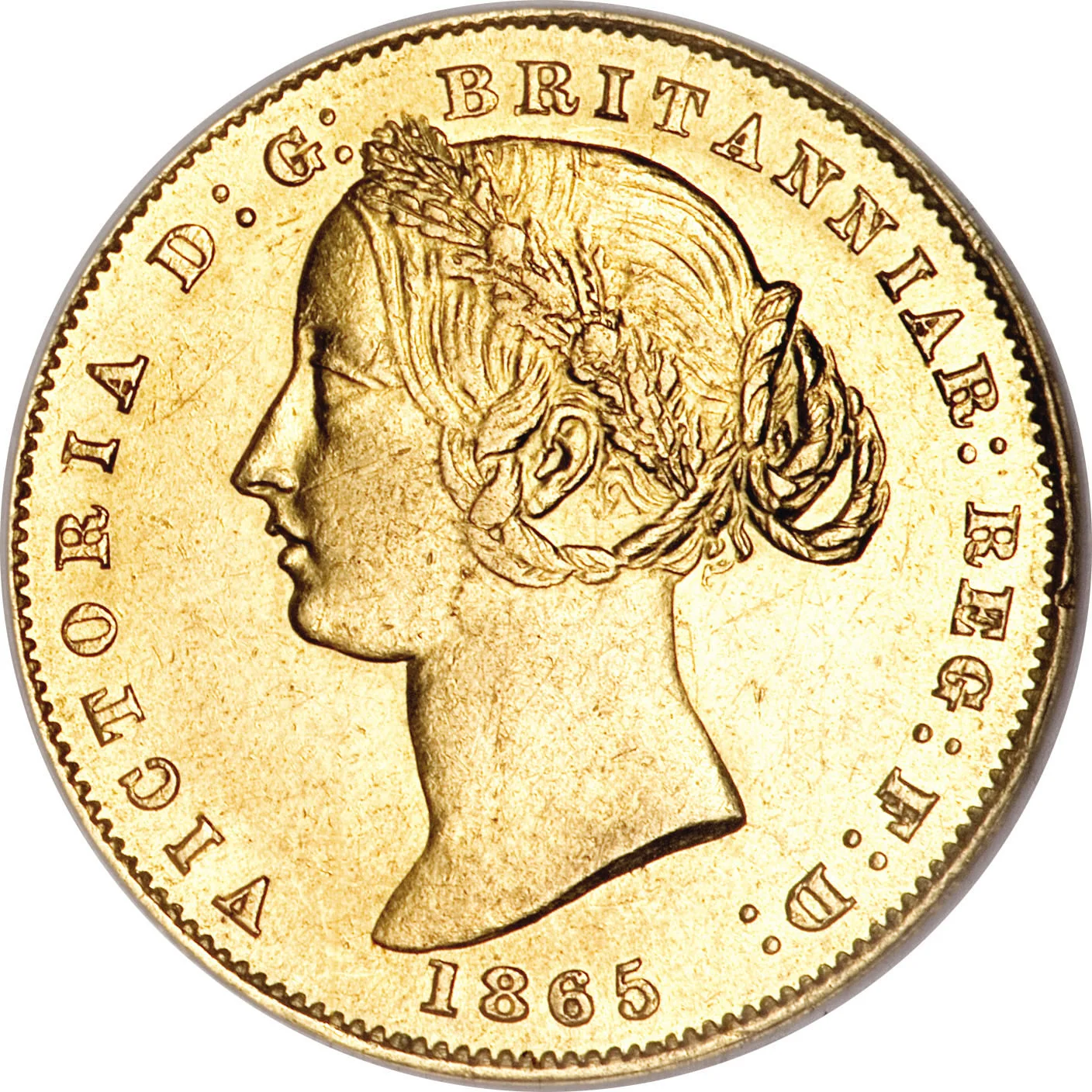
Obverse
Description:
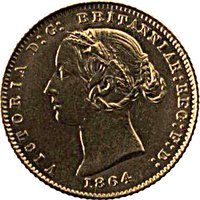
Young Victoria facing left.
Inscription:
VICTORIA D: G: BRITANNIAR: REG: F: D:
1865
1865
Script: Latin
Engraver: Leonard Charles Wyon
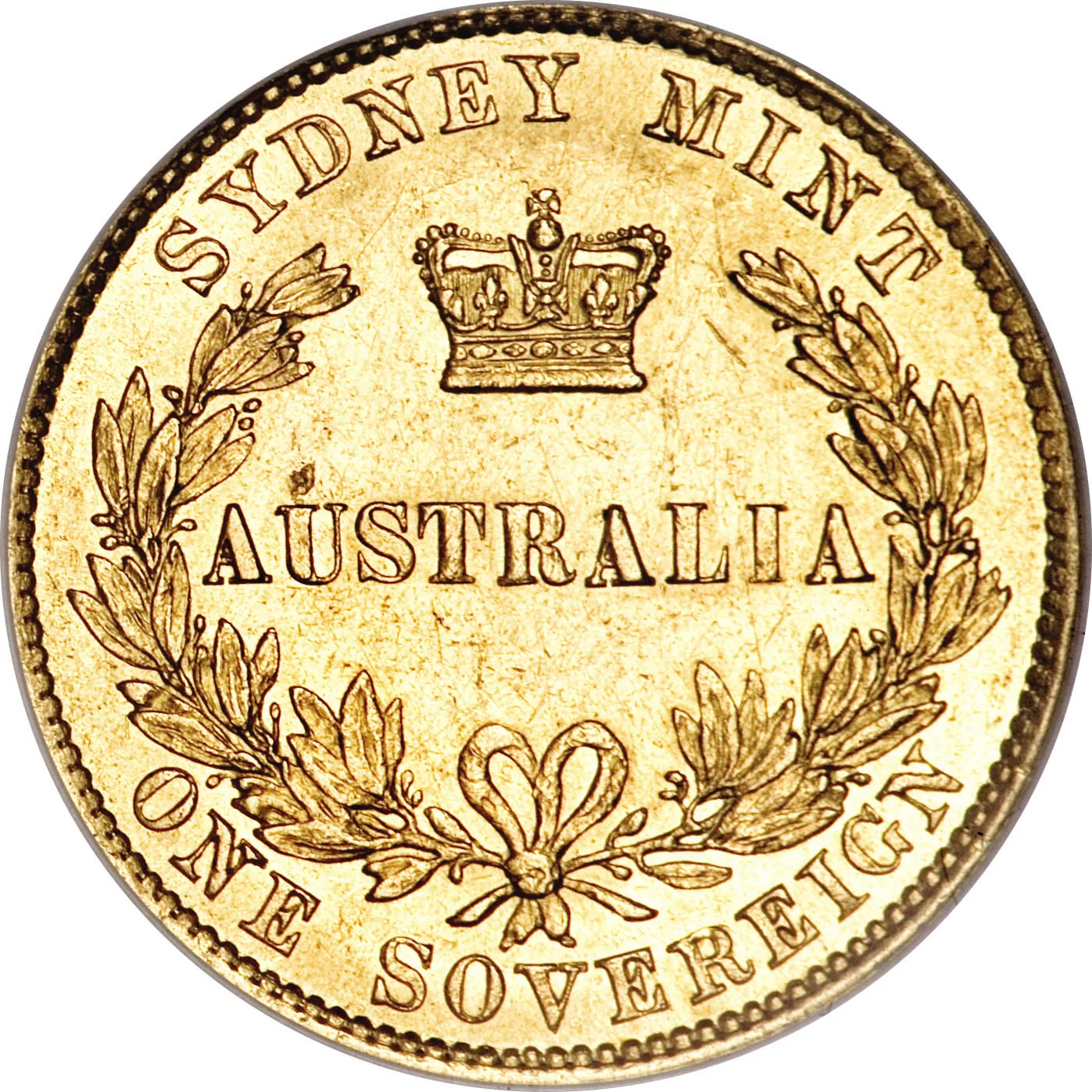
Reverse
Description:
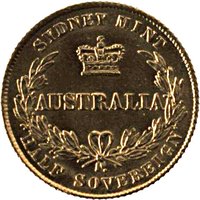
Crown and laurel wreath.
Inscription:
SYDNEY MINT
AUSTRALIA
ONE SOVEREIGN
AUSTRALIA
ONE SOVEREIGN
Script: Latin
Engraver: Leonard Charles Wyon
Edge
Milled
Mints
| Name | Mark |
|---|---|
| Royal Mint | — |
Mintings
| Year | Mint Mark | Mintage | Quality | Collection |
|---|---|---|---|---|
| 1857 | sy | — | Proof | |
| 1857 | sy | 499,000 | ||
| 1858 | sy | 1,101,000 | ||
| 1859 | sy | 1,050,000 | ||
| 1860 | sy | 1,573,000 | ||
| 1861 | sy | 1,626,000 | ||
| 1862 | sy | 2,477,000 | ||
| 1863 | sy | 1,255,000 | ||
| 1864 | sy | 2,698,000 | ||
| 1865 | sy | 2,130,000 | ||
| 1866 | sy | 2,911,000 | ||
| 1866 | sy | — | Proof | |
| 1867 | sy | 2,370,000 | ||
| 1868 | sy | 3,522,000 | ||
| 1870 | sy | 1,220,000 | ||
| 1870 | sy | — | Proof |
Historical background
In 1857, the currency systems across the British Empire were fragmented and complex, operating on a de facto gold standard centered on the pound sterling but with significant local variations. Most colonies used a combination of British gold sovereigns and silver coins, alongside a proliferation of foreign coins—most notably Spanish dollars and Mexican reals—that circulated by weight and were given a local sterling value by proclamation. This created a messy, multi-currency environment where the official exchange rates often diverged from the intrinsic bullion value of the coins, leading to arbitrage, confusion in trade, and the frequent export of full-weight British coins, leaving the colony with a degraded mixed currency.
The situation was particularly acute in the West Indies, West Africa, and the Asian colonies, where the shortage of official British coinage was chronic. To facilitate local commerce, colonial governments often authorized the use of specific foreign silver coins as legal tender at fixed rates. Furthermore, many colonies supplemented the metallic currency with the issuance of paper money by private banks or, in some cases, by the colonial government itself. These notes were not always fully convertible to specie, especially in times of economic stress, creating a fragile and sometimes inflationary monetary landscape.
The year 1857 itself was a moment of crisis that highlighted the vulnerabilities of this system. The financial panic in Britain and the United States caused a sharp contraction of credit and a scramble for specie worldwide. In the colonies, this triggered bank failures and forced many to suspend specie payments, exposing the underlying weakness of their currency arrangements. This crisis, among other factors, would eventually spur imperial efforts toward greater monetary uniformity, leading to the wider adoption of sterling-denominated subsidiary coinage and stricter control over note issuance in the following decades.
The situation was particularly acute in the West Indies, West Africa, and the Asian colonies, where the shortage of official British coinage was chronic. To facilitate local commerce, colonial governments often authorized the use of specific foreign silver coins as legal tender at fixed rates. Furthermore, many colonies supplemented the metallic currency with the issuance of paper money by private banks or, in some cases, by the colonial government itself. These notes were not always fully convertible to specie, especially in times of economic stress, creating a fragile and sometimes inflationary monetary landscape.
The year 1857 itself was a moment of crisis that highlighted the vulnerabilities of this system. The financial panic in Britain and the United States caused a sharp contraction of credit and a scramble for specie worldwide. In the colonies, this triggered bank failures and forced many to suspend specie payments, exposing the underlying weakness of their currency arrangements. This crisis, among other factors, would eventually spur imperial efforts toward greater monetary uniformity, leading to the wider adoption of sterling-denominated subsidiary coinage and stricter control over note issuance in the following decades.
🌟 Limited