

10 pesetas (Joan Miró) – Spain
Add to wishlist
Circulating commemorative coins
Commemoration: 100th anniversary of the birth of Joan Miró
Spain
Context
Year: 1993
Issuer: Spain
Ruler: Juan Carlos I
Currency:
(1868—2001)
Demonetization: 28 February 2002
Total mintage: 53,845,000
Material
References
KM: #
Numista: #6318
Value
Exchange value: 10 ESP
Inflation-adjusted value: 22.85 ESP
Obverse
Description:
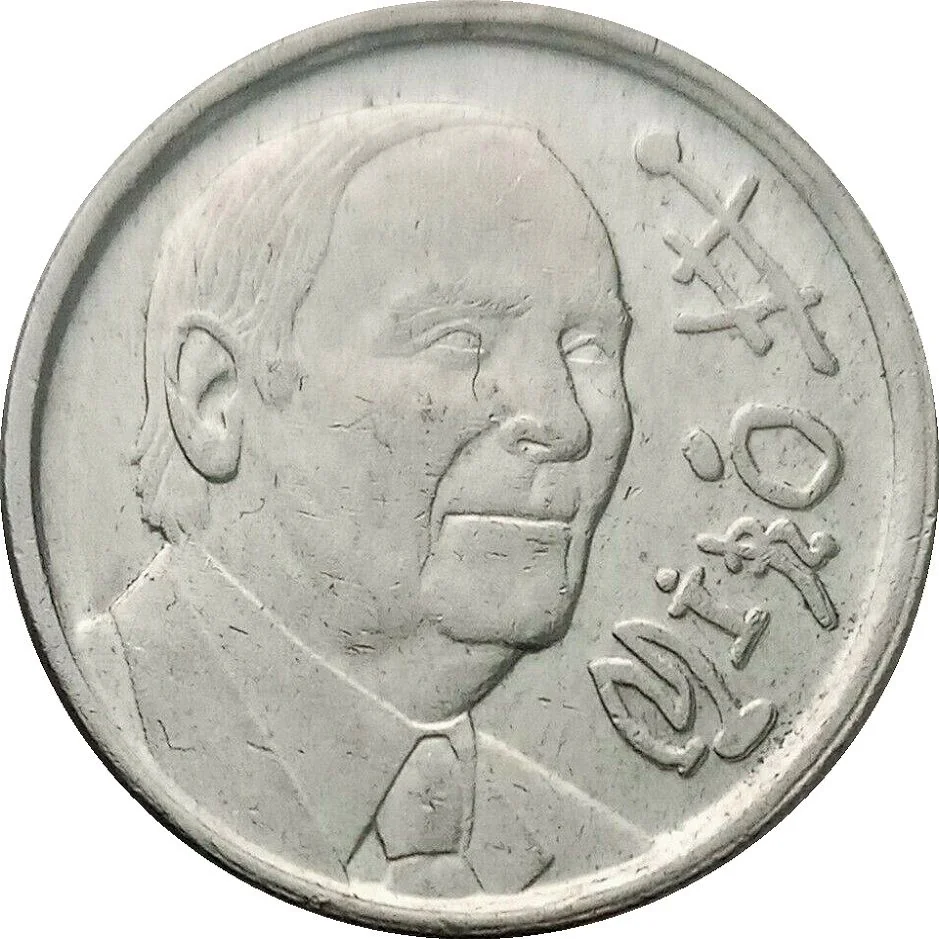
Joan Miró bust in profile, facing right.
Inscription:
Miró
Translation:
I have admired.
Script: Latin
Language: Latin
Engraver: Begoña Castellanos García
Reverse
Description:
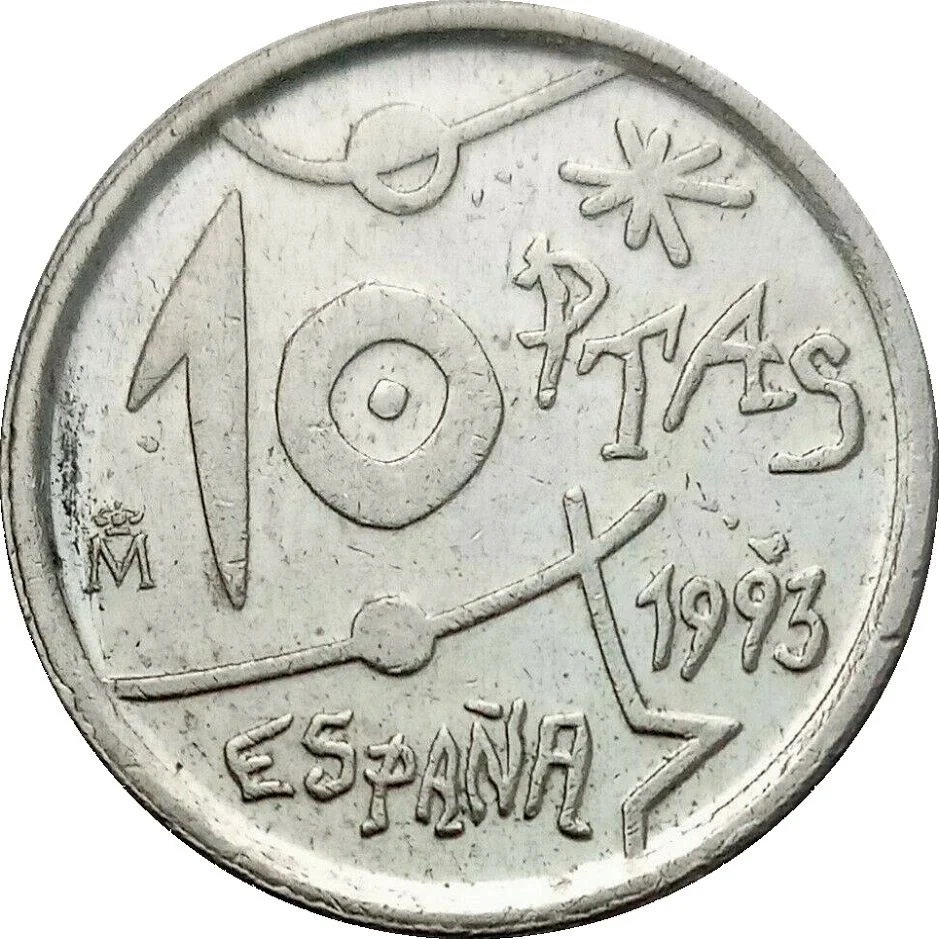
Joan Miró's signature symbolic style.
Inscription:
10 PTAS
M 1993
ESPAÑA
M 1993
ESPAÑA
Translation:
10 Pesetas
M 1993
Spain
M 1993
Spain
Script: Latin
Engraver: Begoña Castellanos García
Edge
Reeded
Categories
| Event> Birth anniversary |
| Person> Artist |
Mints
| Name | Mark |
|---|---|
| Royal Mint of Madrid | (M) |
Mintings
| Year | Mint Mark | Mintage | Quality | Collection |
|---|---|---|---|---|
| 1993 | M | 53,845,000 |
Historical background
In 1993, Spain's currency situation was defined by a profound crisis within the European Exchange Rate Mechanism (ERM), the system designed to stabilize European currencies ahead of monetary union. The Spanish peseta, like the British pound before it, came under severe speculative attack in the financial markets. This pressure was driven by high German interest rates (set to manage reunification costs), which created a stark divergence with Spain's own economic needs. While the Bundesbank maintained tight policy, Spain was grappling with a deep recession and required lower rates to stimulate growth, making the peseta's ERM peg increasingly unsustainable.
The crisis culminated in two major devaluations of the peseta within the ERM band. The first occurred in November 1992, when the currency was devalued by 5%. Far from quelling market pressure, this move signaled weakness and failed to address the core economic divergence. Consequently, a second and more severe devaluation of 8% followed in May 1993. These devaluations were humiliating for the government of Prime Minister Felipe González and exposed the painful constraints of maintaining a fixed exchange rate while domestic economic conditions demanded a divergent monetary policy.
The turmoil ultimately led to a systemic change in August 1993, when the ERM itself was fundamentally altered in response to the ongoing crises. The narrow fluctuation bands of ±2.25% were abandoned in favor of a vastly wider band of ±15%, a move that effectively suspended the rigid system. For Spain, this provided crucial breathing room, allowing for greater monetary flexibility to address the recession without the immediate threat of currency speculation. The events of 1993 thus highlighted the difficult path to European Monetary Union, demonstrating that full convergence of economic fundamentals was an absolute prerequisite for a successful single currency.
The crisis culminated in two major devaluations of the peseta within the ERM band. The first occurred in November 1992, when the currency was devalued by 5%. Far from quelling market pressure, this move signaled weakness and failed to address the core economic divergence. Consequently, a second and more severe devaluation of 8% followed in May 1993. These devaluations were humiliating for the government of Prime Minister Felipe González and exposed the painful constraints of maintaining a fixed exchange rate while domestic economic conditions demanded a divergent monetary policy.
The turmoil ultimately led to a systemic change in August 1993, when the ERM itself was fundamentally altered in response to the ongoing crises. The narrow fluctuation bands of ±2.25% were abandoned in favor of a vastly wider band of ±15%, a move that effectively suspended the rigid system. For Spain, this provided crucial breathing room, allowing for greater monetary flexibility to address the recession without the immediate threat of currency speculation. The events of 1993 thus highlighted the difficult path to European Monetary Union, demonstrating that full convergence of economic fundamentals was an absolute prerequisite for a successful single currency.
🌱 Common