

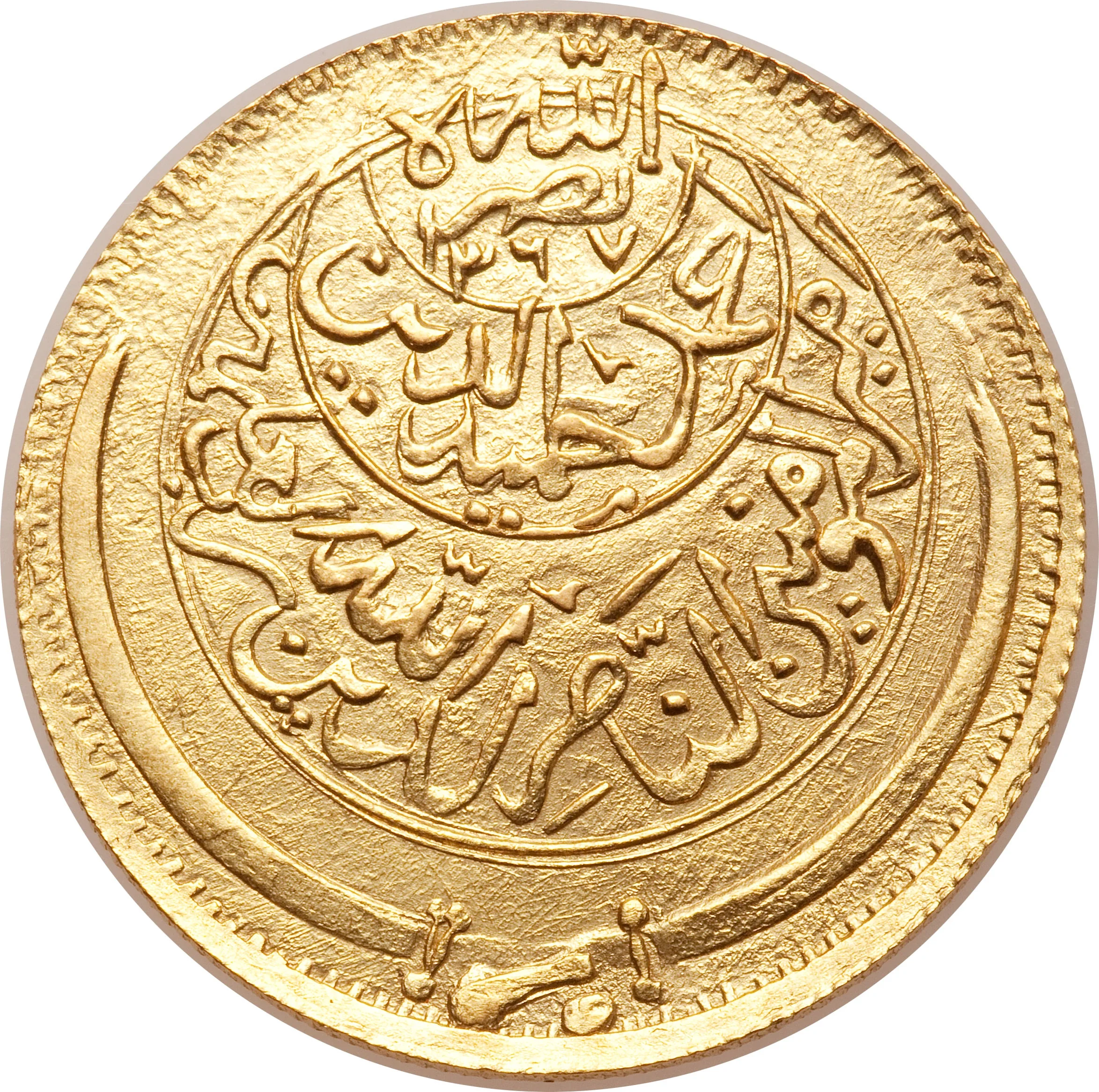
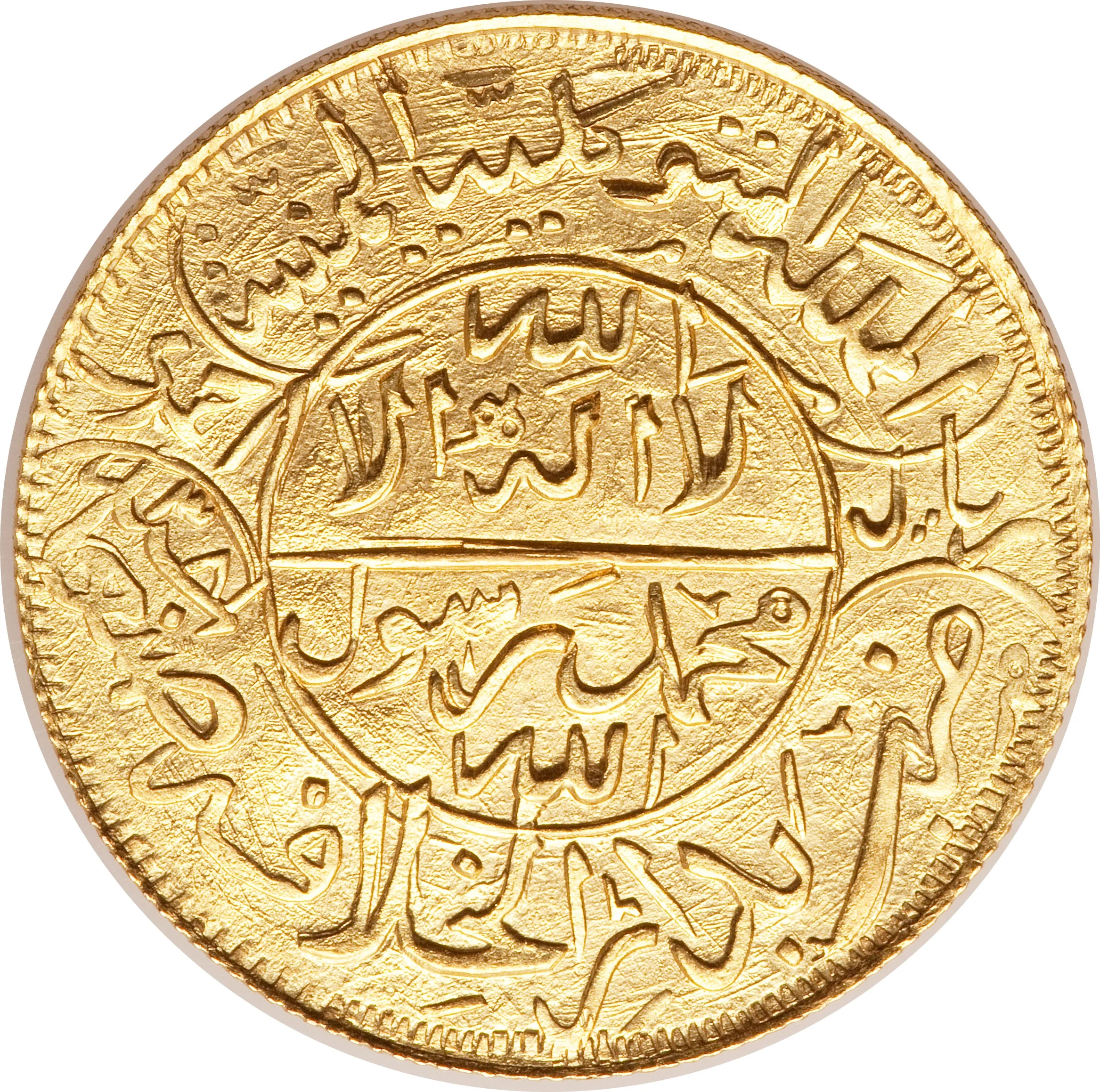
1 Rial – Mutawakkilite Kingdom
Context
Years: 1954–1962
Issuer: Mutawakkilite Kingdom
Ruler: Ahmad bin Yahya
Currency:
(1918—1974)
Demonetized: Yes
Material
References
Y: #Click to copy to clipboardG17.2
Numista: #63078
Value
Bullion value: $4875.46
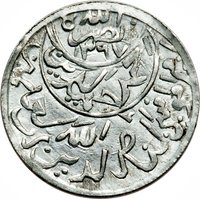
Obverse
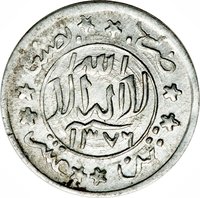
Reverse
Edge
Categories
| Object> Cold weapons |
Mintings
| Year | Mint Mark | Mintage | Quality | Collection |
|---|---|---|---|---|
| 1954 | — | — | ||
| 1955 | — | — | ||
| 1956 | — | — | ||
| 1958 | — | — | ||
| 1959 | — | — | ||
| 1962 | — | — |
Historical background
By 1954, the currency situation in the Mutawakkilite Kingdom of Yemen was characterized by a stark duality, reflecting the country's profound isolation and traditional economic structures. The primary currency in circulation was the Yemeni Riyal, a large, silver coin minted locally since the 1920s. Its value was intrinsically tied to its weight in silver, adhering to centuries-old Islamic monetary principles. Alongside this, the Maria Theresa Thaler (MTT), a silver trade coin dating from the 18th century, remained in widespread use, especially in rural areas and for larger transactions, underscoring the kingdom's resistance to modern financial systems and its deep economic links to regional trade patterns.
This bimetallic reality existed within an almost entirely cash-based economy, with no central bank or paper currency. Imam Ahmad bin Yahya's government exercised strict control over the minting of silver riyals in Sana'a, but the money supply was ultimately constrained by the kingdom's limited silver reserves, which were dependent on the fluctuating revenues from coffee exports and remittances from Yemenis abroad. This inherent scarcity of coinage frequently led to monetary contraction and hindered commercial activity, as the economy was vulnerable to the volatile global price of silver.
Furthermore, the currency system faced external pressure from the growing use of British sovereigns and Indian rupees in the port of Aden and the southern regions, highlighting the kingdom's economic fragmentation. While Imam Ahmad maintained a policy of economic autarky, the outdated monetary system was becoming a significant point of friction. It struggled to meet the needs of a state facing gradual modernization and increased contact with the outside world, setting the stage for the financial reforms that would be cautiously attempted in the late 1950s.
This bimetallic reality existed within an almost entirely cash-based economy, with no central bank or paper currency. Imam Ahmad bin Yahya's government exercised strict control over the minting of silver riyals in Sana'a, but the money supply was ultimately constrained by the kingdom's limited silver reserves, which were dependent on the fluctuating revenues from coffee exports and remittances from Yemenis abroad. This inherent scarcity of coinage frequently led to monetary contraction and hindered commercial activity, as the economy was vulnerable to the volatile global price of silver.
Furthermore, the currency system faced external pressure from the growing use of British sovereigns and Indian rupees in the port of Aden and the southern regions, highlighting the kingdom's economic fragmentation. While Imam Ahmad maintained a policy of economic autarky, the outdated monetary system was becoming a significant point of friction. It struggled to meet the needs of a state facing gradual modernization and increased contact with the outside world, setting the stage for the financial reforms that would be cautiously attempted in the late 1950s.

✨ Legendary