

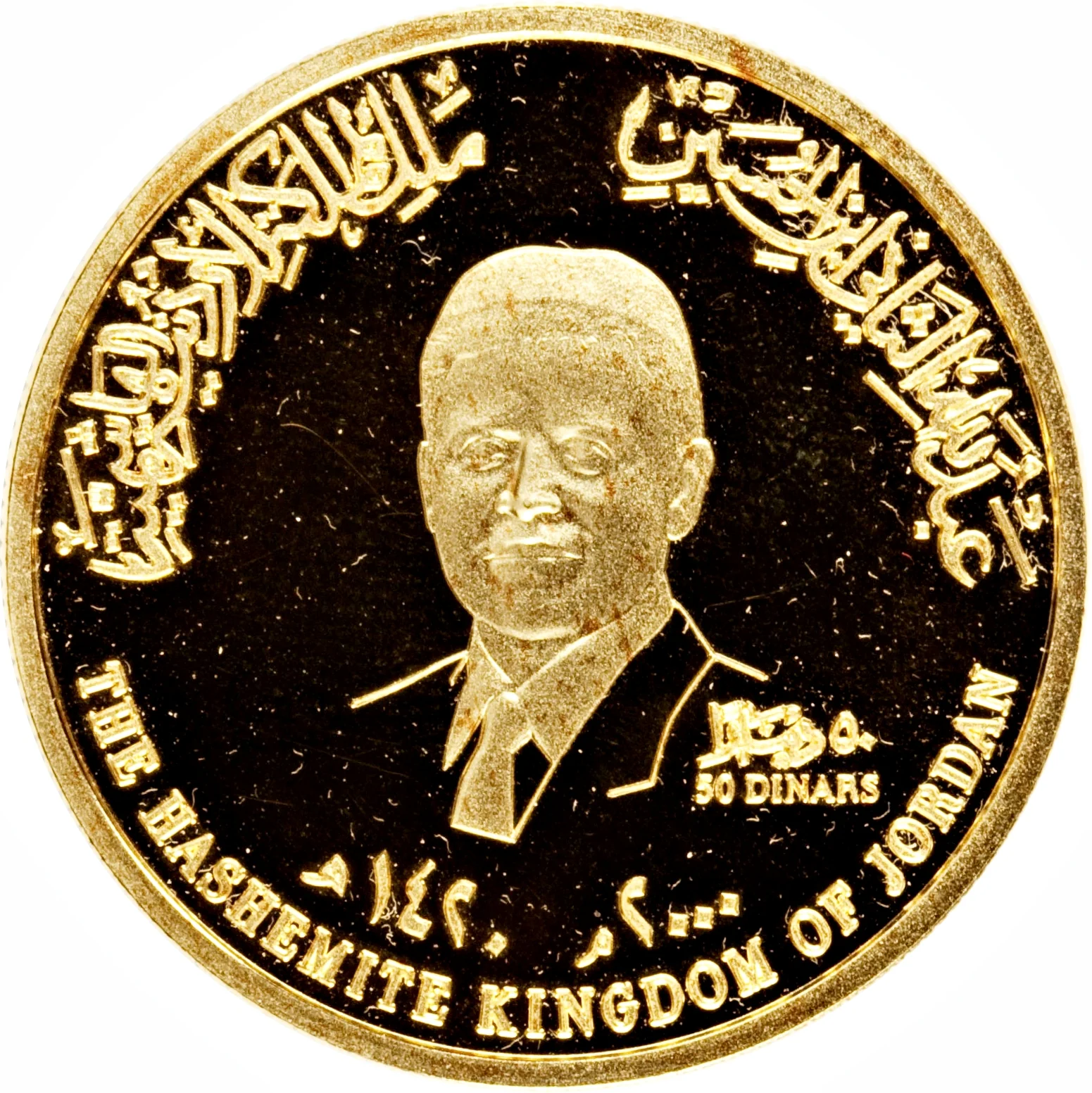
50 dinars – Jordan
Add to wishlist
Non-circulating coins
Commemoration: Millennium
Jordan
Context
Year: 2000
Islamic (Hijri) Year:: 1420
Issuer: Jordan
Ruler: Abdullah II bin Al-Hussein
Currency:
(since 1949)
Material
References
KM: #
Numista: #63023
Value
Exchange value: 50 JOD
Bullion value: $2389.29
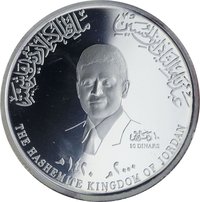
Obverse
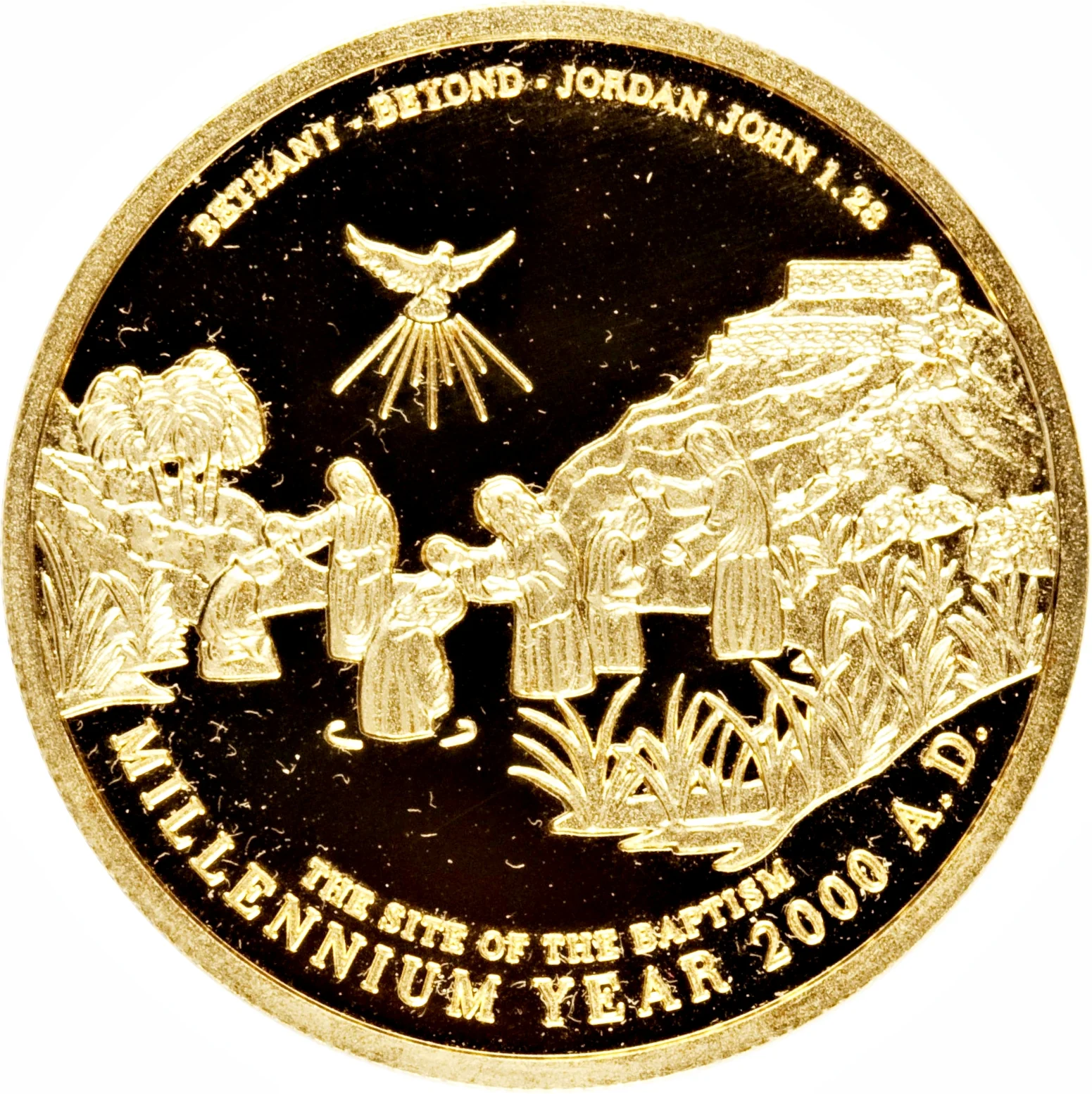
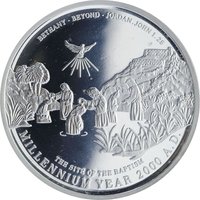
Reverse
Inscription:
BETHANY·BEYOND·JORDAN·JOHN 1.28
THE SITE OF THE BAPTISM
MILLENNIUM YEAR 2000 A.D.
THE SITE OF THE BAPTISM
MILLENNIUM YEAR 2000 A.D.
Edge
Reeded
Categories
| Event> Millennium |
Mintings
| Year | Mint Mark | Mintage | Quality | Collection |
|---|---|---|---|---|
| 2000 | — | — | Proof |
Historical background
In the year 2000, Jordan's currency, the dinar (JOD), was a notable pillar of stability in a region often marked by economic volatility. This stability was the direct result of a fixed exchange rate regime, firmly pegging the dinar to the U.S. dollar at a rate of approximately 0.709 JOD per dollar, a policy established in 1995. This peg was a cornerstone of the country's economic strategy, engineered to control inflation, attract foreign investment, and provide a predictable environment for trade. The Central Bank of Jordan maintained this peg through disciplined monetary policy and by holding substantial foreign currency reserves, which bolstered confidence in the dinar both domestically and internationally.
The context for this stability, however, was a period of significant economic challenge and transition. The 1990s had been difficult, beginning with the economic disruptions of the Gulf War and followed by a rigorous structural adjustment program under IMF guidance. By 2000, Jordan was grappling with the lingering effects of high public debt, persistent unemployment (hovering around 14-15%), and the pressures of liberalizing its economy. The fixed exchange rate, while successful in providing monetary anchor, also imposed constraints, limiting the central bank's ability to use interest rates independently to stimulate domestic growth and making the economy sensitive to shifts in U.S. monetary policy.
Overall, the currency situation in 2000 reflected a strategic trade-off. The dinar's strength and predictability were achieved at the cost of some monetary policy flexibility and came amidst broader, ongoing struggles with fiscal deficits and slow job creation. This stable yet constrained monetary environment set the stage for Jordan's continued efforts in the new millennium to balance external credibility with the urgent need for internal economic development and reform.
The context for this stability, however, was a period of significant economic challenge and transition. The 1990s had been difficult, beginning with the economic disruptions of the Gulf War and followed by a rigorous structural adjustment program under IMF guidance. By 2000, Jordan was grappling with the lingering effects of high public debt, persistent unemployment (hovering around 14-15%), and the pressures of liberalizing its economy. The fixed exchange rate, while successful in providing monetary anchor, also imposed constraints, limiting the central bank's ability to use interest rates independently to stimulate domestic growth and making the economy sensitive to shifts in U.S. monetary policy.
Overall, the currency situation in 2000 reflected a strategic trade-off. The dinar's strength and predictability were achieved at the cost of some monetary policy flexibility and came amidst broader, ongoing struggles with fiscal deficits and slow job creation. This stable yet constrained monetary environment set the stage for Jordan's continued efforts in the new millennium to balance external credibility with the urgent need for internal economic development and reform.
✨ Legendary