

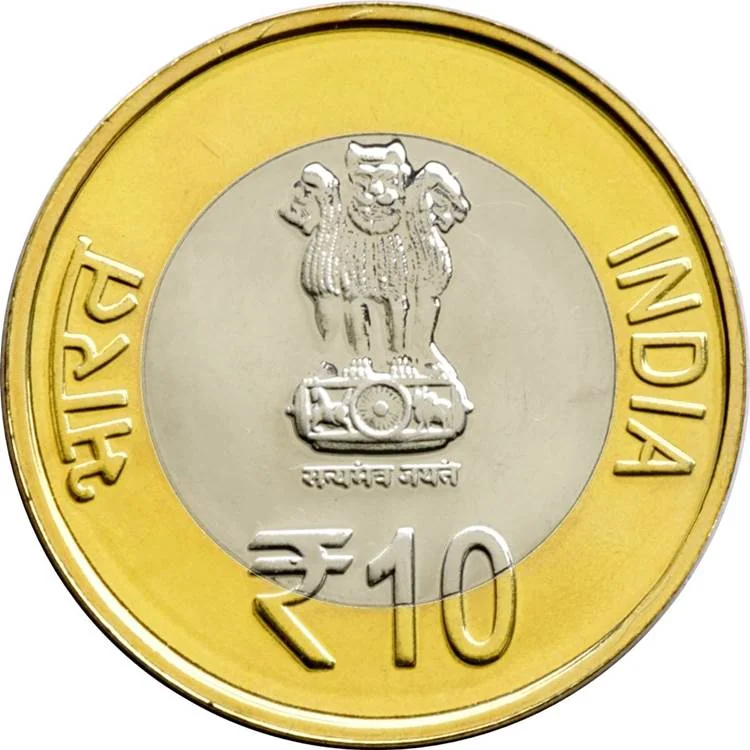

10 rupees – India
Add to wishlist
Circulating commemorative coins
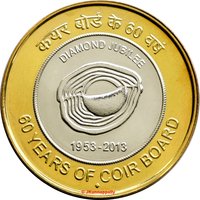
Commemoration: Diamond Jubilee of Coir Board of India
India
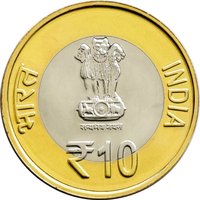
Obverse
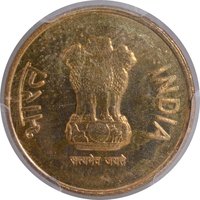
Reverse
Edge
Plain
Mints
| Name | Mark |
|---|---|
| Kolkata / Calcutta / Murshidabad | — |
| Noida | ● |
| Hyderabad | ★ |
| Mumbai / Bombay | ♦ |
| Mumbai / Bombay | M |
Historical background
In 2013, India faced a severe currency crisis, primarily driven by a sharp deterioration in its external account. The current account deficit (CAD) had widened to a record high of 4.8% of GDP in the 2012-13 fiscal year, fueled by high imports of gold and oil and weak exports. This deficit, coupled with global anticipation that the US Federal Reserve would soon taper its quantitative easing program, triggered massive capital outflows from emerging markets like India. The resulting pressure on the rupee was intense, causing it to depreciate by nearly 25% against the US dollar between May and August 2013, hitting an all-time low of around ₹68.8 to the dollar.
The government and the Reserve Bank of India (RBI) responded with a multi-pronged defense. The RBI intervened directly in the forex market and raised short-term interest rates to attract capital, even at the cost of stifling domestic economic growth. It also imposed restrictions on gold imports and encouraged public sector companies to raise foreign currency loans. The government launched initiatives like the NRI bond scheme (Foreign Currency Non-Resident Bank deposits) to attract dollar inflows. These measures, alongside a subsequent fall in global commodity prices (especially gold and oil), helped stabilize the rupee by the end of the year.
The 2013 crisis exposed structural vulnerabilities in India's economy and had significant consequences. It highlighted the risks of a large CAD financed by volatile capital flows. The episode also cemented the RBI's focus on building robust foreign exchange reserves as a buffer against future volatility, a policy that continues today. While the immediate crisis abated, it left a legacy of cautious macroeconomic management and underscored the importance of controlling the "twin deficits" (fiscal and current account) for India's financial stability.
The government and the Reserve Bank of India (RBI) responded with a multi-pronged defense. The RBI intervened directly in the forex market and raised short-term interest rates to attract capital, even at the cost of stifling domestic economic growth. It also imposed restrictions on gold imports and encouraged public sector companies to raise foreign currency loans. The government launched initiatives like the NRI bond scheme (Foreign Currency Non-Resident Bank deposits) to attract dollar inflows. These measures, alongside a subsequent fall in global commodity prices (especially gold and oil), helped stabilize the rupee by the end of the year.
The 2013 crisis exposed structural vulnerabilities in India's economy and had significant consequences. It highlighted the risks of a large CAD financed by volatile capital flows. The episode also cemented the RBI's focus on building robust foreign exchange reserves as a buffer against future volatility, a policy that continues today. While the immediate crisis abated, it left a legacy of cautious macroeconomic management and underscored the importance of controlling the "twin deficits" (fiscal and current account) for India's financial stability.
🌱 Very Common