

1000 rupees – Sri Lanka
Add to wishlist
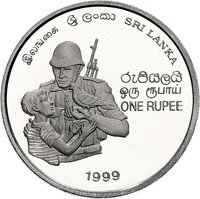
Non-circulating coins
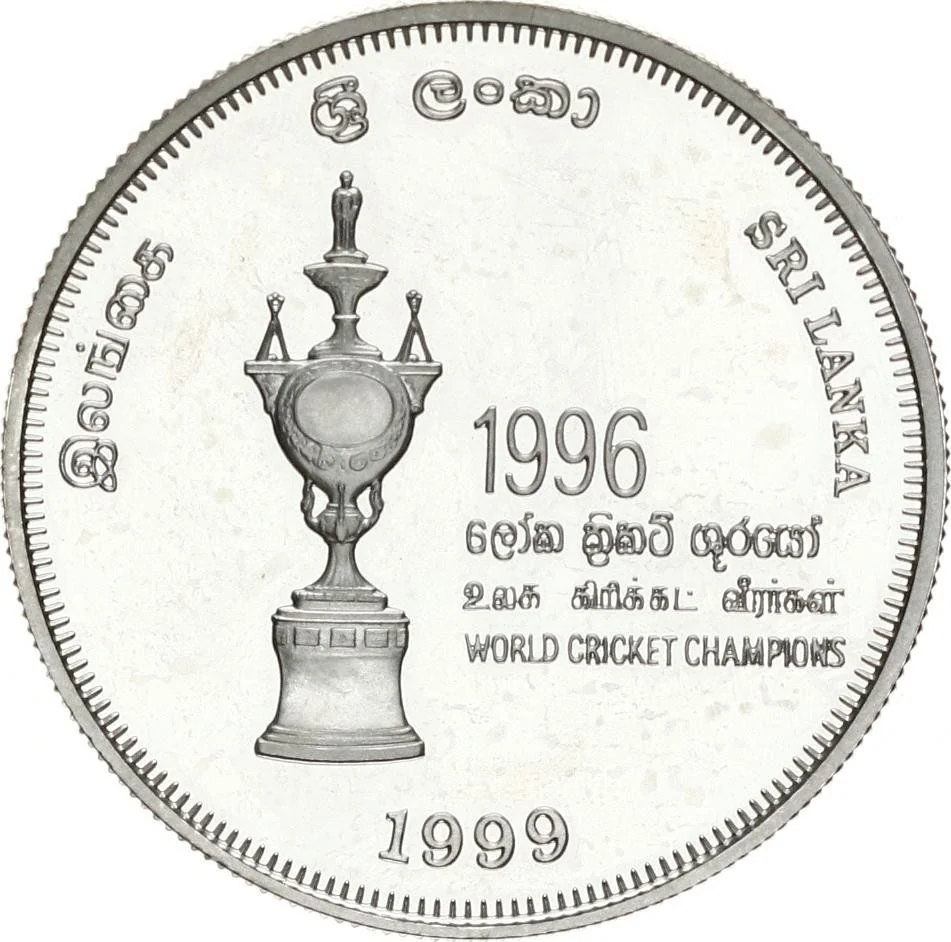
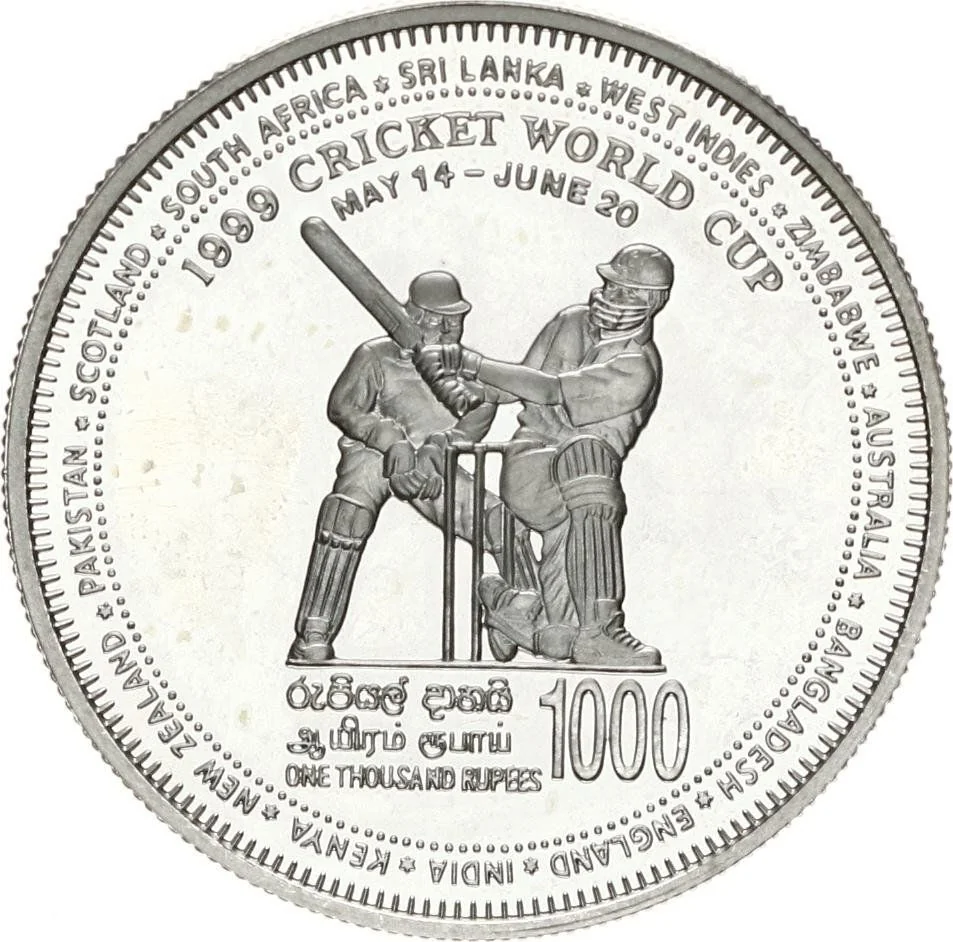
Commemoration: 1996 Cricket World Cup, Calcutta
Sri Lanka
Obverse
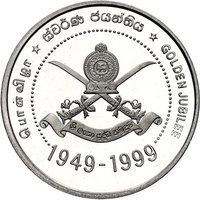
Reverse
Edge
Mints
| Name | Mark |
|---|---|
| Royal Mint | — |
Mintings
| Year | Mint Mark | Mintage | Quality | Collection |
|---|---|---|---|---|
| 1999 | — | 25,000 |
Historical background
In 1999, Sri Lanka's currency situation was characterized by a managed float regime under significant pressure. The Central Bank of Sri Lanka (CBSL) maintained a peg of the Sri Lankan Rupee (LKR) to a basket of currencies, heavily weighted towards the US Dollar, but allowed for periodic adjustments. This period followed the 1997-98 Asian Financial Crisis, which, while not devastating Sri Lanka as severely as other regional economies, still led to capital outflows, reduced export competitiveness, and strained foreign exchange reserves. The CBSL was actively intervening in the forex market to defend the rupee and curb excessive volatility, a costly effort that drew down reserves.
Economically, the year was dominated by the ongoing civil war against the Liberation Tigers of Tamil Eelam (LTTE), which consumed a large portion of government expenditure and deterred foreign investment. While economic growth was moderate, the conflict created a persistent balance of payments challenge. Export earnings from garments and tea were crucial, but the high import bill for both consumer goods and military needs, coupled with substantial debt servicing obligations, created consistent demand for foreign currency. This fundamental pressure kept the rupee on a gradual but controlled depreciating trend throughout the year.
Consequently, 1999 represented a period of cautious stability punctuated by underlying fragility. The CBSL's management successfully avoided a sudden devaluation or crisis, but the structural pressures of conflict financing and a trade deficit meant the rupee's value was artificially sustained through intervention. This policy aimed to control inflation and maintain import stability but came at the cost of dwindling reserves and criticisms about overvaluation hurting exports. The situation highlighted the difficult trade-offs in exchange rate management for a conflict-affected developing economy, setting the stage for the more pronounced economic challenges that would emerge in the following decade.
Economically, the year was dominated by the ongoing civil war against the Liberation Tigers of Tamil Eelam (LTTE), which consumed a large portion of government expenditure and deterred foreign investment. While economic growth was moderate, the conflict created a persistent balance of payments challenge. Export earnings from garments and tea were crucial, but the high import bill for both consumer goods and military needs, coupled with substantial debt servicing obligations, created consistent demand for foreign currency. This fundamental pressure kept the rupee on a gradual but controlled depreciating trend throughout the year.
Consequently, 1999 represented a period of cautious stability punctuated by underlying fragility. The CBSL's management successfully avoided a sudden devaluation or crisis, but the structural pressures of conflict financing and a trade deficit meant the rupee's value was artificially sustained through intervention. This policy aimed to control inflation and maintain import stability but came at the cost of dwindling reserves and criticisms about overvaluation hurting exports. The situation highlighted the difficult trade-offs in exchange rate management for a conflict-affected developing economy, setting the stage for the more pronounced economic challenges that would emerge in the following decade.
💎 Extremely Rare