

1000 rupees (People's Bank of Sri Lanka) – Sri Lanka
Add to wishlist
Non-circulating coins
Commemoration: 50th Anniversary of the People's Bank of Sri Lanka
Sri Lanka
Obverse
Description:
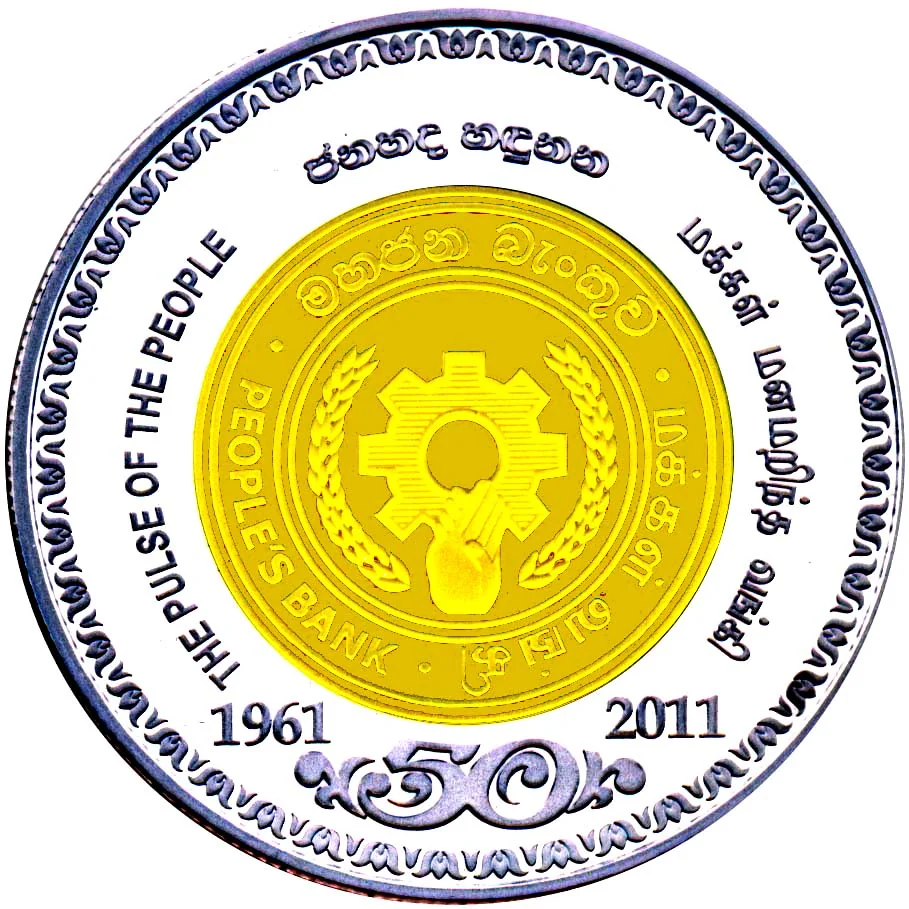
A gear encircled by a laurel wreath.
Inscription:
THE PULSE OF THE PEOPLE
ජනහද හඳුනන
மக்கள் மனமறிந்த வங்கி
මහජන බැංකුව
மக்கள் வங்கி
PEOPLE'S BANK
1961 2011
ජනහද හඳුනන
மக்கள் மனமறிந்த வங்கி
මහජන බැංකුව
மக்கள் வங்கி
PEOPLE'S BANK
1961 2011
Translation:
The Pulse of the People
The Bank that Knows the People's Heart
The Bank that Knows the People's Heart
People's Bank
People's Bank
PEOPLE'S BANK
1961 2011
The Bank that Knows the People's Heart
The Bank that Knows the People's Heart
People's Bank
People's Bank
PEOPLE'S BANK
1961 2011
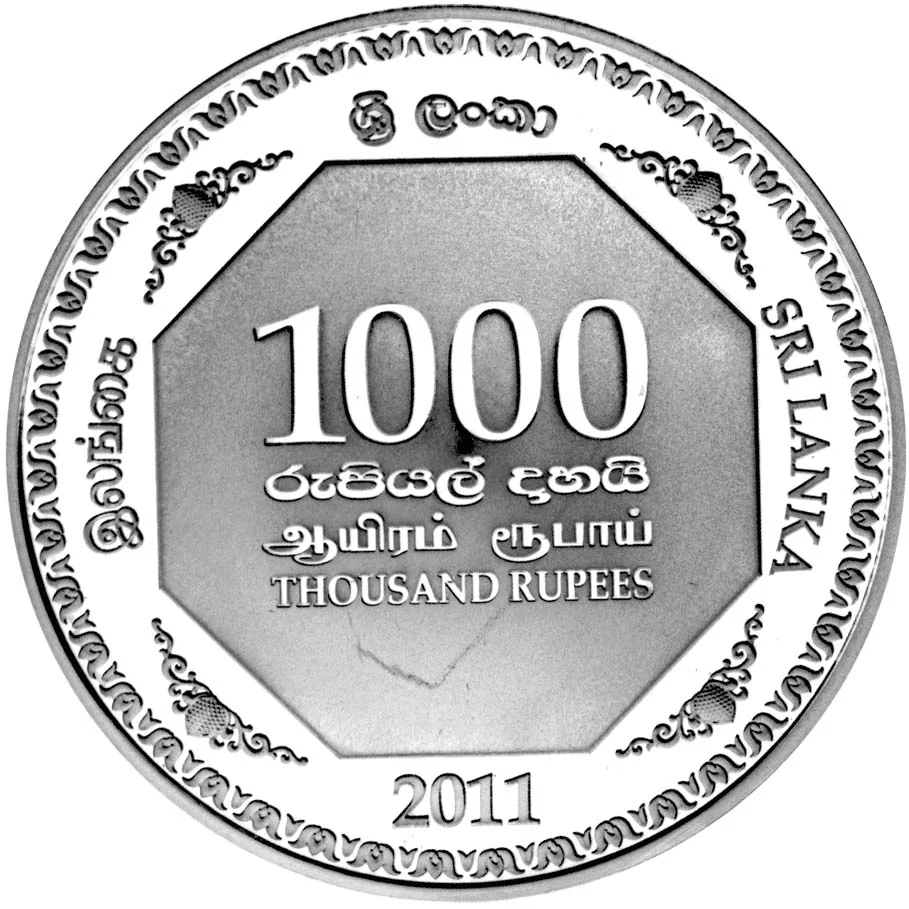
Reverse
Edge
Mintings
| Year | Mint Mark | Mintage | Quality | Collection |
|---|---|---|---|---|
| 2011 | — | 2,300 |
Historical background
In 2011, Sri Lanka's currency situation was characterized by significant pressure on the Sri Lankan Rupee (LKR) and a growing balance of payments crisis. The country was emerging from a decades-long civil war that ended in 2009, and the government, led by President Mahinda Rajapaksa, was pursuing an aggressive post-war reconstruction and development drive. This was fueled by heavy state-led borrowing and spending on large-scale infrastructure projects. Consequently, imports of vehicles, machinery, and consumer goods surged, while exports like tea and garments failed to keep pace, leading to a widening trade deficit.
To finance this deficit and support the rupee, the Central Bank of Sri Lanka (CBSL) heavily intervened in the foreign exchange market, depleting the country's foreign reserves. Despite these efforts, the rupee faced persistent downward pressure. The CBSL also employed administrative measures, including imposing credit ceilings on commercial banks and urging them to limit imports, in an attempt to curb the outflow of foreign exchange. However, these controls were only partially effective and created distortions in the market.
By the end of 2011, the economic vulnerabilities were becoming acute. Official foreign reserves had fallen to precarious levels, covering only a few months of imports. In a pivotal move in November 2011, the CBSL was forced to devalue the rupee by approximately 3% and allow greater flexibility in its managed float, signaling a shift away from rigidly defending an unsustainable peg. This devaluation was a clear acknowledgment of the mounting external imbalances and set the stage for a more severe currency crisis in the following year, as Sri Lanka approached its first sovereign debt default in history.
To finance this deficit and support the rupee, the Central Bank of Sri Lanka (CBSL) heavily intervened in the foreign exchange market, depleting the country's foreign reserves. Despite these efforts, the rupee faced persistent downward pressure. The CBSL also employed administrative measures, including imposing credit ceilings on commercial banks and urging them to limit imports, in an attempt to curb the outflow of foreign exchange. However, these controls were only partially effective and created distortions in the market.
By the end of 2011, the economic vulnerabilities were becoming acute. Official foreign reserves had fallen to precarious levels, covering only a few months of imports. In a pivotal move in November 2011, the CBSL was forced to devalue the rupee by approximately 3% and allow greater flexibility in its managed float, signaling a shift away from rigidly defending an unsustainable peg. This devaluation was a clear acknowledgment of the mounting external imbalances and set the stage for a more severe currency crisis in the following year, as Sri Lanka approached its first sovereign debt default in history.
✨ Legendary