

2 Pounds – Guernsey
Non-circulating coins
Commemoration: Emperor Moth
Context
Year: 1997
Country: British Crown dependencies
Issuer: Guernsey
Ruler: Elizabeth II
Currency:
(since 1971)
Total mintage: 15,000
Material
References
KM: #Click to copy to clipboard80a
Numista: #111445
Value
Exchange value: 2 GGP
Bullion value: $82.01
Obverse
Description:
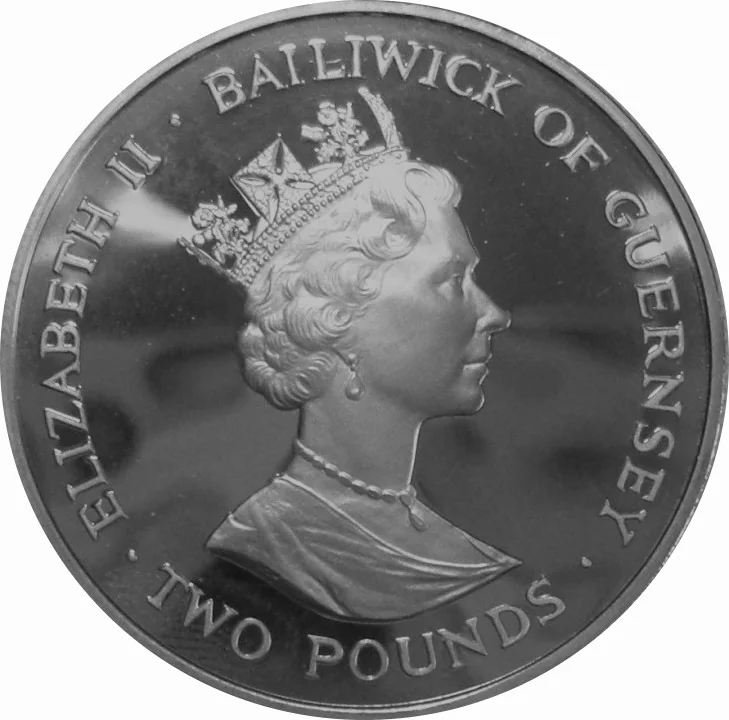
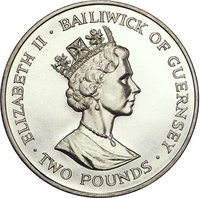
Elizabeth II crowned bust right above value.
Inscription:
ELIZABETH II · BAILIWICK OF GUERNSEY
RDM
· TWO POUNDS ·
RDM
· TWO POUNDS ·
Script: Latin
Engraver: Raphael David Maklouf
Reverse
Description:
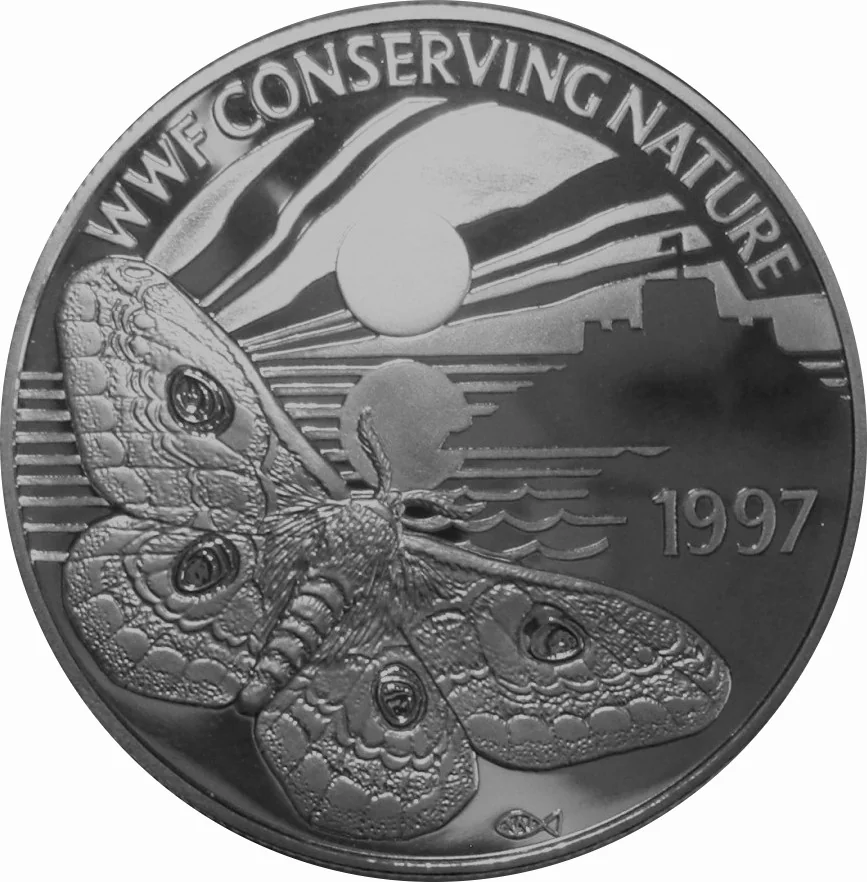
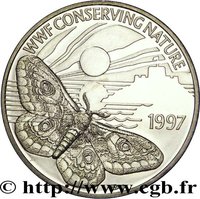
Emperor Moth with date.
Inscription:
WWF CONSERVING NATURE
1997
1997
Script: Latin
Engraver: Willem Vis
Edge
Milled
Mints
| Name | Mark |
|---|---|
| Royal Mint | — |
Mintings
| Year | Mint Mark | Mintage | Quality | Collection |
|---|---|---|---|---|
| 1997 | — | 15,000 |
Historical background
In 1997, the currency situation in Guernsey was characterised by a stable and long-standing dual-currency system, with both UK sterling and local Guernsey pound notes and coins in circulation. The Guernsey pound (£) was not an independent currency but operated in a one-to-one fixed parity with sterling, functioning as a local issue of British currency. This arrangement provided the island with the economic stability of the UK monetary system while allowing for the issuance of its own distinctive banknotes and coins, which were legal tender only within the Bailiwick.
This system was underpinned by the Guernsey Currency Fund, established in 1914 and reinforced by later laws. The core principle was that every Guernsey pound note issued had to be fully backed by sterling assets held in the Fund, ensuring absolute convertibility and maintaining strict fiscal discipline. Consequently, the island had no independent monetary policy and could not devalue its currency; its economic fortunes were closely tied to those of the United Kingdom, particularly regarding interest rates set by the Bank of England.
The context of 1997 was one of particular economic confidence and stability. The UK economy was strong, and Guernsey, with its thriving finance sector, benefited accordingly. There was no significant debate or movement towards altering this established currency model, which was viewed as a successful cornerstone of the island's prosperity. The system efficiently served Guernsey's needs as a small, open economy, providing the benefits of a major international currency while retaining a symbol of its constitutional autonomy and identity.
This system was underpinned by the Guernsey Currency Fund, established in 1914 and reinforced by later laws. The core principle was that every Guernsey pound note issued had to be fully backed by sterling assets held in the Fund, ensuring absolute convertibility and maintaining strict fiscal discipline. Consequently, the island had no independent monetary policy and could not devalue its currency; its economic fortunes were closely tied to those of the United Kingdom, particularly regarding interest rates set by the Bank of England.
The context of 1997 was one of particular economic confidence and stability. The UK economy was strong, and Guernsey, with its thriving finance sector, benefited accordingly. There was no significant debate or movement towards altering this established currency model, which was viewed as a successful cornerstone of the island's prosperity. The system efficiently served Guernsey's needs as a small, open economy, providing the benefits of a major international currency while retaining a symbol of its constitutional autonomy and identity.
✨ Legendary