

Iran
Context
Years: 1899–1906
Issuer: Iran 
Ruler: Mozaffar ad-Din Shah
Currency:
(1825—1932)
Demonetization: 1907
Material
References
KM: #Click to copy to clipboard994
Numista: #62134
Value
Bullion value: $216.62
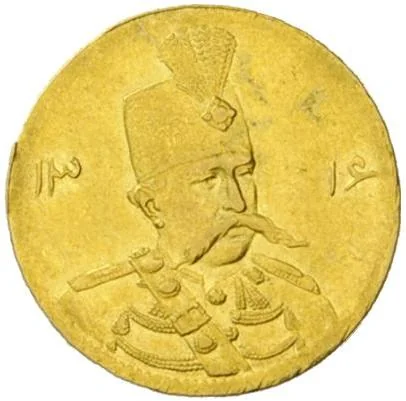
Obverse
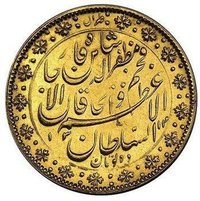
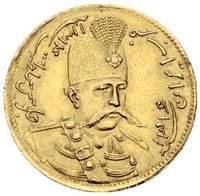
Inscription:
۱۳۱۶
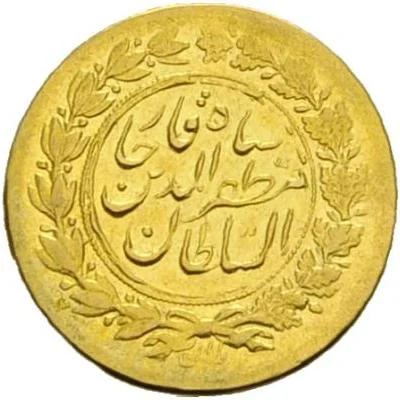
Reverse
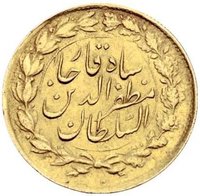
Inscription:
السّلطان مظفرالدین شاه قاجار
طهران
طهران
Translation:
The Sultan Muzaffar al-Din Shah Qajar
Tehran
Tehran
Language: Arabic
Edge
Mintings
| Year | Mint Mark | Mintage | Quality | Collection |
|---|---|---|---|---|
| 1899 | — | — | ||
| 1901 | — | — | ||
| 1902 | — | — | ||
| 1903 | — | — | ||
| 1903 | — | — | ||
| 1904 | — | — | ||
| 1905 | — | — | ||
| 1906 | — | — |
Historical background
By 1899, Iran’s monetary system was in a state of profound crisis and chaotic disarray, a legacy of the Qajar dynasty’s chronic fiscal mismanagement and foreign interference. The country operated on a bimetallic system of silver krans and gold tomans, but the value and metal content of coins varied wildly across different provinces, with major cities like Tabriz, Tehran, and Isfahan each minting their own incompatible currencies. This internal fragmentation was compounded by a severe shortage of precious metals, leading to the widespread circulation of debased and counterfeit coins, which further eroded public trust and hampered commerce.
The situation was critically exacerbated by external economic pressure, particularly from the Russian Empire and Great Britain, whose spheres of influence dominated Iran. Large quantities of silver were being drained from the country to pay for imports, as Iran’s economy had become a captive market for foreign manufactured goods. Furthermore, European powers, especially the British, introduced their own silver coins (like the Maria Theresa thaler and Indian rupees) into key trading regions, which often circulated more readily than domestic currency. This effectively ceded portions of Iran’s monetary sovereignty to foreign states, undermining the authority of the central government in Tehran.
Recognizing the destabilizing effects of this monetary anarchy, the Qajar state under Mozaffar ad-Din Shah had begun to contemplate serious reform. The previous decade had seen discussions about establishing a unified national bank and a standardized currency, partly to break free from the grip of British and Russian financial influence. While the Imperial Bank of Persia (British-chartered) had been established in 1889, it primarily served foreign interests. Therefore, by 1899, the groundwork was being laid for what would eventually become the Banque d'Escompte de Perse and, later, the creation of the modern rial in 1932. The currency situation of 1899 thus represents a low point of fragmentation, immediately preceding a prolonged and difficult struggle toward a centralized national monetary system.
The situation was critically exacerbated by external economic pressure, particularly from the Russian Empire and Great Britain, whose spheres of influence dominated Iran. Large quantities of silver were being drained from the country to pay for imports, as Iran’s economy had become a captive market for foreign manufactured goods. Furthermore, European powers, especially the British, introduced their own silver coins (like the Maria Theresa thaler and Indian rupees) into key trading regions, which often circulated more readily than domestic currency. This effectively ceded portions of Iran’s monetary sovereignty to foreign states, undermining the authority of the central government in Tehran.
Recognizing the destabilizing effects of this monetary anarchy, the Qajar state under Mozaffar ad-Din Shah had begun to contemplate serious reform. The previous decade had seen discussions about establishing a unified national bank and a standardized currency, partly to break free from the grip of British and Russian financial influence. While the Imperial Bank of Persia (British-chartered) had been established in 1889, it primarily served foreign interests. Therefore, by 1899, the groundwork was being laid for what would eventually become the Banque d'Escompte de Perse and, later, the creation of the modern rial in 1932. The currency situation of 1899 thus represents a low point of fragmentation, immediately preceding a prolonged and difficult struggle toward a centralized national monetary system.
✨ Legendary