

2 toman – Iran
Add to wishlist
Circulating commemorative coins
Commemoration: Ali bin Musa commemorative
Iran
Context
Year: 1878
Islamic (Hijri) Year:: 1295
Issuer: Iran
Ruler: Naser al-Din Shah
Currency:
(1825—1932)
Demonetization: 1896
Material
References
KM: #
Numista: #62116
Value
Bullion value: $905.16
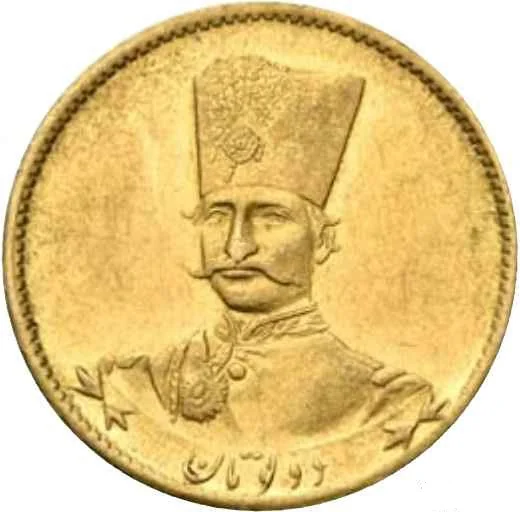
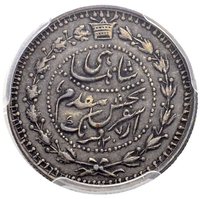
Obverse
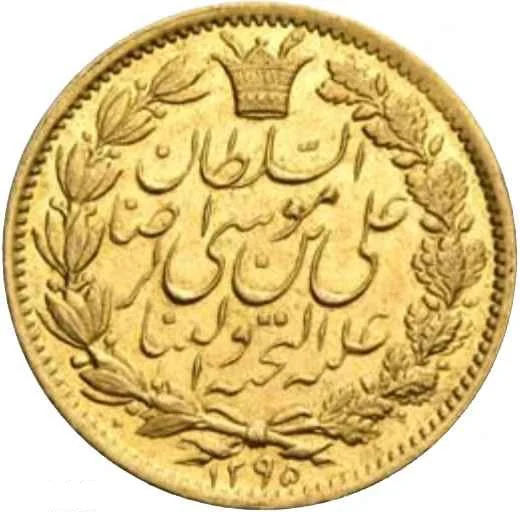
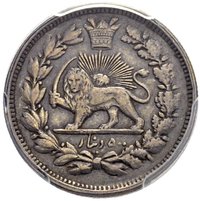
Reverse
Inscription:
السّلطان
علی بن موسی الرضا
علیه التحیه و الثنا
۱۲۹۵
علی بن موسی الرضا
علیه التحیه و الثنا
۱۲۹۵
Translation:
The Sultan
Ali ibn Musa al-Rida
Upon him be greetings and praise
1295
Ali ibn Musa al-Rida
Upon him be greetings and praise
1295
Script: Persian (nastaliq)
Language: Arabic
Edge
Mints
| Name | Mark |
|---|---|
| Tehran | — |
Mintings
| Year | Mint Mark | Mintage | Quality | Collection |
|---|---|---|---|---|
| 1878 | — | — |
Historical background
In 1878, Iran's currency system was a complex and unstable mosaic, reflecting the country's political and economic fragility under the Qajar dynasty. The monetary landscape was dominated by silver, with the primary unit being the kran, a silver coin that had suffered significant debasement over decades. However, there was no unified national currency; a plethora of coins minted in various cities and by different authorities circulated with fluctuating values based on weight and silver content. This was compounded by the widespread use of foreign currencies, particularly the Russian ruble in the north and the British pound sterling in the south, which further undermined domestic monetary sovereignty and facilitated external economic influence.
The root of the instability lay in severe fiscal deficits. The Qajar state, burdened by extravagant court expenditures, costly provincial administration, and military campaigns, had limited capacity to generate revenue from its largely agrarian economy. This chronic shortage of silver bullion led the government to repeatedly reduce the silver content of newly minted krans, a practice that caused inflation, eroded public trust, and created a chaotic disparity between newer and older coins in circulation. The situation was exacerbated by the global decline in the value of silver relative to gold, which adversely affected Iran's silver-based economy and its international trade balances.
Despite the evident crisis, comprehensive reform remained elusive in 1878. Earlier attempts at establishing a modern bank and stabilizing the currency had faltered. It was not until the 1880s that more concerted efforts would begin, culminating in the introduction of the gold-based toman and the establishment of the Imperial Bank of Persia by British concession in 1889. Therefore, the year 1878 represents a point of deep monetary distress within a longer period of transition, where the pressures of internal mismanagement and global economic forces set the stage for eventual, though externally influenced, financial restructuring.
The root of the instability lay in severe fiscal deficits. The Qajar state, burdened by extravagant court expenditures, costly provincial administration, and military campaigns, had limited capacity to generate revenue from its largely agrarian economy. This chronic shortage of silver bullion led the government to repeatedly reduce the silver content of newly minted krans, a practice that caused inflation, eroded public trust, and created a chaotic disparity between newer and older coins in circulation. The situation was exacerbated by the global decline in the value of silver relative to gold, which adversely affected Iran's silver-based economy and its international trade balances.
Despite the evident crisis, comprehensive reform remained elusive in 1878. Earlier attempts at establishing a modern bank and stabilizing the currency had faltered. It was not until the 1880s that more concerted efforts would begin, culminating in the introduction of the gold-based toman and the establishment of the Imperial Bank of Persia by British concession in 1889. Therefore, the year 1878 represents a point of deep monetary distress within a longer period of transition, where the pressures of internal mismanagement and global economic forces set the stage for eventual, though externally influenced, financial restructuring.
✨ Legendary