

Obverse
Description:
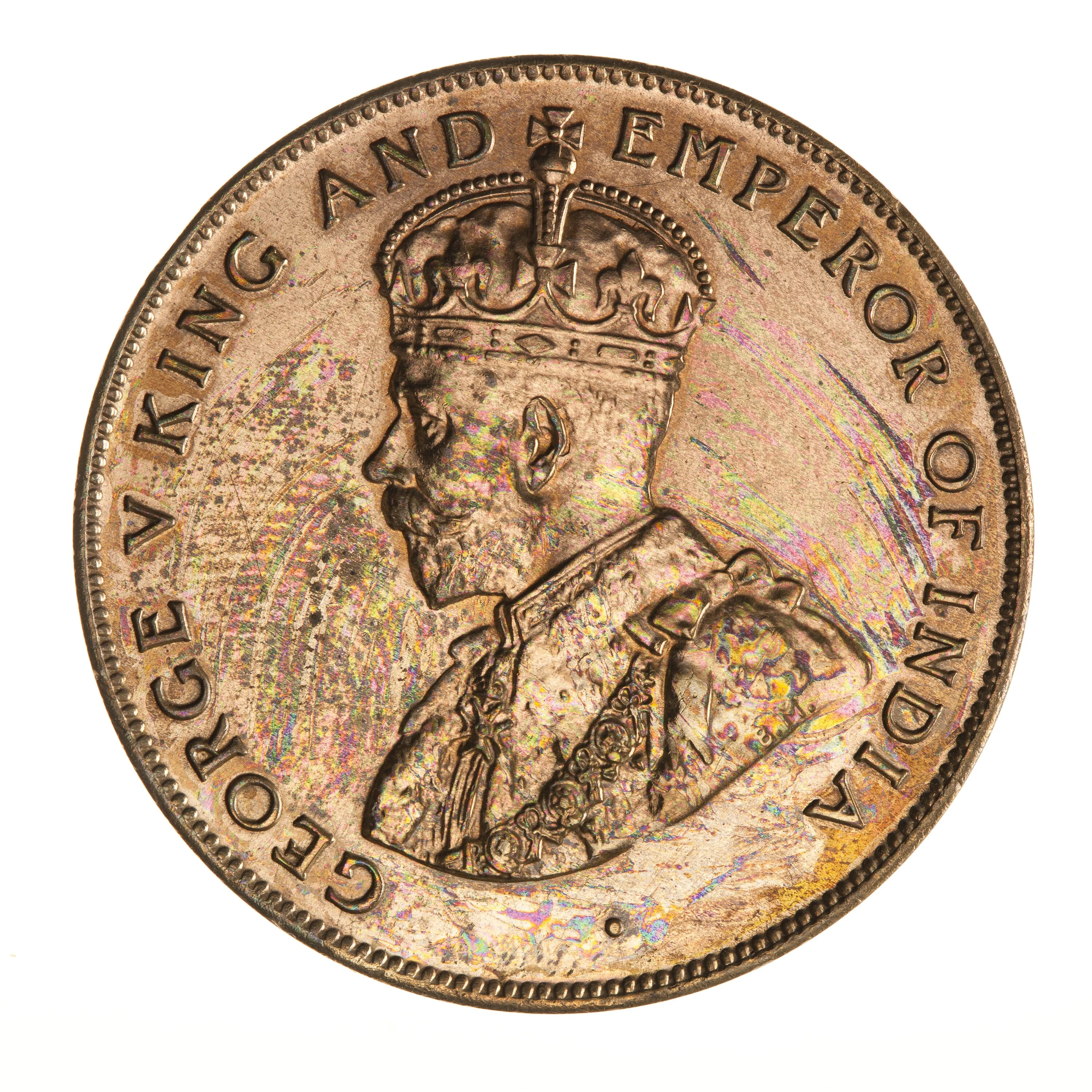
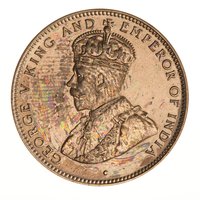
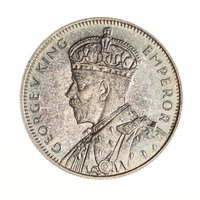
Crowned head left.
Inscription:
· GEORGE V KING AND EMPEROR OF INDIA
B.M.
B.M.
Translation:
GEORGE V KING AND EMPEROR OF INDIA
B.M.
B.M.
Script: Latin
Language: English
Engraver: Edgar Bertram MacKennal
Reverse
Edge
Plain
Mints
| Name | Mark |
|---|---|
| Royal Mint (Tower Hill) | — |
Mintings
| Year | Mint Mark | Mintage | Quality | Collection |
|---|---|---|---|---|
| 1917 | — | 600,000 | ||
| 1920 | — | 200,000 | ||
| 1921 | — | 100,000 | ||
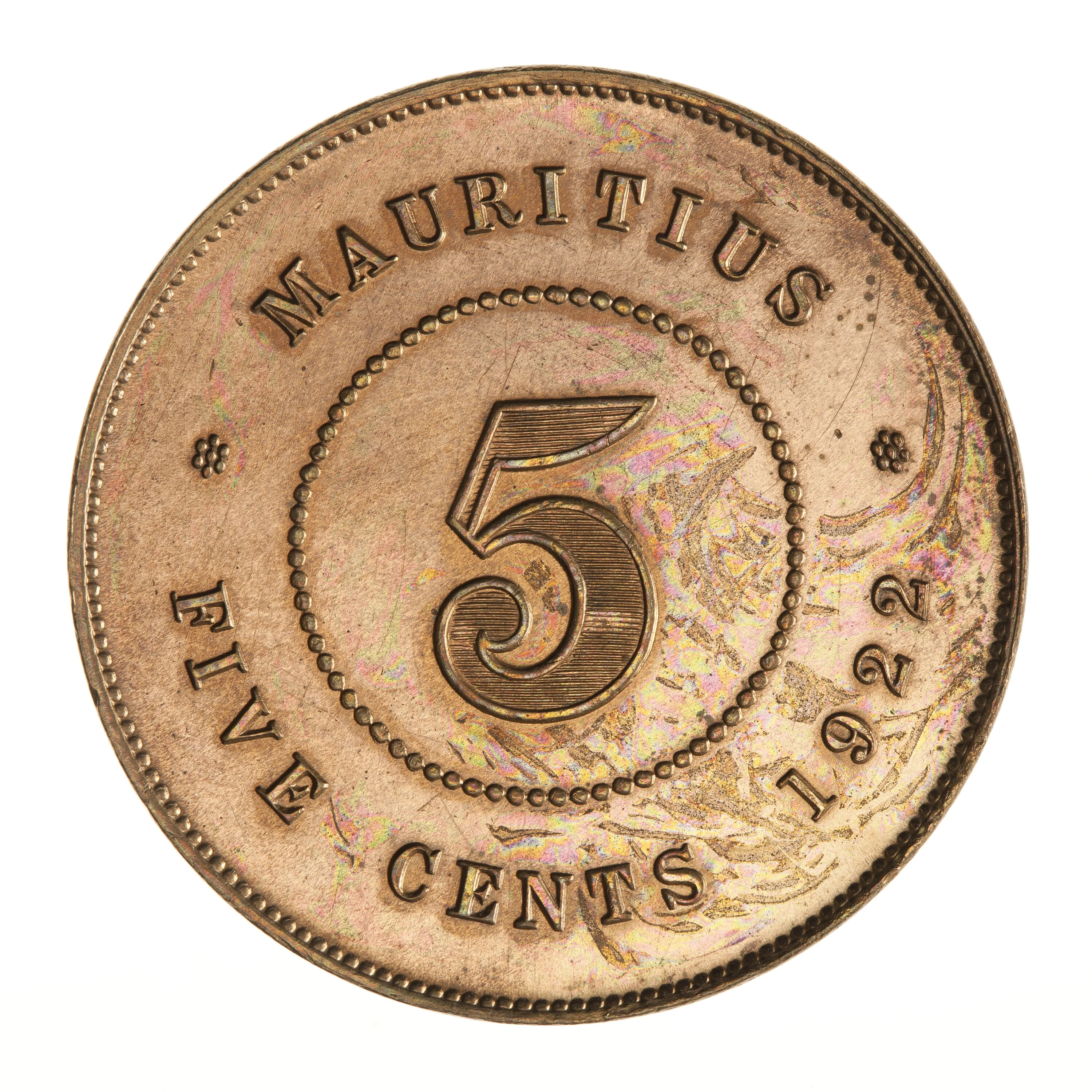
| 1922 | — | 360,000 | ||
| 1923 | — | 400,000 | ||
| 1924 | — | 400,000 |
Historical background
In 1917, Mauritius, a British Crown Colony since 1810, operated under a currency system directly tied to the imperial pound sterling. The official currency was the Mauritian rupee, but its value was not pegged to silver, as was historically common. Instead, following the Indian precedent and the dictates of colonial finance, the Mauritian rupee was fixed to sterling at a firm exchange rate of 1 rupee = 1 shilling 6 pence (or 10 rupees = 15 shillings, making £1 equal to 10 rupees 10 cents). This sterling exchange standard ensured stability for trade and remittances with the United Kingdom, the island's dominant economic partner.
The First World War profoundly impacted this system, as it did globally. While the fixed rate remained officially in place, the war placed severe strain on colonial finances and disrupted shipping. A key concern was the physical supply of currency, particularly silver coins for smaller transactions. With global silver markets in turmoil and Britain's resources directed toward the war effort, the colony faced periodic shortages of coinage, leading to administrative challenges in paying labourers, especially on the sugar estates that formed the backbone of the economy. This occasionally prompted the use of private tokens or scrip by some plantations to facilitate local wages.
Furthermore, the war inflated the price of imports, upon which the island was heavily dependent, including essential foodstuffs. This inflation, measured in rupees, eroded purchasing power but did not break the sterling peg. The colonial government's primary monetary focus in 1917 was therefore one of maintenance: upholding the fixed exchange rate, managing the logistical difficulties of currency supply, and navigating the inflationary pressures within the constraints of a wartime sterling-area economy. The system's rigidity, while ensuring stability, also meant Mauritius imported the financial pressures of Metropolitan Britain.
The First World War profoundly impacted this system, as it did globally. While the fixed rate remained officially in place, the war placed severe strain on colonial finances and disrupted shipping. A key concern was the physical supply of currency, particularly silver coins for smaller transactions. With global silver markets in turmoil and Britain's resources directed toward the war effort, the colony faced periodic shortages of coinage, leading to administrative challenges in paying labourers, especially on the sugar estates that formed the backbone of the economy. This occasionally prompted the use of private tokens or scrip by some plantations to facilitate local wages.
Furthermore, the war inflated the price of imports, upon which the island was heavily dependent, including essential foodstuffs. This inflation, measured in rupees, eroded purchasing power but did not break the sterling peg. The colonial government's primary monetary focus in 1917 was therefore one of maintenance: upholding the fixed exchange rate, managing the logistical difficulties of currency supply, and navigating the inflationary pressures within the constraints of a wartime sterling-area economy. The system's rigidity, while ensuring stability, also meant Mauritius imported the financial pressures of Metropolitan Britain.
🌱 Common