

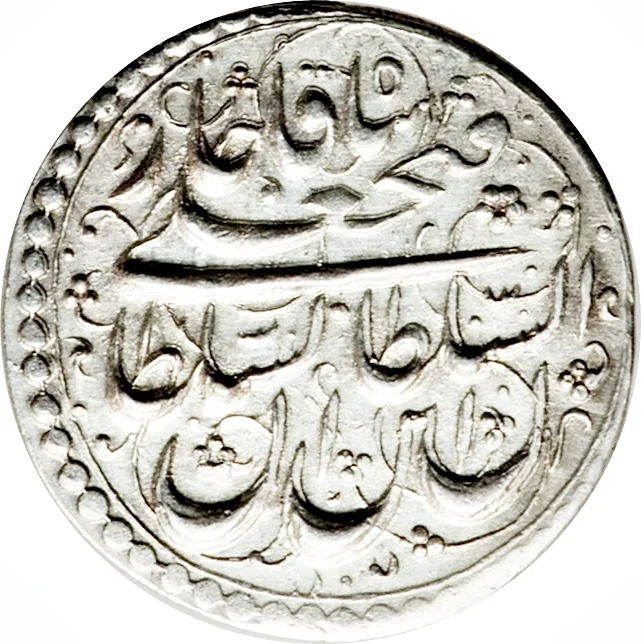
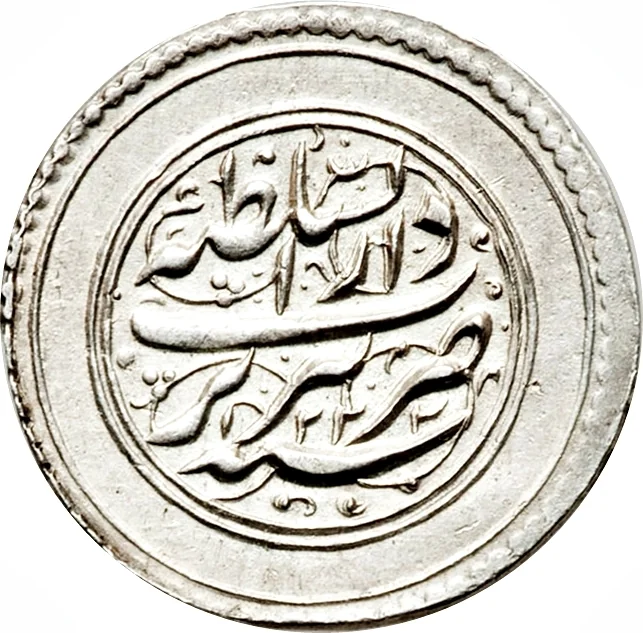
⅕ Rial – Iran
Iran
Context
Year: 1808
Islamic (Hijri) Year: 1223
Issuer: Iran 
Ruler: Fath-Ali Shah
Currency:
(1798—1825)
Demonetized: Yes
Material
References
KM: #Click to copy to clipboard683
Numista: #62075
Value
Bullion value: $5.17
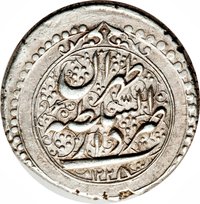
Obverse
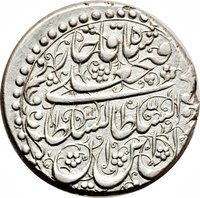
Reverse
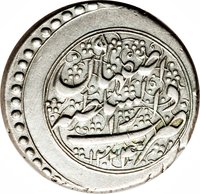
Edge
Mints
| Name | Mark |
|---|---|
| Tebriz | — |
Mintings
| Year | Mint Mark | Mintage | Quality | Collection |
|---|---|---|---|---|
| 1808 | — | — |
Historical background
In 1808, Iran's currency system was in a state of profound disarray, a direct legacy of the political and military turmoil of the late 18th century. The collapse of the Safavid dynasty, followed by decades of conflict, civil war, and the unstable rule of the Zand dynasty, had severely disrupted the economy and the minting authority of the state. The Qajar dynasty, under Fath-Ali Shah (r. 1797–1834), had recently consolidated power, but it inherited a fragmented monetary landscape where various provincial centers issued their own coins with little standardization in weight or purity. The primary silver coin was the qiran (later the rial), but its value fluctuated wildly based on the erratic silver content of coins from different mints in cities like Tabriz, Isfahan, and Tehran.
This period was characterized by a severe shortage of specie, particularly high-quality silver. Decades of war had drained precious metals from the treasury, and trade imbalances, especially with British India, led to a steady outflow of silver. Furthermore, widespread counterfeiting and the practice of "clipping" precious metal from the edges of coins further eroded public trust in the currency. The state's response was largely ineffective; rather than implementing central reform, it often resorted to debasement—reducing the silver content in new coins to generate short-term revenue—which only accelerated inflation and deepened the crisis for both merchants and the general population.
Consequently, the monetary chaos of 1808 acted as a significant brake on Iran's economic recovery and integration into global trade networks. Internal commerce was hampered by the need for constant money-changing and valuation disputes, while European merchants and diplomats reported on the difficulties of conducting business. This unstable financial foundation weakened the Qajar state's fiscal authority and limited its ability to fund infrastructure or military modernization, leaving it vulnerable to the growing economic and political pressures from European powers, particularly Russia and Great Britain, that would define much of the 19th century.
This period was characterized by a severe shortage of specie, particularly high-quality silver. Decades of war had drained precious metals from the treasury, and trade imbalances, especially with British India, led to a steady outflow of silver. Furthermore, widespread counterfeiting and the practice of "clipping" precious metal from the edges of coins further eroded public trust in the currency. The state's response was largely ineffective; rather than implementing central reform, it often resorted to debasement—reducing the silver content in new coins to generate short-term revenue—which only accelerated inflation and deepened the crisis for both merchants and the general population.
Consequently, the monetary chaos of 1808 acted as a significant brake on Iran's economic recovery and integration into global trade networks. Internal commerce was hampered by the need for constant money-changing and valuation disputes, while European merchants and diplomats reported on the difficulties of conducting business. This unstable financial foundation weakened the Qajar state's fiscal authority and limited its ability to fund infrastructure or military modernization, leaving it vulnerable to the growing economic and political pressures from European powers, particularly Russia and Great Britain, that would define much of the 19th century.
✨ Legendary