

30 euro (May Declaration) – Slovenia
Add to wishlist
Non-circulating coins
Commemoration: 100th Anniversary of May Declaration
Slovenia
Context
Material
References
KM: #
Numista: #111422
Value
Exchange value: 30 EUR
Bullion value: $33.77
Inflation-adjusted value: 39.84 EUR
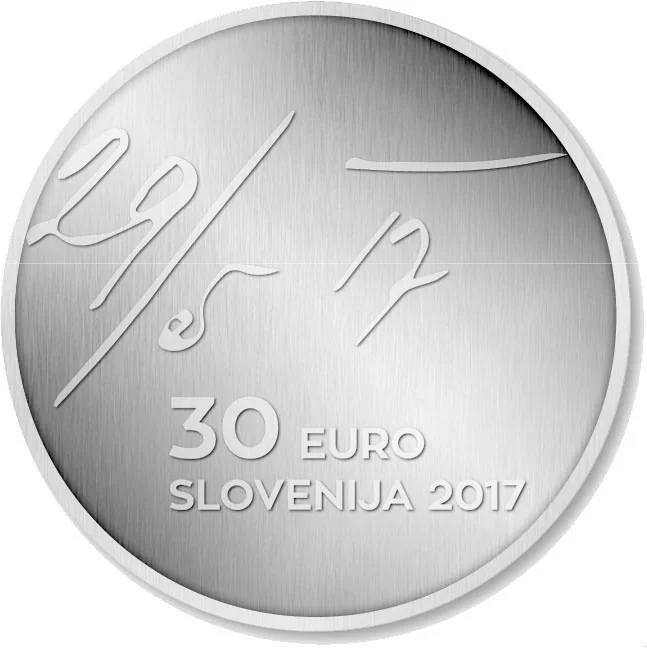
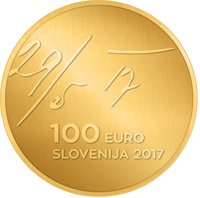
Obverse
Inscription:
29/5 17
3 EURO
SLOVENIJA 2017
3 EURO
SLOVENIJA 2017
Translation:
29 May 17
3 EURO
SLOVENIA 2017
3 EURO
SLOVENIA 2017
Script: Latin
Designer: Ana Kompara
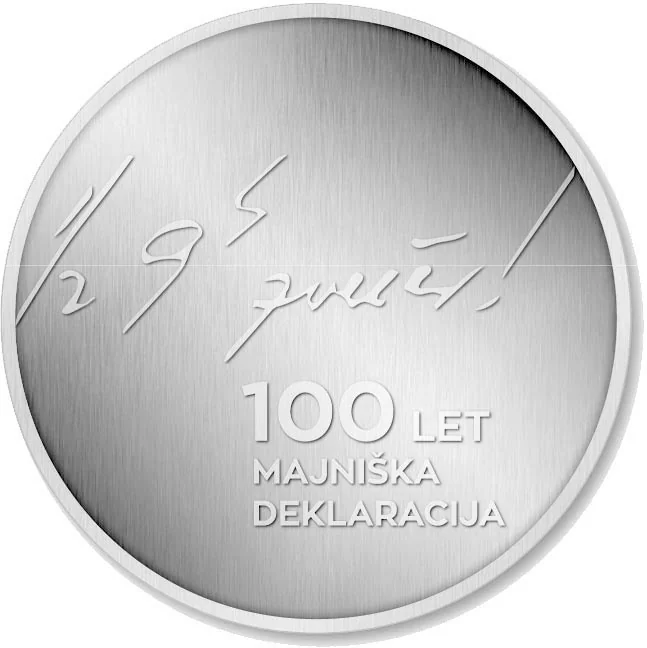
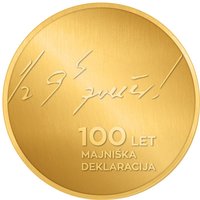
Reverse
Inscription:
½ 9h zvečer!
100 LET
MAJNIŠKA
DEKLARACIJA
100 LET
MAJNIŠKA
DEKLARACIJA
Translation:
Half past nine in the evening!
100 YEARS
OF THE MAY DECLARATION
100 YEARS
OF THE MAY DECLARATION
Script: Latin
Language: Slovenian
Designer: Ana Kompara
Edge
Mints
| Name | Mark |
|---|---|
| Kremnica | — |
Mintings
| Year | Mint Mark | Mintage | Quality | Collection |
|---|---|---|---|---|
| 2017 | — | 2,000 | Proof |
Historical background
In 2017, Slovenia remained a committed member of the Eurozone, having adopted the euro as its sole legal tender in 2007. The country's currency situation was therefore stable and fully integrated into the European Central Bank's (ECB) monetary policy framework. This provided macroeconomic stability, low transaction costs for trade (particularly with its main EU partners), and eliminated exchange rate risk, which was seen as a key pillar for the small, open, and export-oriented economy. Domestically, there was no significant political or public debate about leaving the euro, as the currency was widely accepted and seen as a symbol of Slovenia's European identity and economic maturity.
The broader economic context in 2017 was one of robust recovery and fiscal consolidation. Following a deep banking crisis and recession earlier in the decade, Slovenia's economy was growing strongly, with GDP growth exceeding 5%—one of the highest rates in the Eurozone. This growth, coupled with prudent fiscal management, allowed the government to successfully exit the European Commission's Excessive Deficit Procedure. The positive economic momentum bolstered confidence in the country's financial stability and, by extension, the benefits of its euro membership, as the central bank focused on implementing the ECB's accommodative policies to support lending and investment.
However, the euro membership also meant Slovenia had no independent monetary policy tools to address specific domestic inflationary pressures or competitiveness issues. In 2017, these concerns were muted but emerging; strong growth began to translate into tightening labor markets and rising wages. The primary currency-related discussions in policy circles therefore centered not on the euro itself, but on the necessary structural reforms to enhance productivity and ensure long-term competitiveness within the single currency area. The focus was on maintaining fiscal discipline and implementing reforms to sustain convergence with more advanced Eurozone economies, rather than on any alternative currency arrangements.
The broader economic context in 2017 was one of robust recovery and fiscal consolidation. Following a deep banking crisis and recession earlier in the decade, Slovenia's economy was growing strongly, with GDP growth exceeding 5%—one of the highest rates in the Eurozone. This growth, coupled with prudent fiscal management, allowed the government to successfully exit the European Commission's Excessive Deficit Procedure. The positive economic momentum bolstered confidence in the country's financial stability and, by extension, the benefits of its euro membership, as the central bank focused on implementing the ECB's accommodative policies to support lending and investment.
However, the euro membership also meant Slovenia had no independent monetary policy tools to address specific domestic inflationary pressures or competitiveness issues. In 2017, these concerns were muted but emerging; strong growth began to translate into tightening labor markets and rising wages. The primary currency-related discussions in policy circles therefore centered not on the euro itself, but on the necessary structural reforms to enhance productivity and ensure long-term competitiveness within the single currency area. The focus was on maintaining fiscal discipline and implementing reforms to sustain convergence with more advanced Eurozone economies, rather than on any alternative currency arrangements.
💎 Extremely Rare