

5 kronor – Sweden
Add to wishlist
Sweden
Context
Years: 1972–1973
Issuer: Sweden
Ruler: Gustaf VI Adolf
Currency:
(since 1873)
Demonetization: 30 June 2017
Total mintage: 22,875,000
Material
References
KM: #
Numista: #6195
Value
Exchange value: 5 SEK
Inflation-adjusted value: 47.30 SEK
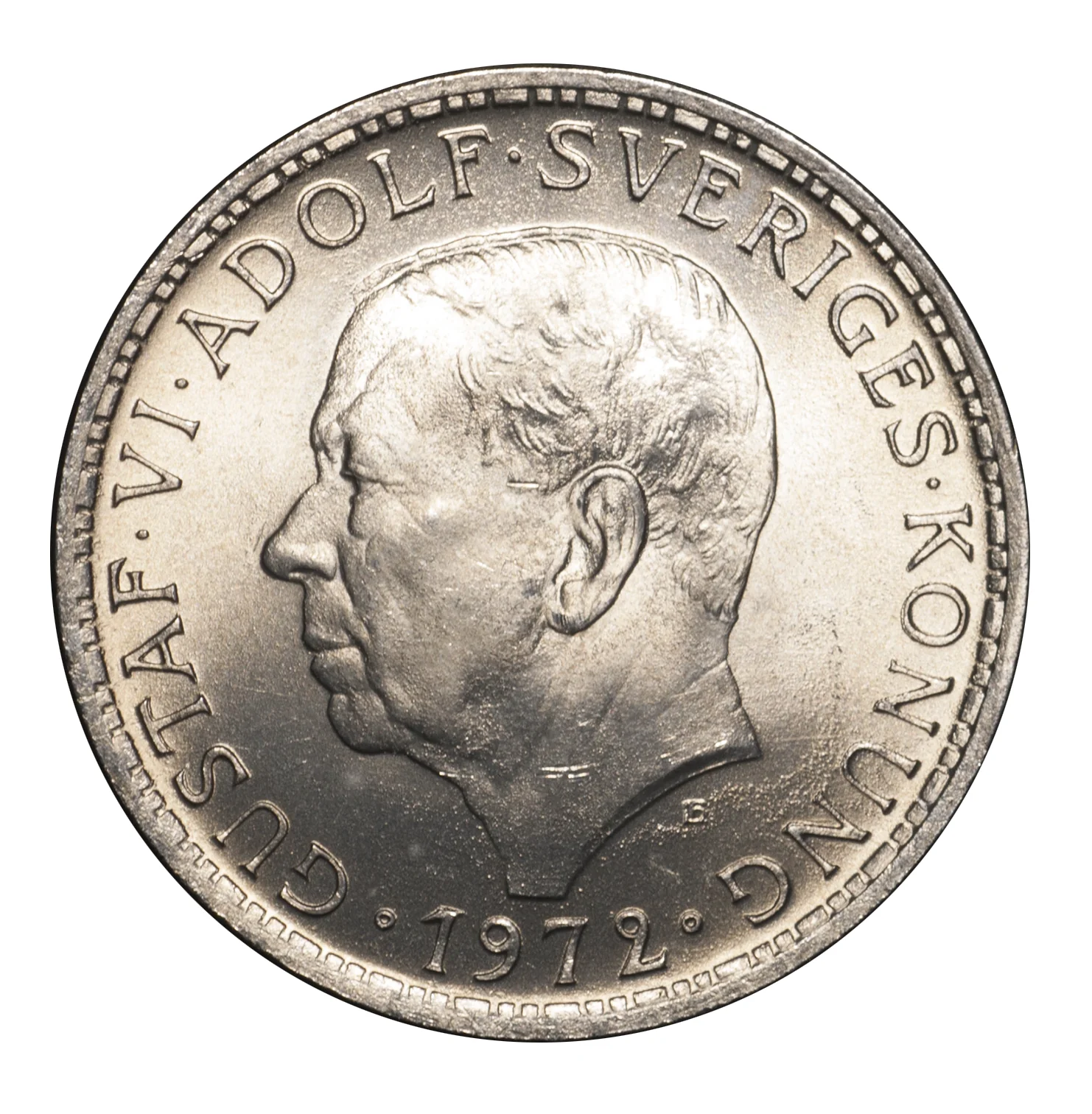
Obverse
Description:
King Gustaf VI facing left. Date around rim.
Inscription:
GUSTAF · VI · ADOLF · SVERIGES · KONUNG
Lh
⸰ 1972 ⸰
Lh
⸰ 1972 ⸰
Translation:
GUSTAF VI ADOLF SWEDEN'S KING
1972
1972
Script: Latin
Language: Swedish
Engraver: Léo Holmgren
Reverse
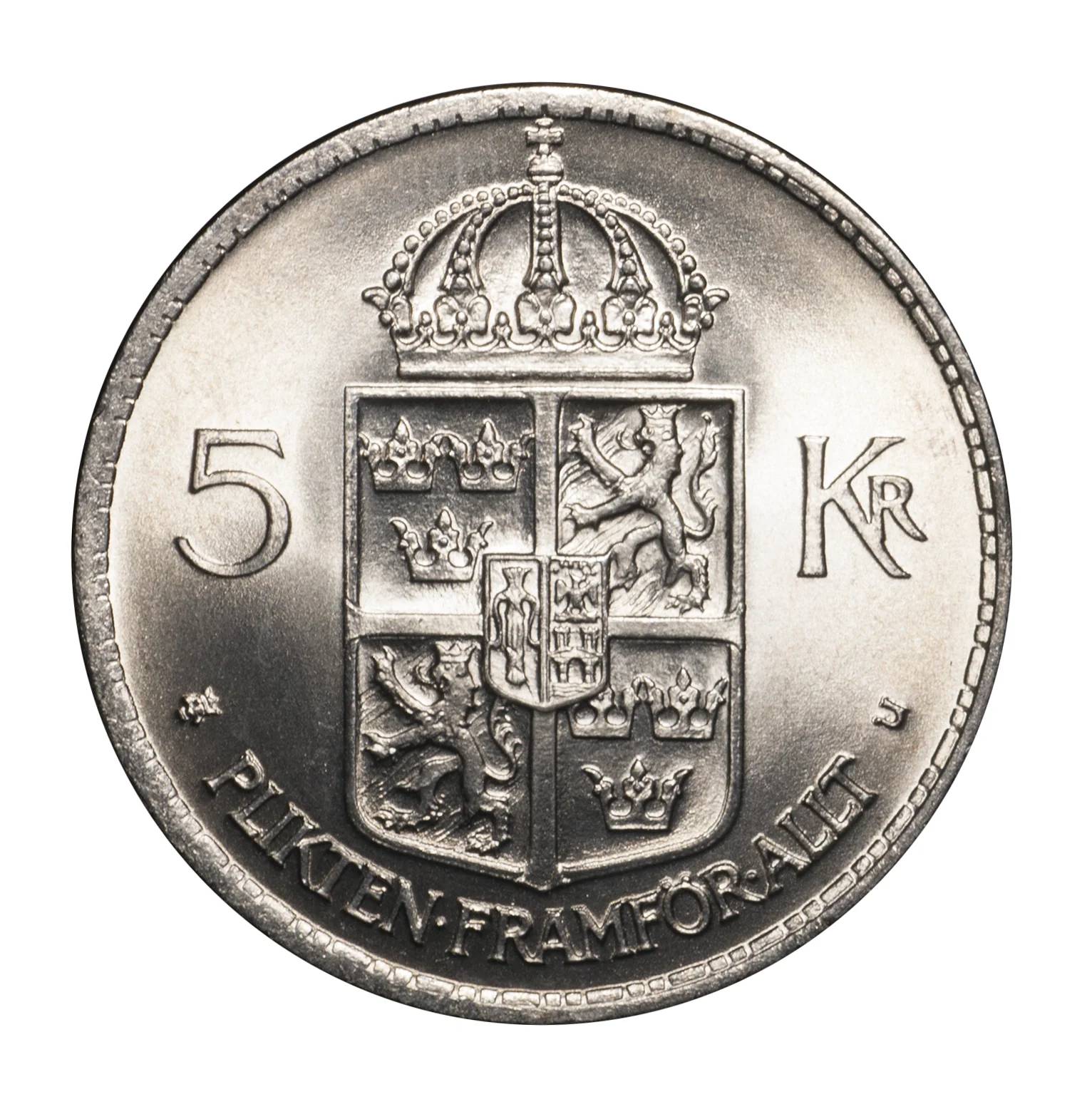
Description:
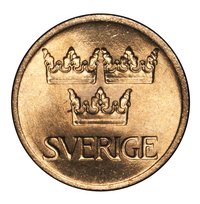
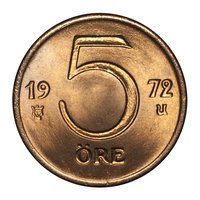
Sweden's coat of arms splits the value. Below, the King's motto is flanked by the mintmark and the Riksbank Governor's initial.
Inscription:
5 KR
PLIKTEN·FRAMFÖR·ALLT u
PLIKTEN·FRAMFÖR·ALLT u
Translation:
Duty Before All
Script: Latin
Language: Swedish
Engraver: Léo Holmgren
Edge
Plain
Mints
| Name | Mark |
|---|---|
| Kungliga Myntet | — |
Mintings
| Year | Mint Mark | Mintage | Quality | Collection |
|---|---|---|---|---|
| 1972 | — | 21,736,000 | ||
| 1973 | — | 1,139,000 |
Historical background
In 1972, Sweden's currency situation was defined by its participation in the European "snake in the tunnel" arrangement, a collective effort to limit exchange rate fluctuations in the wake of the collapsed Bretton Woods system. Sweden, along with several other European nations, pegged the Swedish krona (SEK) to a narrow band against the US dollar (the "tunnel"), while maintaining an even narrower band of fluctuation among the participating European currencies themselves (the "snake"). This was a strategic choice to promote trade stability with key European partners, particularly West Germany, and to combat imported inflation.
Domestically, this period was marked by the enduring influence of the "Rehn–Meidner model," a cornerstone of Swedish economic policy that emphasized full employment, solidarity wages, and active labor market policies. Maintaining a fixed exchange rate was seen as crucial for controlling inflation in this context, as it imposed discipline and prevented competitive devaluations. However, this commitment often conflicted with other domestic goals, requiring tight monetary policy and occasional foreign exchange interventions by the Riksbank to defend the krona's peg.
The arrangement proved challenging to sustain. The global economic environment was turbulent, with the 1971 Nixon Shock and the 1973 oil crisis creating severe inflationary pressures and currency instability worldwide. The specific demands of the snake often forced Sweden to follow interest rate policies set by stronger economies like Germany, which were not always suitable for its own economic cycle. This tension would culminate in 1973, when Sweden, facing capital flight and economic strain, made the pivotal decision to withdraw from the snake and instead peg the krona to a trade-weighted currency basket, seeking greater autonomy in its monetary policy.
Domestically, this period was marked by the enduring influence of the "Rehn–Meidner model," a cornerstone of Swedish economic policy that emphasized full employment, solidarity wages, and active labor market policies. Maintaining a fixed exchange rate was seen as crucial for controlling inflation in this context, as it imposed discipline and prevented competitive devaluations. However, this commitment often conflicted with other domestic goals, requiring tight monetary policy and occasional foreign exchange interventions by the Riksbank to defend the krona's peg.
The arrangement proved challenging to sustain. The global economic environment was turbulent, with the 1971 Nixon Shock and the 1973 oil crisis creating severe inflationary pressures and currency instability worldwide. The specific demands of the snake often forced Sweden to follow interest rate policies set by stronger economies like Germany, which were not always suitable for its own economic cycle. This tension would culminate in 1973, when Sweden, facing capital flight and economic strain, made the pivotal decision to withdraw from the snake and instead peg the krona to a trade-weighted currency basket, seeking greater autonomy in its monetary policy.

🌱 Very Common