

Mints
| Name | Mark |
|---|---|
| Potosi | — |
Mintings
| Year | Mint Mark | Mintage | Quality | Collection |
|---|---|---|---|---|
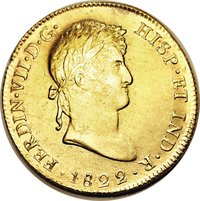
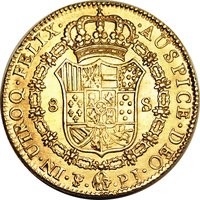
| 1822 | PJ | — | ||
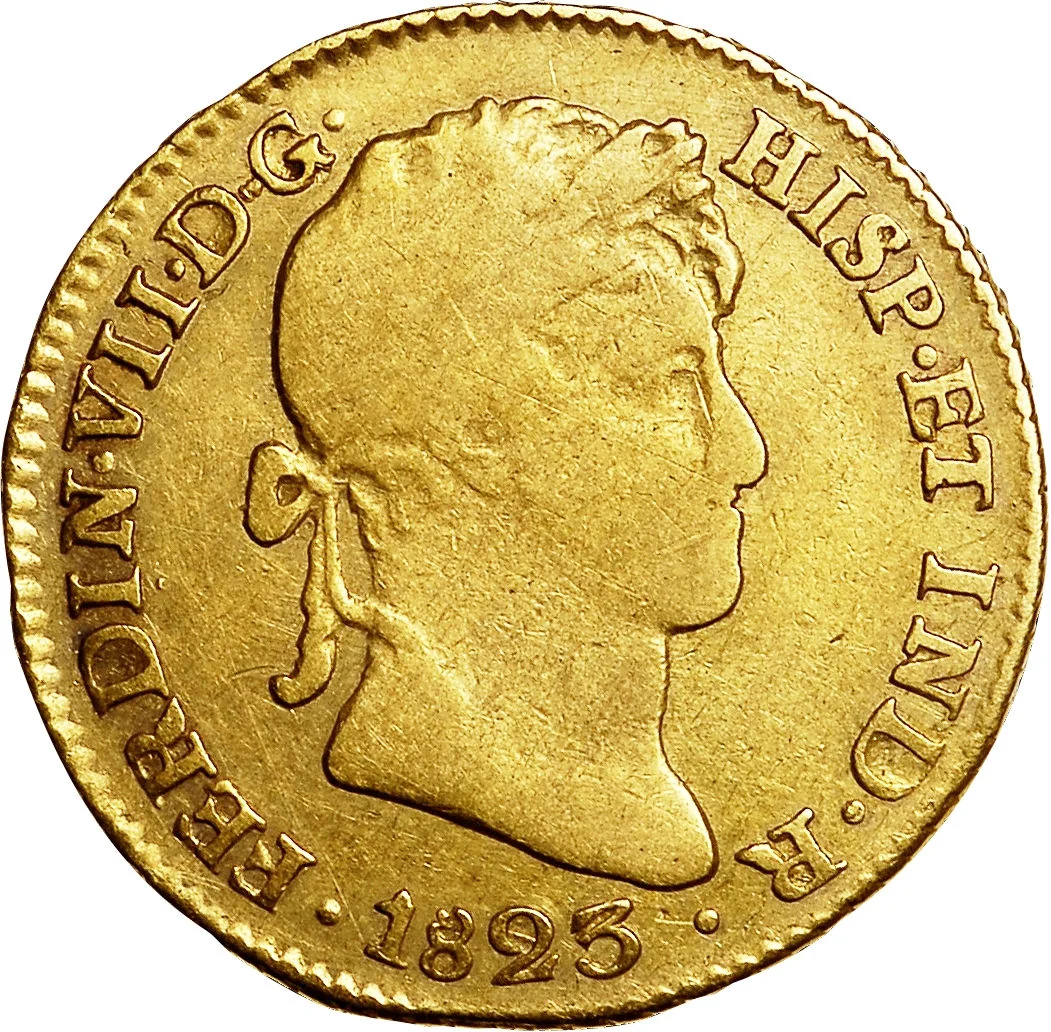
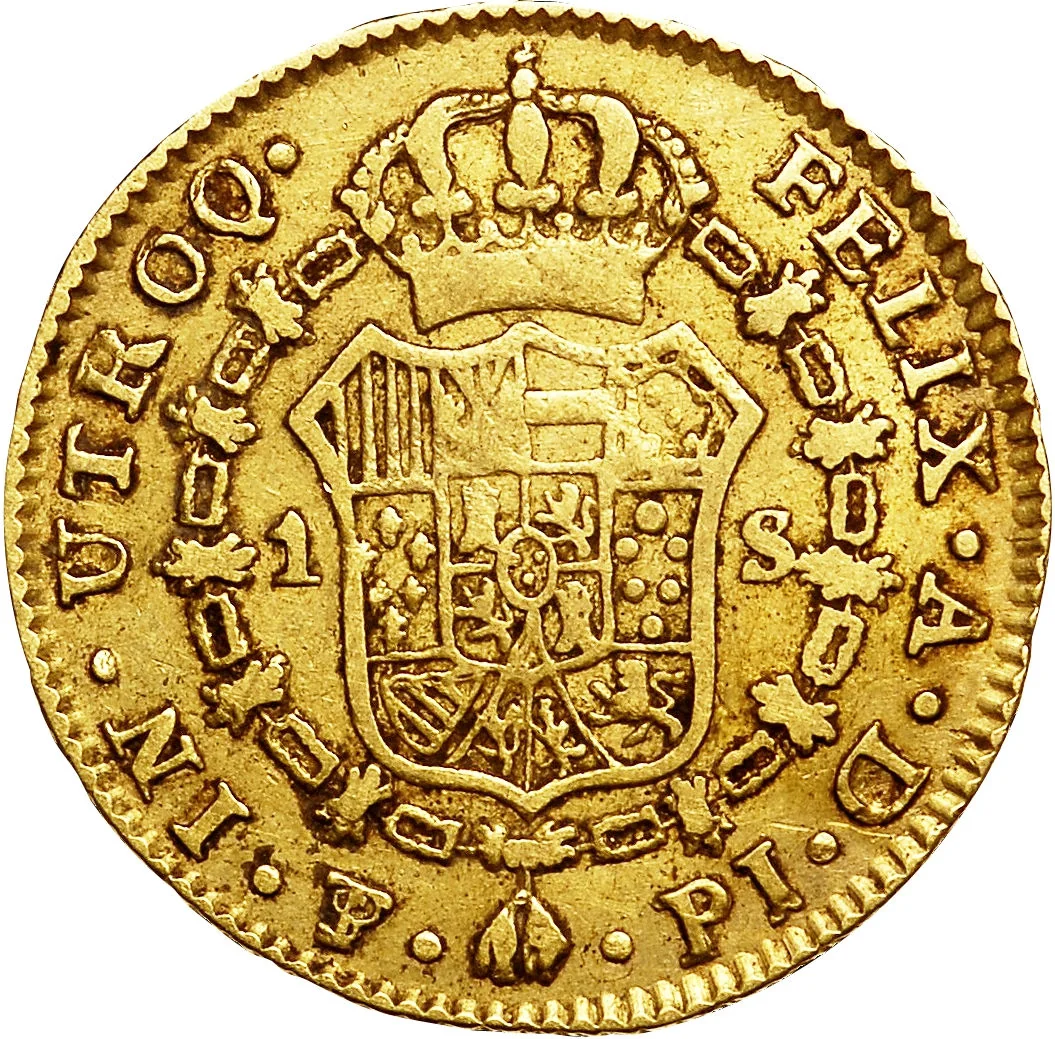
| 1823 | PJ | — | ||
| 1824 | PJ | — |
Historical background
In 1822, Bolivia did not yet exist as an independent nation; it was a region known as Upper Peru, still under the control of the Spanish Royalists during the final, chaotic years of the Wars of Independence (1809-1825). The currency situation was therefore a direct extension of the collapsing colonial monetary system. The primary circulating coin was the Spanish silver real and its higher-value unit, the peso (or "piece of eight," worth 8 reales). However, years of relentless warfare had severely disrupted the silver mining industry in Potosí, the region's economic heart, leading to a scarcity of newly minted coinage.
This scarcity was compounded by significant fiscal pressures. The Royalist authorities, funding a costly war effort, resorted to issuing crude and often devaled copper coinage (known as moneda macuquina or señoreaje) to pay troops and cover expenses. Furthermore, they circulated paper money, or vales, which were essentially promissory notes. These measures led to a complex and unstable monetary environment where the value of money was highly volatile, trust in paper instruments was low, and a variety of older, clipped, and foreign coins circulated at fluctuating rates.
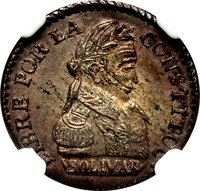
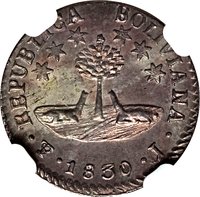
Consequently, the monetary landscape of 1822 was one of fragmentation and uncertainty. The ideal of a standardized silver peso competed with the reality of depreciated copper and dubious paper, creating hardship for daily commerce. This instability would persist until after independence in 1825, when the new Republic of Bolivia, named for Simón Bolívar, would eventually confront the monumental task of establishing its own national currency and mint to bring order to its finances.
This scarcity was compounded by significant fiscal pressures. The Royalist authorities, funding a costly war effort, resorted to issuing crude and often devaled copper coinage (known as moneda macuquina or señoreaje) to pay troops and cover expenses. Furthermore, they circulated paper money, or vales, which were essentially promissory notes. These measures led to a complex and unstable monetary environment where the value of money was highly volatile, trust in paper instruments was low, and a variety of older, clipped, and foreign coins circulated at fluctuating rates.
Consequently, the monetary landscape of 1822 was one of fragmentation and uncertainty. The ideal of a standardized silver peso competed with the reality of depreciated copper and dubious paper, creating hardship for daily commerce. This instability would persist until after independence in 1825, when the new Republic of Bolivia, named for Simón Bolívar, would eventually confront the monumental task of establishing its own national currency and mint to bring order to its finances.
✨ Legendary