Logo Title
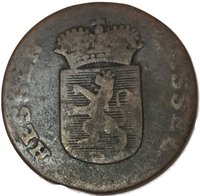
obverse
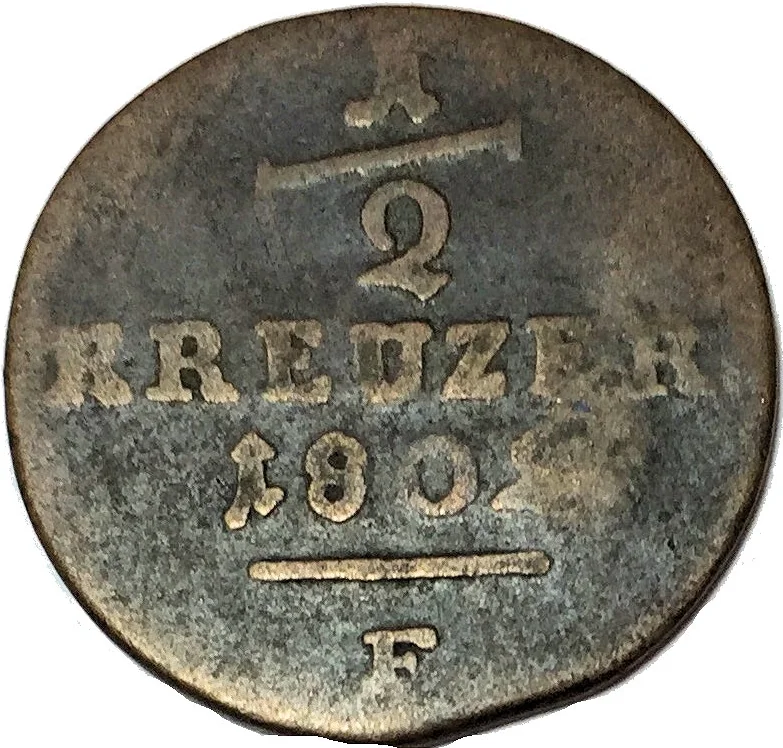
reverse

½ Kreuzer – Landgraviate of Hesse-Cassel

Context
Years: 1801–1803
Ruler: William IX
Currency:
Demonetized: Yes
Material
Diameter: 20 mm
Weight: 2.93 g
Shape: Round
Composition: Copper
Magnetic: No
Alignment: Medal alignment
Obverse
OBVERSE ↑
flip
Reverse
REVERSE ↑
References
KM: #Click to copy to clipboard551
Numista: #111414

Obverse

Description:
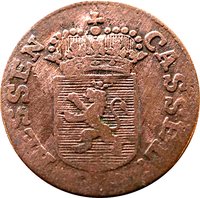
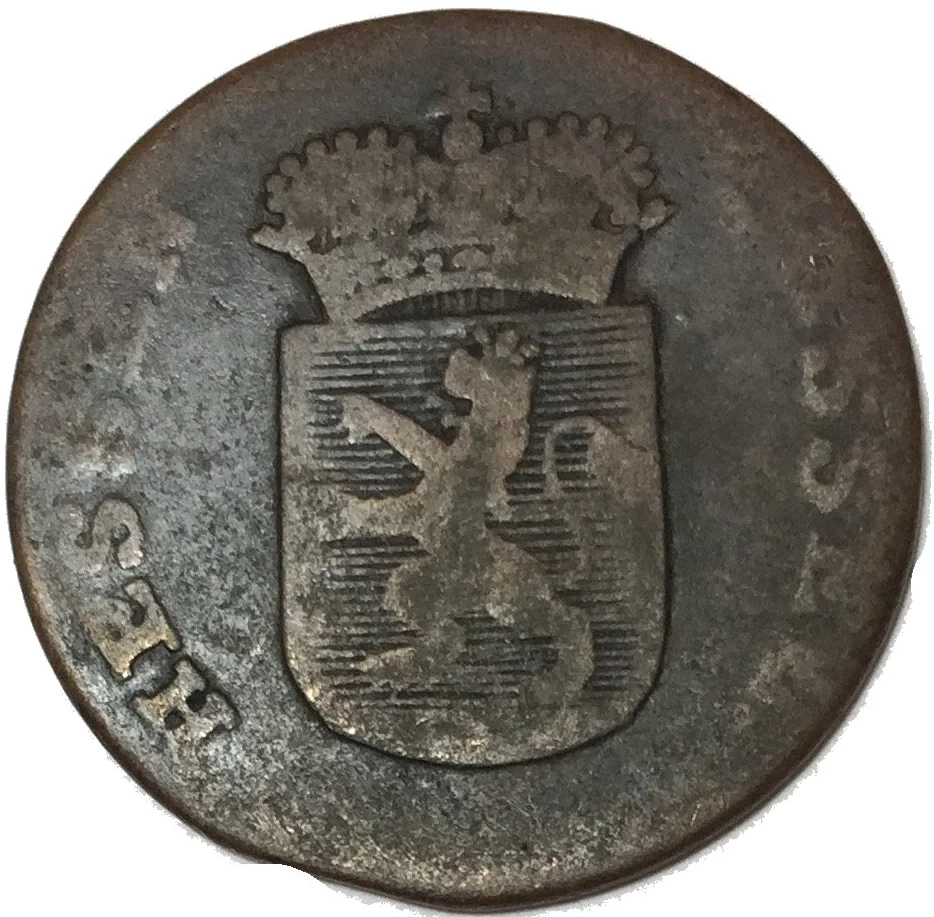
Crowned lion on shield, flanked by lettering.
Inscription:
HESSEN CASSEL
Script: Latin

Reverse

Description:
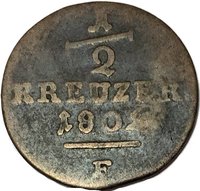
Denomination, date, and mintmark inscribed on four lines.
Inscription:
1/2

KREUZER

1802

F
Script: Latin

Edge

Mintings

YearMint MarkMintageQualityCollection
1801F
1802F
1803F

Historical background

In 1801, the Landgraviate of Hesse-Cassel found itself in a complex and challenging monetary situation, typical of the Holy Roman Empire's fragmented political landscape. The territory did not have a unified, sovereign currency. Instead, its monetary system was a confusing mosaic of various coins, both domestic and foreign. Officially, the landgravial mint in Kassel produced its own Taler and smaller denominations, but these circulated alongside a plethora of coins from neighboring German states, as well as French, Dutch, and Austrian currency brought in through trade and military movements. This proliferation created chronic problems of exchange rate instability and uncertainty in everyday commerce.

The core of the issue lay in the disparity between the official Reichsthaler, a theoretical accounting unit defined by imperial law, and the actual physical coins in circulation, which had varying silver content and value. Furthermore, the recent upheavals of the French Revolutionary Wars had severely disrupted the regional economy. Hesse-Cassel, having been a lucrative supplier of mercenary troops (Soldatenhandel), saw its finances strained by the conflict, leading to occasional debasement of its coinage to raise short-term revenue. This practice further eroded public trust in the locally minted currency.

Consequently, merchants and the public often preferred "hard" foreign currencies with reliable silver content, such as the Prussian Thaler, over the landgravial issues. This effectively created a two-tiered system where stable foreign coins were hoarded or used for large transactions, while weaker domestic coins fueled local trade and inflation. The situation demanded constant official ordinances to fix exchange rates, but these were largely ineffective, leaving Hesse-Cassel's economy in a state of monetary confusion on the eve of the Napoleonic reorganizations that would soon dissolve the Empire itself.
💎 Extremely Rare