

20 escudos – Mozambique
Add to wishlist
Mozambique
Context
Years: 1971–1972
Issuer: Mozambique
Period:
(1951—1975)
Currency:
(1911—1974)
Demonetization: 1 January 1980
Total mintage: 2,316,000
Material
References
KM: #
Numista: #6186
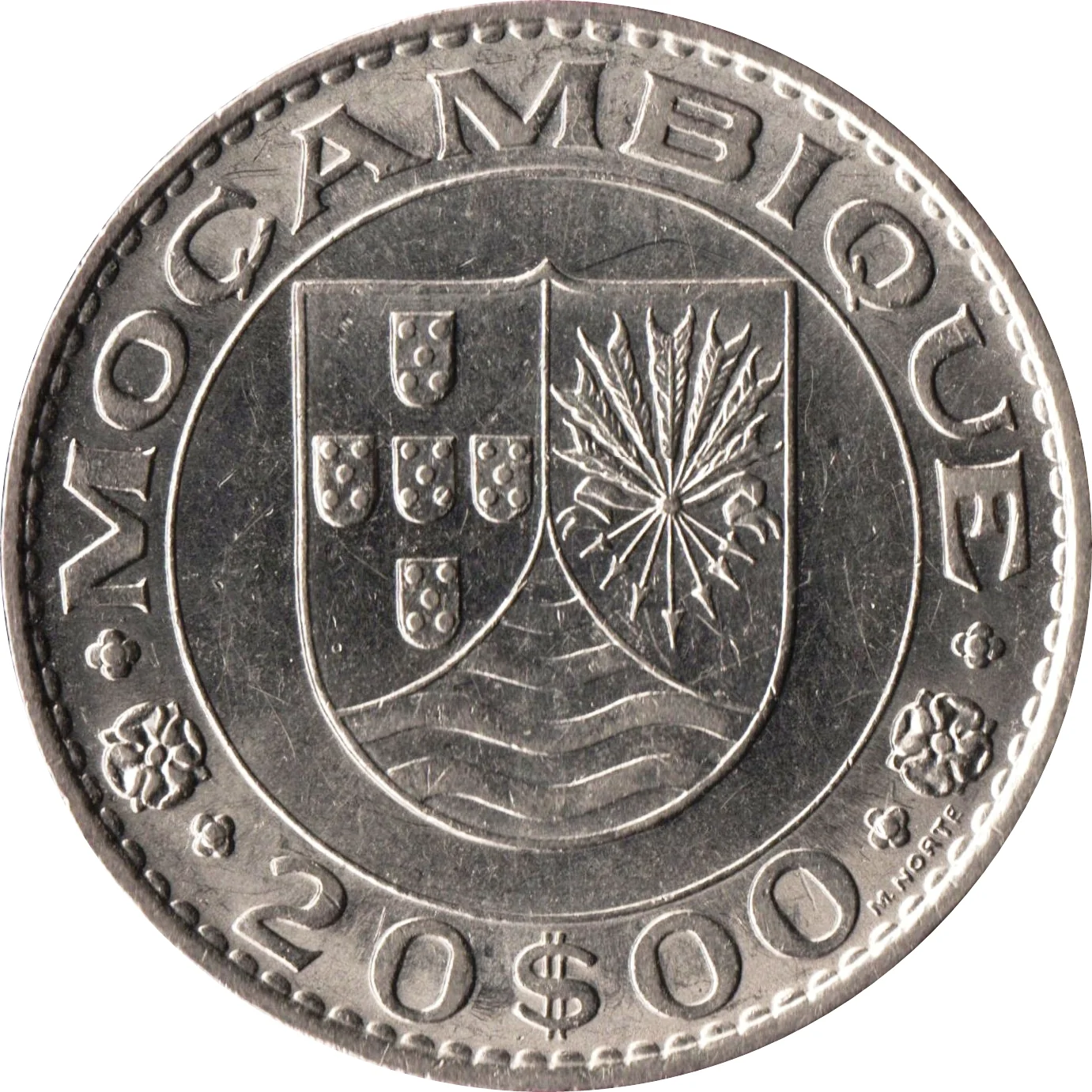
Obverse
Description:
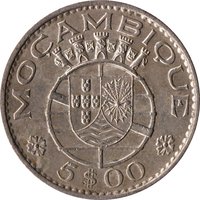
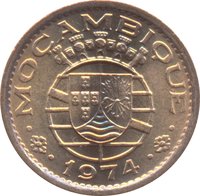
Portuguese Mozambique coat of arms, value below.
Inscription:
·MOÇAMBIQUE·
·20$00·
M. NORTE
·20$00·
M. NORTE
Translation:
MOZAMBIQUE
20.00 meticais
M. NORTE
20.00 meticais
M. NORTE
Script: Latin
Language: Portuguese
Engraver: Marcelino Norte de Almeida
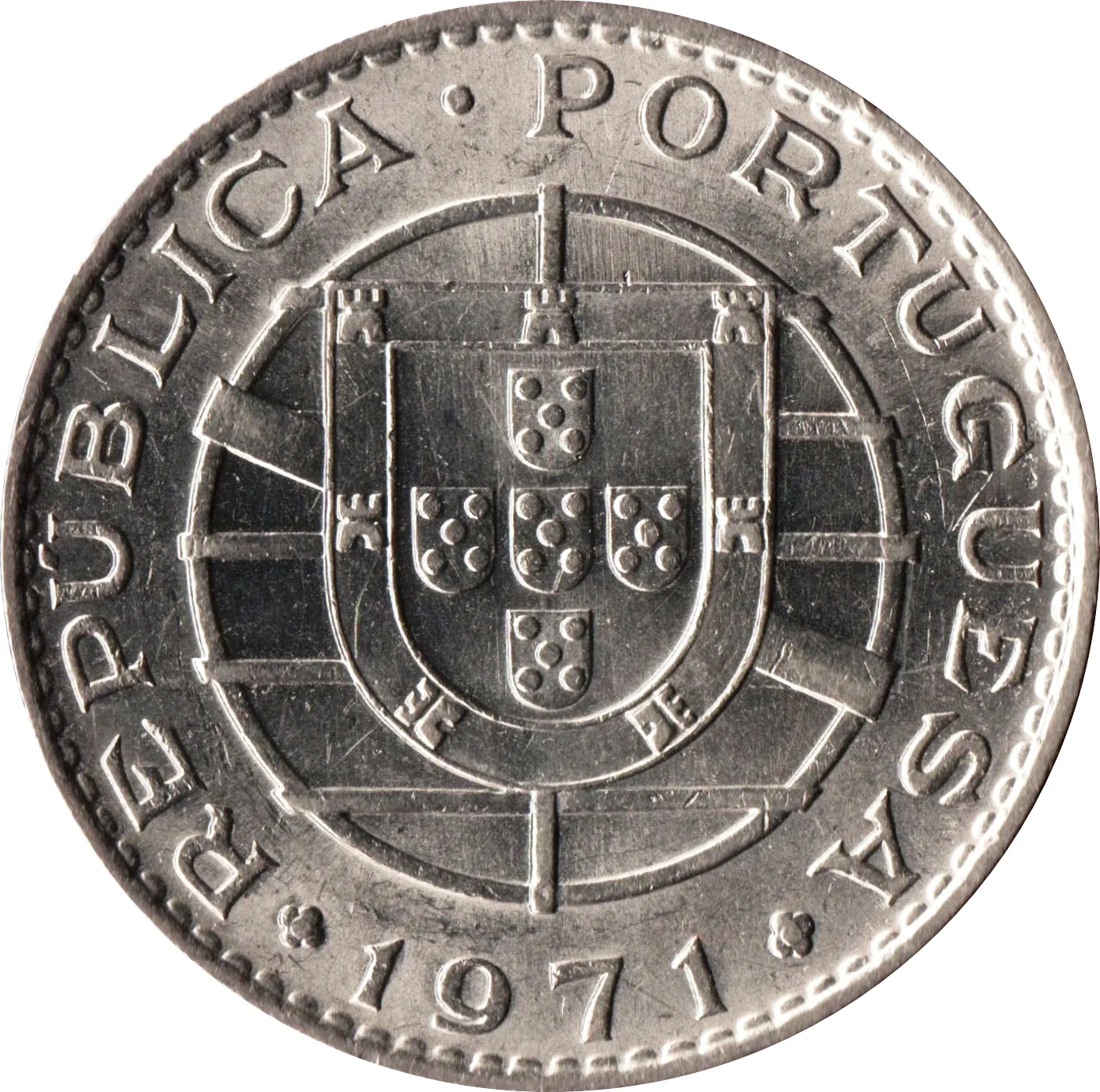
Reverse
Description:
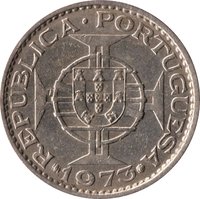
Portuguese coat of arms on a globe, date below.
Inscription:
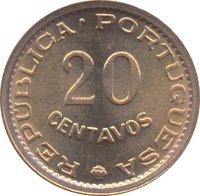
REPÚBLICA·PORTUGUESA
·1971·
·1971·
Translation:
PORTUGUESE REPUBLIC
1971
1971
Script: Latin
Language: Portuguese
Engraver: Marcelino Norte de Almeida
Edge
Reeded
Mintings
| Year | Mint Mark | Mintage | Quality | Collection |
|---|---|---|---|---|
| 1971 | — | 1,158,000 | ||
| 1972 | — | 1,158,000 |
Historical background
In 1971, Mozambique was a Portuguese overseas province, and its currency situation was directly governed by Lisbon. The official currency was the Portuguese escudo (PTE), which circulated interchangeably with the Mozambican escudo (MZE). While the Mozambican escudo had its own banknotes and coins issued by the Banco Nacional Ultramarino, it was pegged at par (1:1) with the metropolitan escudo and was not an independent currency. This system tightly integrated Mozambique's economy and monetary policy with that of Portugal, ensuring financial control remained with the colonial power.
The economy was primarily structured to serve Portuguese interests and the colonial project, focusing on agricultural exports (like cotton, sugar, and cashews), raw materials, and providing a market for Portuguese goods. The fixed parity with the Portuguese escudo facilitated this exchange but also meant Mozambique had little monetary autonomy. Inflation and economic conditions in Portugal directly impacted Mozambique, and the currency's value was ultimately tied to the performance and policies of the European metropole rather than local economic realities.
This period represented the final phase of colonial monetary policy, which would persist until the Carnation Revolution in Portugal in 1974 set in motion the process for Mozambican independence. Following independence in 1975, the new government would move to establish a sovereign currency, initially the Mozambican escudo (still using the name but now separate) and later, in 1980, the metical (MZM), to assert national economic control and break from the colonial financial system.
The economy was primarily structured to serve Portuguese interests and the colonial project, focusing on agricultural exports (like cotton, sugar, and cashews), raw materials, and providing a market for Portuguese goods. The fixed parity with the Portuguese escudo facilitated this exchange but also meant Mozambique had little monetary autonomy. Inflation and economic conditions in Portugal directly impacted Mozambique, and the currency's value was ultimately tied to the performance and policies of the European metropole rather than local economic realities.
This period represented the final phase of colonial monetary policy, which would persist until the Carnation Revolution in Portugal in 1974 set in motion the process for Mozambican independence. Following independence in 1975, the new government would move to establish a sovereign currency, initially the Mozambican escudo (still using the name but now separate) and later, in 1980, the metical (MZM), to assert national economic control and break from the colonial financial system.
🌱 Common