

50 groszys – Poland
Add to wishlist
Poland
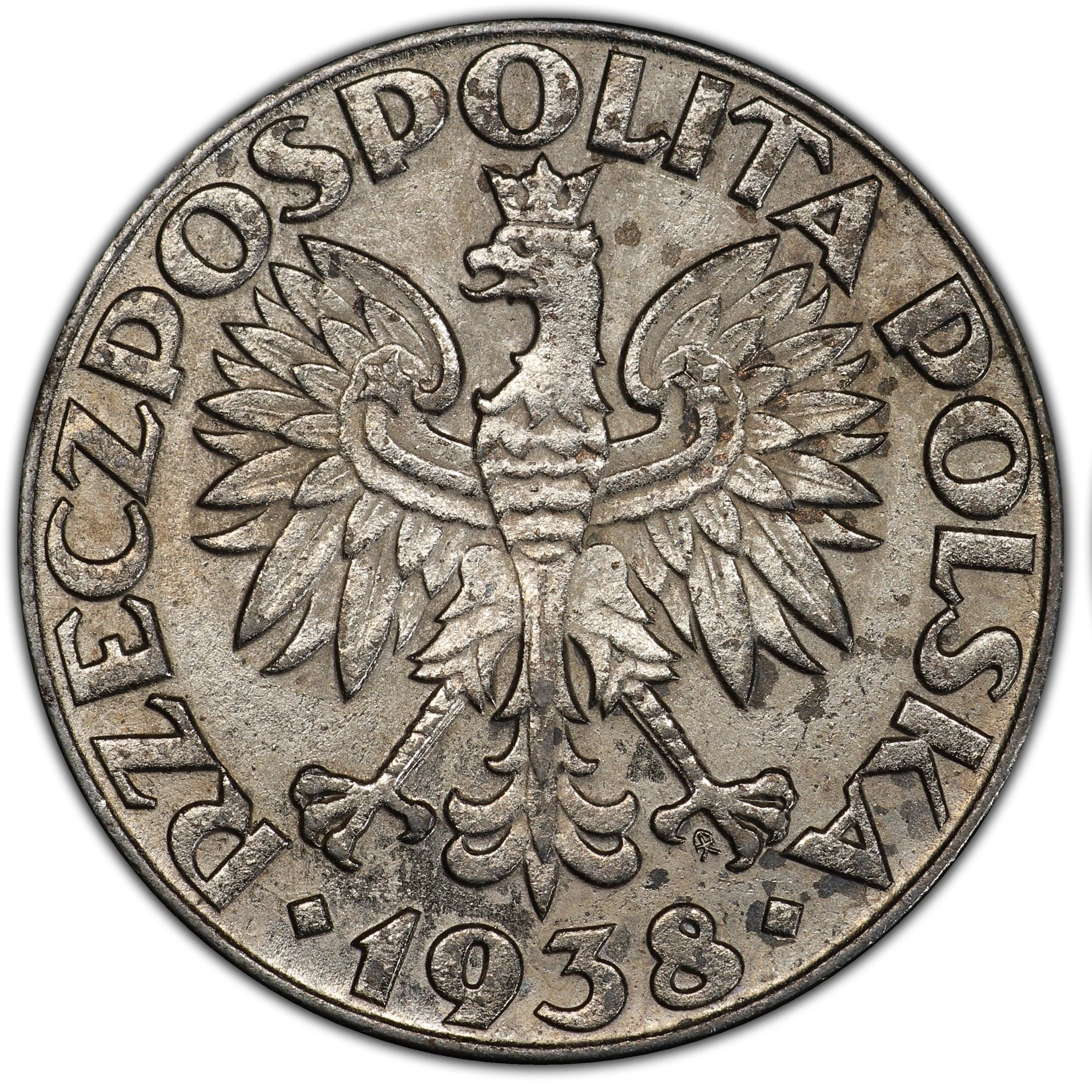
Obverse
Description:
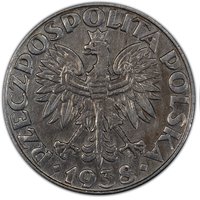
Crowned eagle with outstretched wings, date beneath.
Inscription:
RZECZPOSPOLITA POLSKA
♦1938♦
♦1938♦
Script: Latin
Engraver: Wojciech Jastrzębowski
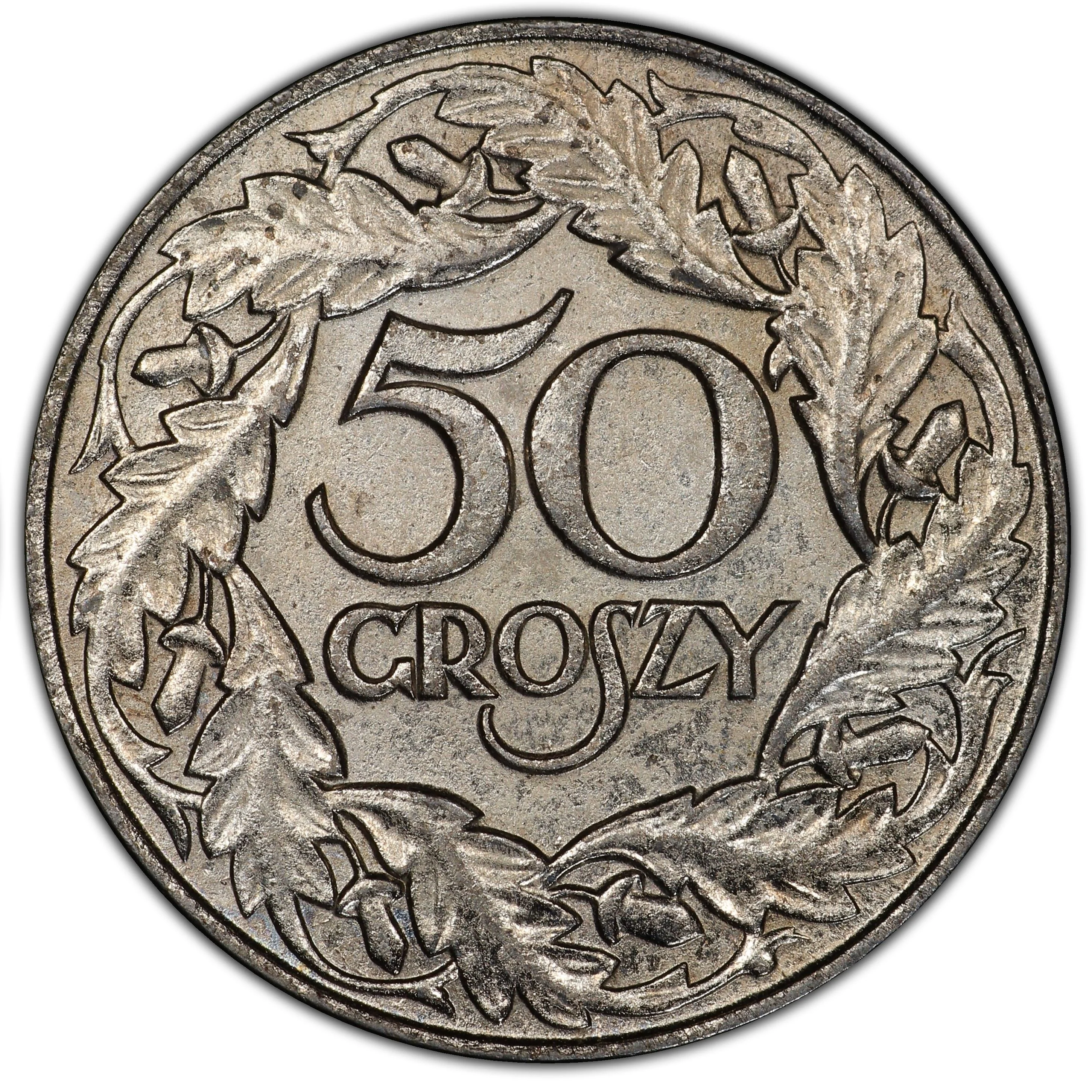
Reverse
Description:
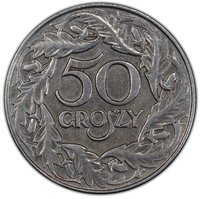
Core with eight overlapping leaves
Inscription:
50
GROSZY
GROSZY
Script: Latin
Engraver: Wojciech Jastrzębowski
Edge
Plain
Mintings
| Year | Mint Mark | Mintage | Quality | Collection |
|---|---|---|---|---|
| 1938 | W | 32,000,000 |
Historical background
In 1938, the currency situation in Poland was defined by the złoty, which had been successfully stabilized a decade earlier under the economic leadership of Prime Minister Eugeniusz Kwiatkowski and Finance Minister Władysław Grabski. Following the hyperinflation of the early 1920s, the 1924 currency reform introduced a new złoty, backed by gold and pegged to a fixed exchange rate. This reform, managed by the newly established Bank Polski as an independent central bank, restored domestic and international confidence, allowing Poland to attract foreign loans and investment throughout much of the interwar period.
By the late 1930s, however, the Polish economy and its currency were under significant strain. The global Great Depression had severely impacted Poland, leading to a sharp decline in agricultural and industrial exports. While the złoty's gold peg was formally maintained, the state increasingly relied on exchange controls and import restrictions to conserve dwindling gold and foreign currency reserves. These measures, part of a broader policy of etatism and the development of the Central Industrial Region (COP), aimed to protect the currency and foster self-sufficiency, but they also limited economic flexibility.
Ultimately, the currency stability of 1938 was precarious and largely artificial, sustained by government intervention rather than robust economic fundamentals. The looming threat of war with Nazi Germany further dictated economic policy, as resources were funneled into military preparation. The system of controls proved inadequate when war erupted in September 1939, leading to the rapid collapse of the interwar złoty and its replacement by occupation currencies, ending an era of hard-won but fragile monetary stability.
By the late 1930s, however, the Polish economy and its currency were under significant strain. The global Great Depression had severely impacted Poland, leading to a sharp decline in agricultural and industrial exports. While the złoty's gold peg was formally maintained, the state increasingly relied on exchange controls and import restrictions to conserve dwindling gold and foreign currency reserves. These measures, part of a broader policy of etatism and the development of the Central Industrial Region (COP), aimed to protect the currency and foster self-sufficiency, but they also limited economic flexibility.
Ultimately, the currency stability of 1938 was precarious and largely artificial, sustained by government intervention rather than robust economic fundamentals. The looming threat of war with Nazi Germany further dictated economic policy, as resources were funneled into military preparation. The system of controls proved inadequate when war erupted in September 1939, leading to the rapid collapse of the interwar złoty and its replacement by occupation currencies, ending an era of hard-won but fragile monetary stability.
🌱 Common