

¼ Dollar – United States
Circulating commemorative coins
Commemoration: South Carolina
United States
Context
Year: 2000
Issuer: United States 
Period:
(since 1776)
Currency:
(since 1785)
Subdivision: ¼ Dollar = 25 Cents
Total mintage: 1,312,804,172
Material
References
KM: #Click to copy to clipboard307
Numista: #611
Value
Exchange value: ¼ USD = $0.25
Inflation-adjusted value: 0.48 USD
Obverse
Description:
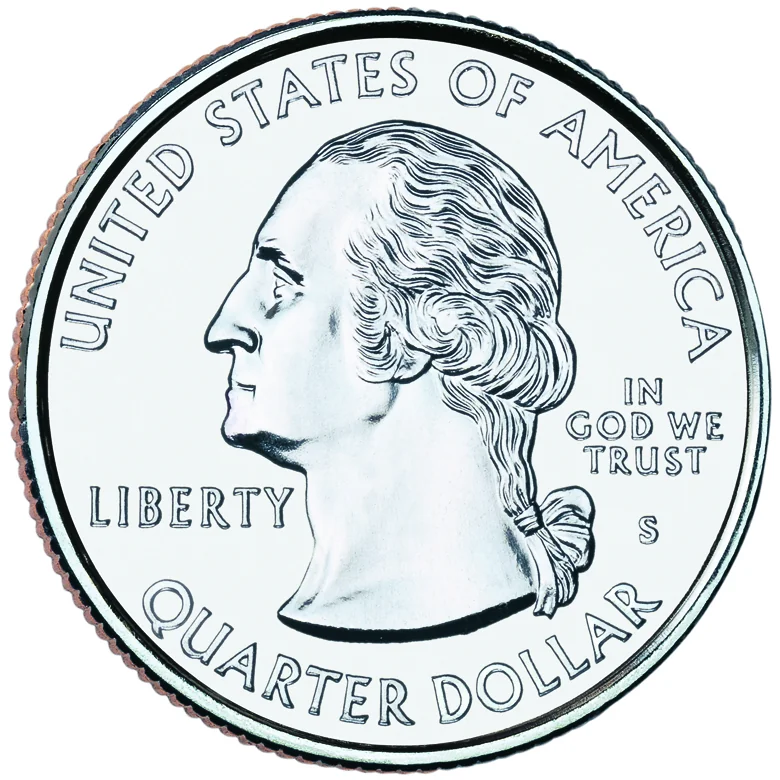
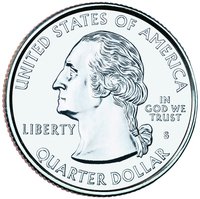
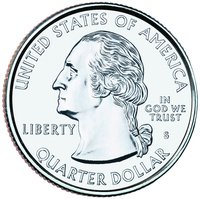
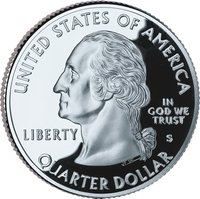
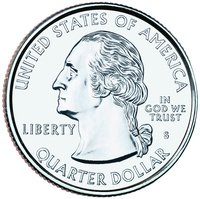
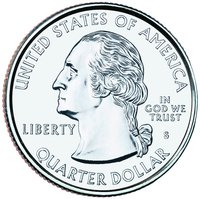
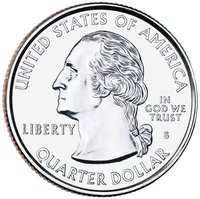
Left-profile portrait of George Washington with "IN GOD WE TRUST" and "LIBERTY," surrounded by the face value and "UNITED STATES OF AMERICA."
Inscription:
UNITED STATES OF AMERICA
IN
GOD WE
TRUST
LIBERTY P
JF WC
QUARTER DOLLAR
IN
GOD WE
TRUST
LIBERTY P
JF WC
QUARTER DOLLAR
Script: Latin
Engravers: John Flanagan, William Cousins
Reverse
Description:
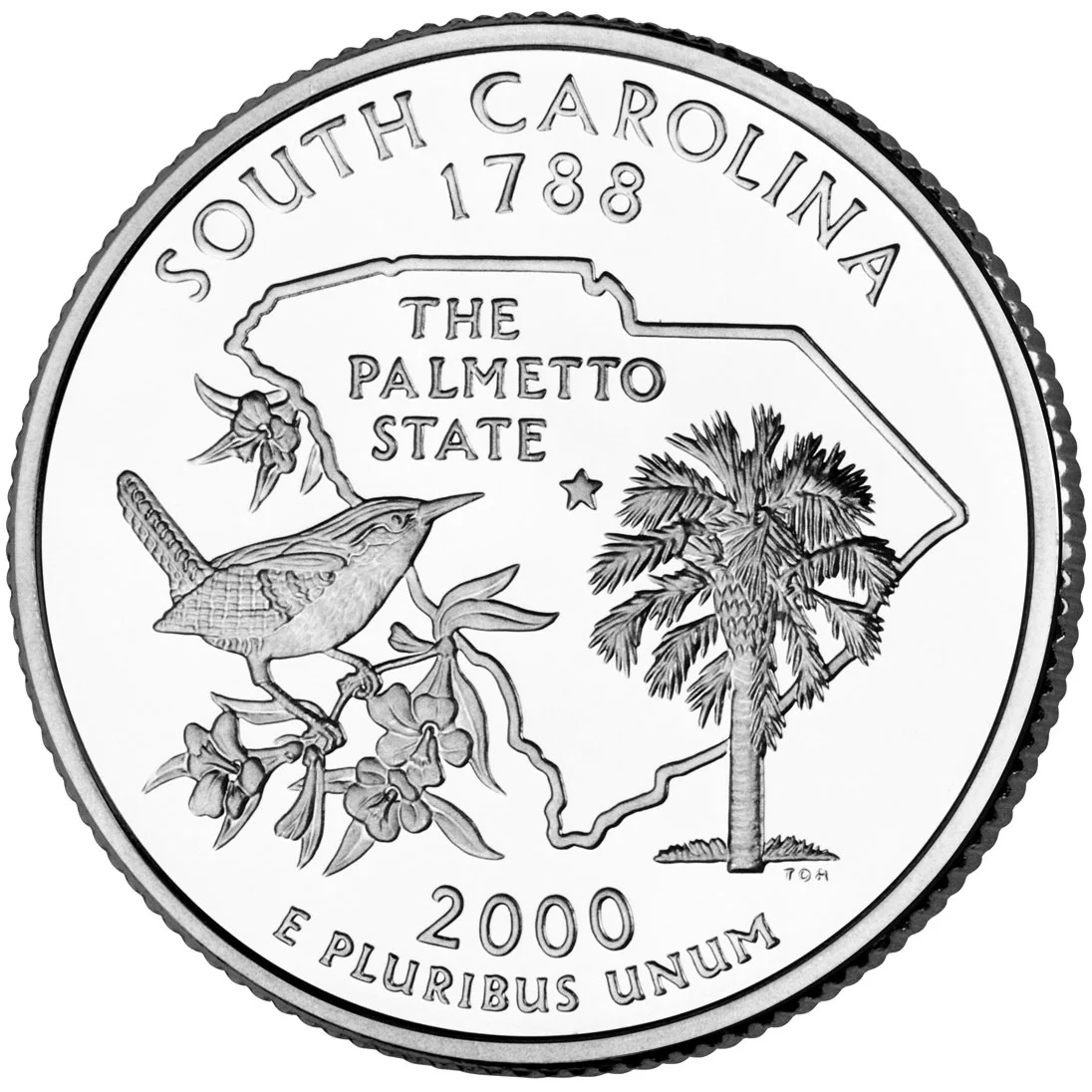
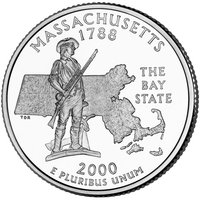
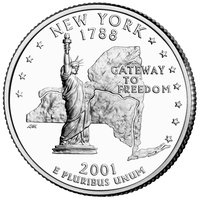
A Carolina wren on a yellow jessamine branch, with a palmetto tree and the state outline. It includes "SOUTH CAROLINA," "1788," "THE PALMETTO STATE," and "E PLURIBUS UNUM."
Inscription:
SOUTH CAROLINA
1788
THE
PALMETTO
STATE
TDR
2000
E PLURIBUS UNUM
1788
THE
PALMETTO
STATE
TDR
2000
E PLURIBUS UNUM
Translation:
SOUTH CAROLINA
1788
THE
PALMETTO
STATE
TDR
2000
OUT OF MANY, ONE
1788
THE
PALMETTO
STATE
TDR
2000
OUT OF MANY, ONE
Script: Latin
Engraver: Thomas D. Rogers
Edge
Reeded
Mints
| Name | Mark |
|---|---|
| United States Mint of Denver | D |
| United States Mint of Philadelphia | P |
| United States Mint of San Francisco | S |
Historical background
The United States entered the year 2000 in a period of robust economic health and monetary confidence, with the U.S. dollar firmly established as the world's dominant reserve currency. The "Great Moderation"—a period of stable growth and low inflation—was in full effect, bolstered by the fiscal surpluses of the late Clinton administration and the perceived successful monetary policy of the Federal Reserve under Chairman Alan Greenspan. The strong dollar policy, explicitly maintained by Treasury Secretary Robert Rubin and continued by his successor Lawrence Summers, was a cornerstone of U.S. economic strategy, promoting global trade and investment flows into American financial markets.
However, this strength presented its own challenges. A persistently high dollar made U.S. exports more expensive, contributing to a growing current account deficit and fueling concerns about domestic manufacturing competitiveness. The era was also marked by a significant technological transition in currency itself: the introduction of the redesigned Series 1996 currency, featuring larger, off-center portraits to deter counterfeiting, was fully circulating. More symbolically, the year saw the final minting of the Sacagawea dollar coin, a government attempt to promote a dollar coin that ultimately failed to gain public traction against the entrenched one-dollar bill.
Beneath this surface stability, nascent pressures were building. The dot-com bubble reached its peak in early 2000 before beginning its dramatic collapse, which would soon impact equity markets and economic sentiment. Furthermore, the seeds of future macroeconomic imbalances were being sown, as easy credit and global savings flows fed asset prices and consumer debt. While the immediate currency situation was one of strength and stability, the conditions that would later challenge the dollar's preeminence—including large external deficits and eventual monetary expansion—were already in motion as the new millennium began.
However, this strength presented its own challenges. A persistently high dollar made U.S. exports more expensive, contributing to a growing current account deficit and fueling concerns about domestic manufacturing competitiveness. The era was also marked by a significant technological transition in currency itself: the introduction of the redesigned Series 1996 currency, featuring larger, off-center portraits to deter counterfeiting, was fully circulating. More symbolically, the year saw the final minting of the Sacagawea dollar coin, a government attempt to promote a dollar coin that ultimately failed to gain public traction against the entrenched one-dollar bill.
Beneath this surface stability, nascent pressures were building. The dot-com bubble reached its peak in early 2000 before beginning its dramatic collapse, which would soon impact equity markets and economic sentiment. Furthermore, the seeds of future macroeconomic imbalances were being sown, as easy credit and global savings flows fed asset prices and consumer debt. While the immediate currency situation was one of strength and stability, the conditions that would later challenge the dollar's preeminence—including large external deficits and eventual monetary expansion—were already in motion as the new millennium began.


🌱 Very Common