

10 Leva – Bulgaria
Non-circulating coins
Commemoration: 27th Summer Olympic Games, Sydney (Australia), 2000: High Jump
Bulgaria
Obverse
Description:
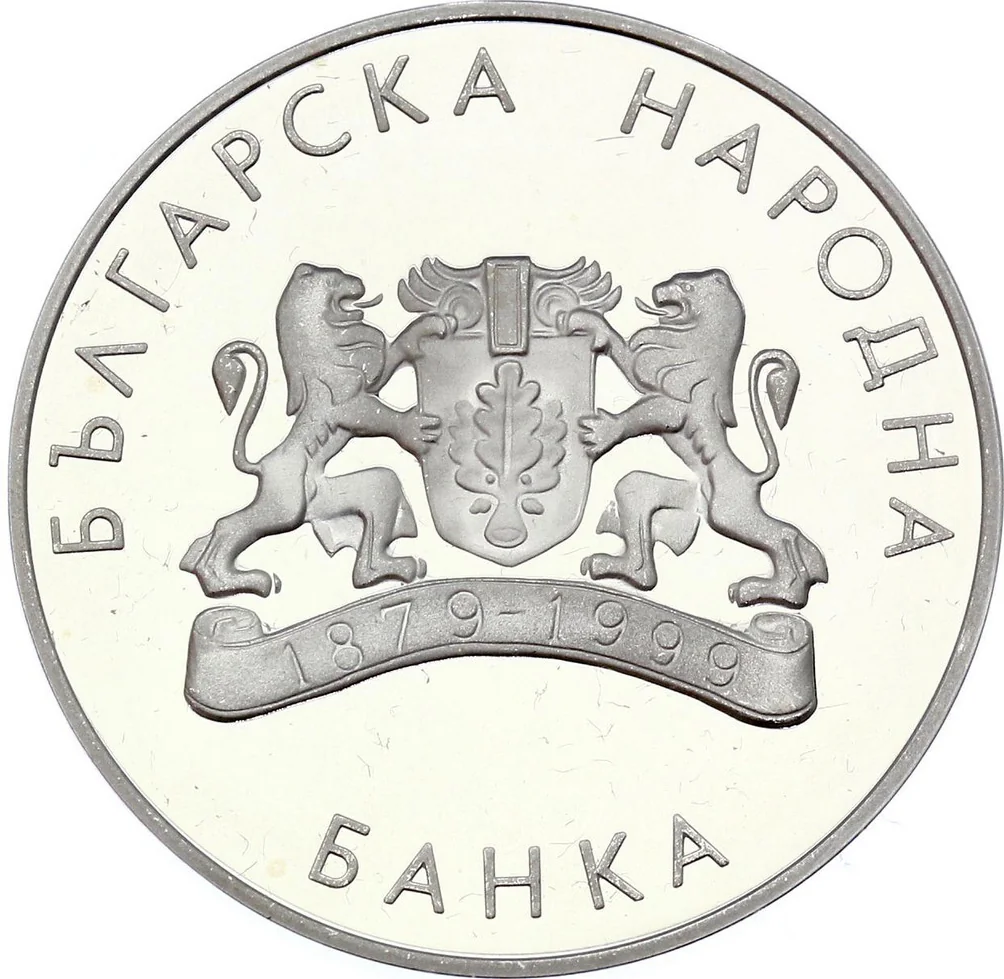
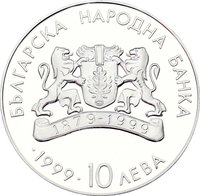
The obverse shows the Bulgarian National Bank logo, with "1879" on its ribbon, encircled by "БЪЛГАРСКА НАРОДНА БАНКА."
Inscription:
БЪЛГАРСКА НАРОДНА
БАНКА
БАНКА
Translation:
BULGARIAN NATIONAL
BANK
BANK
Script: Cyrillic
Language: Bulgarian
Engravers: Elena Todorova, Ivan Todorov
Reverse
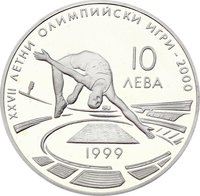
Description:
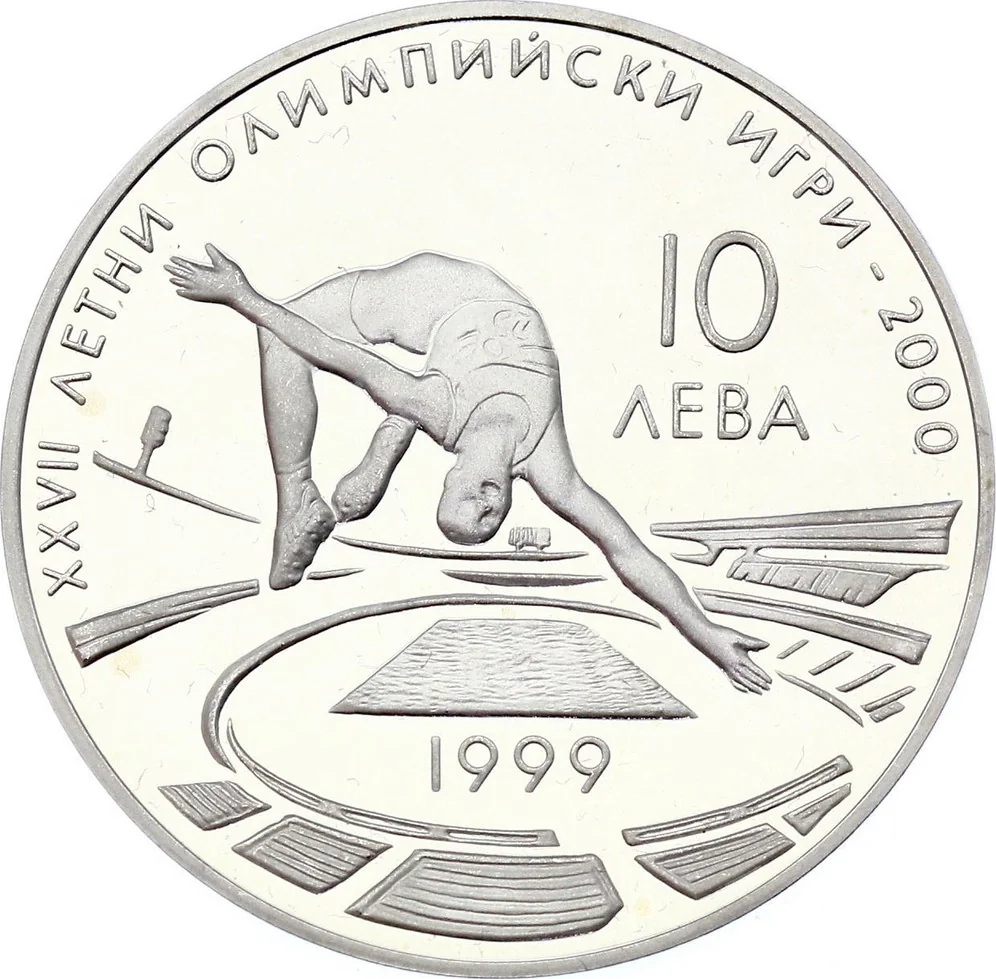
Jumper. Denomination, date.
Inscription:
XXVII ЛЕТНИ ОЛИМПИЙСКИ ИГРИ - 2000
10
ЛЕВА
1999
10
ЛЕВА
1999
Translation:
TWENTY-SEVENTH SUMMER OLYMPIC GAMES - 2000
10
LEVA
1999
10
LEVA
1999
Script: Cyrillic
Language: Bulgarian
Engravers: Elena Todorova, Ivan Todorov
Edge
Plain
Categories
| Sport> Summer Olympic Games |
| Sport> Athletics |
Mints
| Name | Mark |
|---|---|
| Bulgarian Mint | — |
Mintings
| Year | Mint Mark | Mintage | Quality | Collection |
|---|---|---|---|---|
| 1999 | — | 6,000 | Proof |
Historical background
In 1999, Bulgaria was in the midst of a critical and transformative period following a severe financial and banking crisis in 1996-1997. That earlier crisis had caused hyperinflation, a collapse of the banking system, and a dramatic plunge in living standards. In response, in July 1997, the country introduced a Currency Board Arrangement (CBA), which pegged the Bulgarian lev (BGN) firmly to the German Deutsche Mark at a rate of 1,000 lev = 1 DM (redenominated to 1 BGN = 1 DM in 1999). By 1999, this strict regime was the defining feature of the currency situation, providing much-needed stability but also imposing significant constraints.
The CBA functioned by requiring the Bulgarian National Bank (BNB) to back the entire monetary base with foreign reserves, eliminating its ability to act as a lender of last resort or conduct independent monetary policy. This institutional straitjacket successfully tamed inflation, restored confidence in the lev, and laid the groundwork for economic recovery. However, in 1999, the economy was still grappling with the CBA's downsides: interest rates were largely dictated by the European Central Bank (which now governed the Deutsche Mark), limiting tools to combat a recession, and the rigid peg made the export sector vulnerable to external shocks.
The year 1999 was thus a period of consolidation under the Currency Board. The macroeconomic situation stabilized, with inflation falling to single digits and foreign reserves growing steadily. This stability was crucial as Bulgaria navigated the aftermath of the Kosovo War, which disrupted regional trade. The successful maintenance of the peg throughout 1999 reinforced its credibility, setting a course for the eventual redenomination of the lev in July 1999 (lopping off three zeros) and paving the way for Bulgaria's broader European integration, with the long-term goal of Eurozone membership firmly linked to the stability provided by the DM (and later euro) peg.
The CBA functioned by requiring the Bulgarian National Bank (BNB) to back the entire monetary base with foreign reserves, eliminating its ability to act as a lender of last resort or conduct independent monetary policy. This institutional straitjacket successfully tamed inflation, restored confidence in the lev, and laid the groundwork for economic recovery. However, in 1999, the economy was still grappling with the CBA's downsides: interest rates were largely dictated by the European Central Bank (which now governed the Deutsche Mark), limiting tools to combat a recession, and the rigid peg made the export sector vulnerable to external shocks.
The year 1999 was thus a period of consolidation under the Currency Board. The macroeconomic situation stabilized, with inflation falling to single digits and foreign reserves growing steadily. This stability was crucial as Bulgaria navigated the aftermath of the Kosovo War, which disrupted regional trade. The successful maintenance of the peg throughout 1999 reinforced its credibility, setting a course for the eventual redenomination of the lev in July 1999 (lopping off three zeros) and paving the way for Bulgaria's broader European integration, with the long-term goal of Eurozone membership firmly linked to the stability provided by the DM (and later euro) peg.
💎 Extremely Rare