

100 leva – Bulgaria
Add to wishlist
Non-circulating coins
Commemoration: Endangered Wild Animals: Imperial Eagle
Bulgaria
Context
Material
References
KM: #
Numista: #60961
Value
Exchange value: 100 BGL
Bullion value: $53.51
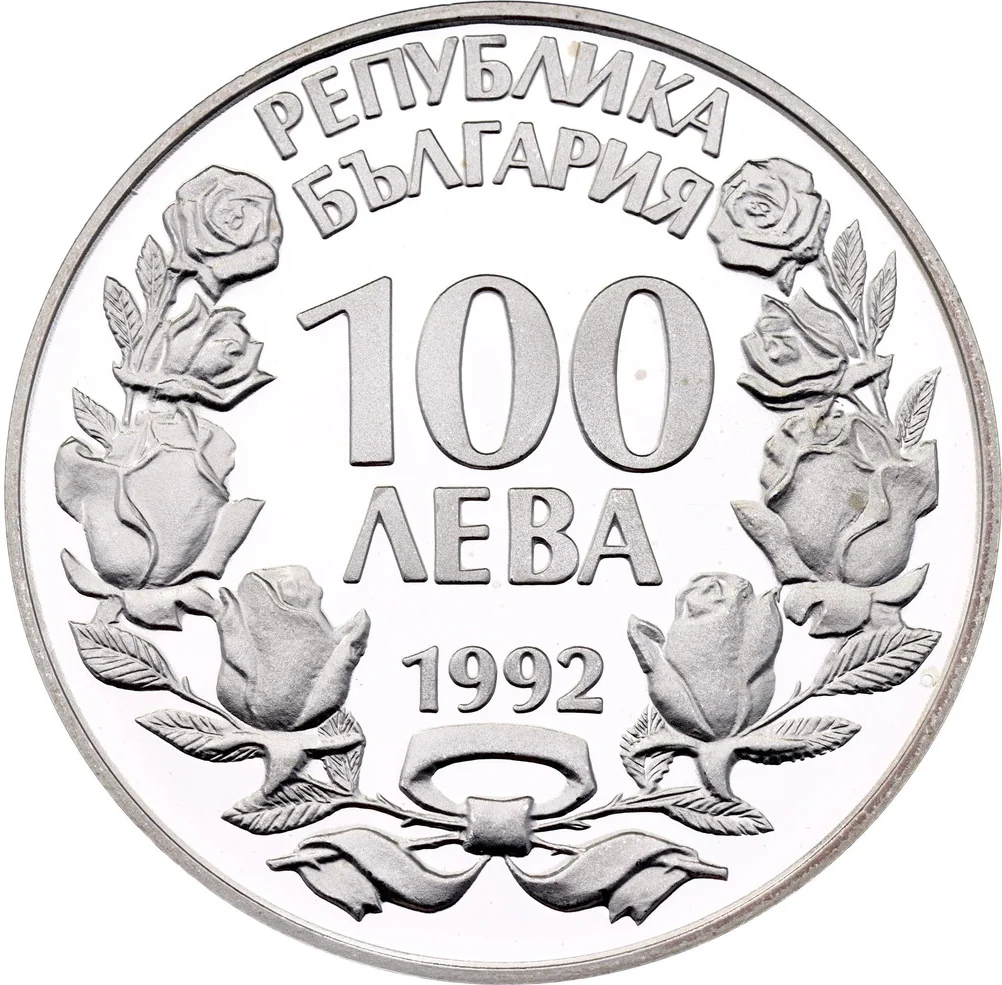
Obverse
Description:
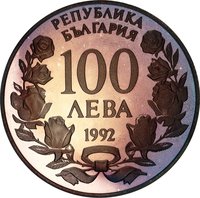
Denomination and date flanked by roses, with lettering above.
Inscription:
РЕПУБЛИКА
БЪЛГАРИЯ
100
ЛЕВА
1992
БЪЛГАРИЯ
100
ЛЕВА
1992
Translation:
REPUBLIC
OF BULGARIA
100
LEVA
1992
OF BULGARIA
100
LEVA
1992
Script: Cyrillic
Language: Bulgarian
Engraver: Georgi Chapkunov
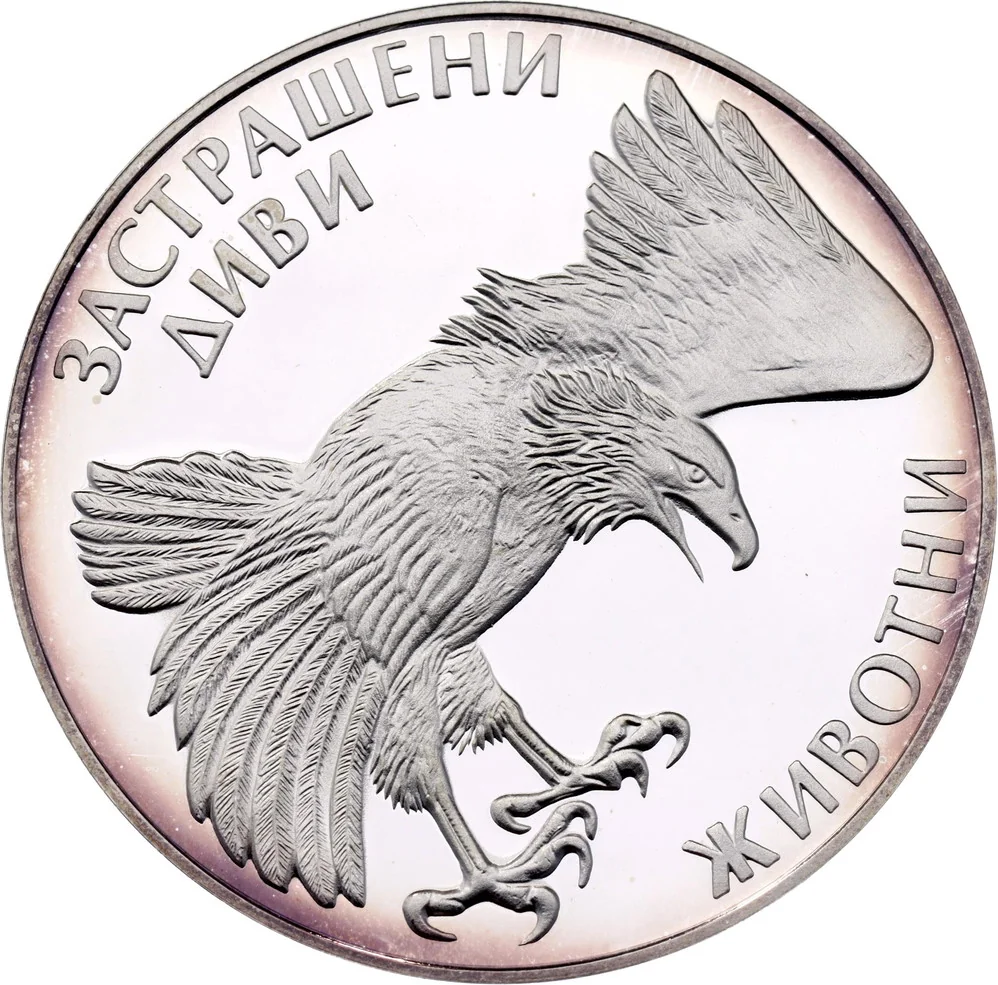
Reverse
Description:
Eagle hunting encircled by lettering.
Inscription:
ЗАСТРАШЕНИ ДИВИ ЖИВОТНИ
Translation:
To the terrifying wild beast.
Script: Cyrillic
Language: Macedonian
Engraver: Georgi Chapkunov
Edge
Plain
Mints
| Name | Mark |
|---|---|
| Bulgarian Mint | — |
Mintings
| Year | Mint Mark | Mintage | Quality | Collection |
|---|---|---|---|---|
| 1992 | — | 27,651 | Proof |
Historical background
In 1992, Bulgaria was in the throes of a profound economic crisis following the collapse of the communist system. The country was grappling with hyperinflation, industrial collapse, and a severe shortage of foreign currency reserves. The national currency, the lev, was virtually worthless in international terms, and multiple exchange rates existed—an official government rate, a wildly different black-market rate, and a special "tourist" rate. This chaotic system crippled foreign trade, encouraged rampant corruption, and led to a dramatic fall in living standards, with savings eroded and widespread poverty setting in.
The government's response was the introduction of a radical currency reform in 1992, a cornerstone of the broader transition to a market economy. This involved the creation of a new lev, which was pegged to the German Deutsche Mark, the most stable currency in Europe at the time. The initial peg was set at 1 Deutsche Mark to 7 new leva, established through a newly introduced currency board arrangement. This drastic measure aimed to halt hyperinflation instantly by imposing strict discipline on money supply, as the Bulgarian National Bank could now only issue domestic currency fully backed by its foreign reserves.
The immediate effects were severe but necessary for stabilization. The currency board successfully eliminated hyperinflation within a year and restored a credible, unified exchange rate. However, it came at a significant short-term social cost: credit dried up, state-owned enterprises faced hard budget constraints leading to further closures and unemployment, and the economy entered a deep recession. Thus, 1992 marked the painful but pivotal year when Bulgaria abandoned its unstable monetary past, anchoring its currency to a foreign standard to impose discipline and lay the foundation for future, albeit difficult, economic recovery.
The government's response was the introduction of a radical currency reform in 1992, a cornerstone of the broader transition to a market economy. This involved the creation of a new lev, which was pegged to the German Deutsche Mark, the most stable currency in Europe at the time. The initial peg was set at 1 Deutsche Mark to 7 new leva, established through a newly introduced currency board arrangement. This drastic measure aimed to halt hyperinflation instantly by imposing strict discipline on money supply, as the Bulgarian National Bank could now only issue domestic currency fully backed by its foreign reserves.
The immediate effects were severe but necessary for stabilization. The currency board successfully eliminated hyperinflation within a year and restored a credible, unified exchange rate. However, it came at a significant short-term social cost: credit dried up, state-owned enterprises faced hard budget constraints leading to further closures and unemployment, and the economy entered a deep recession. Thus, 1992 marked the painful but pivotal year when Bulgaria abandoned its unstable monetary past, anchoring its currency to a foreign standard to impose discipline and lay the foundation for future, albeit difficult, economic recovery.

⭐ Somewhat Rare