

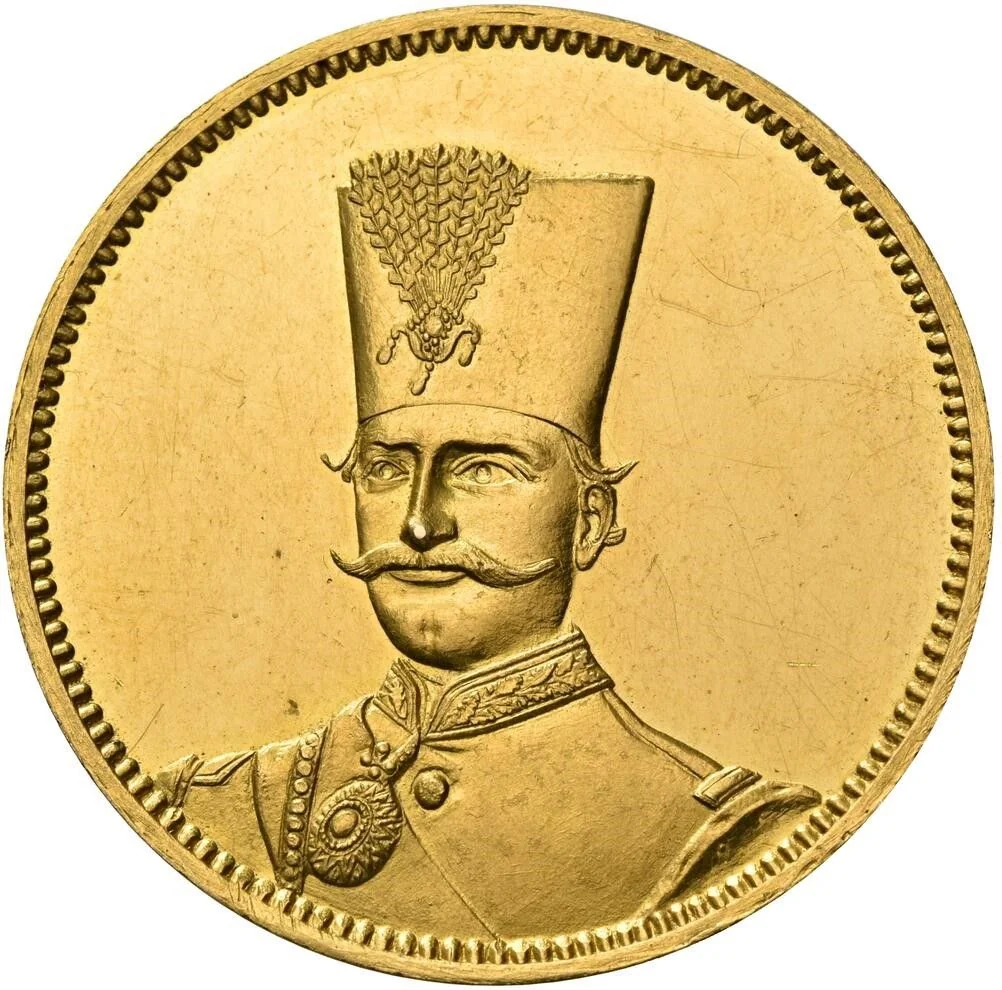
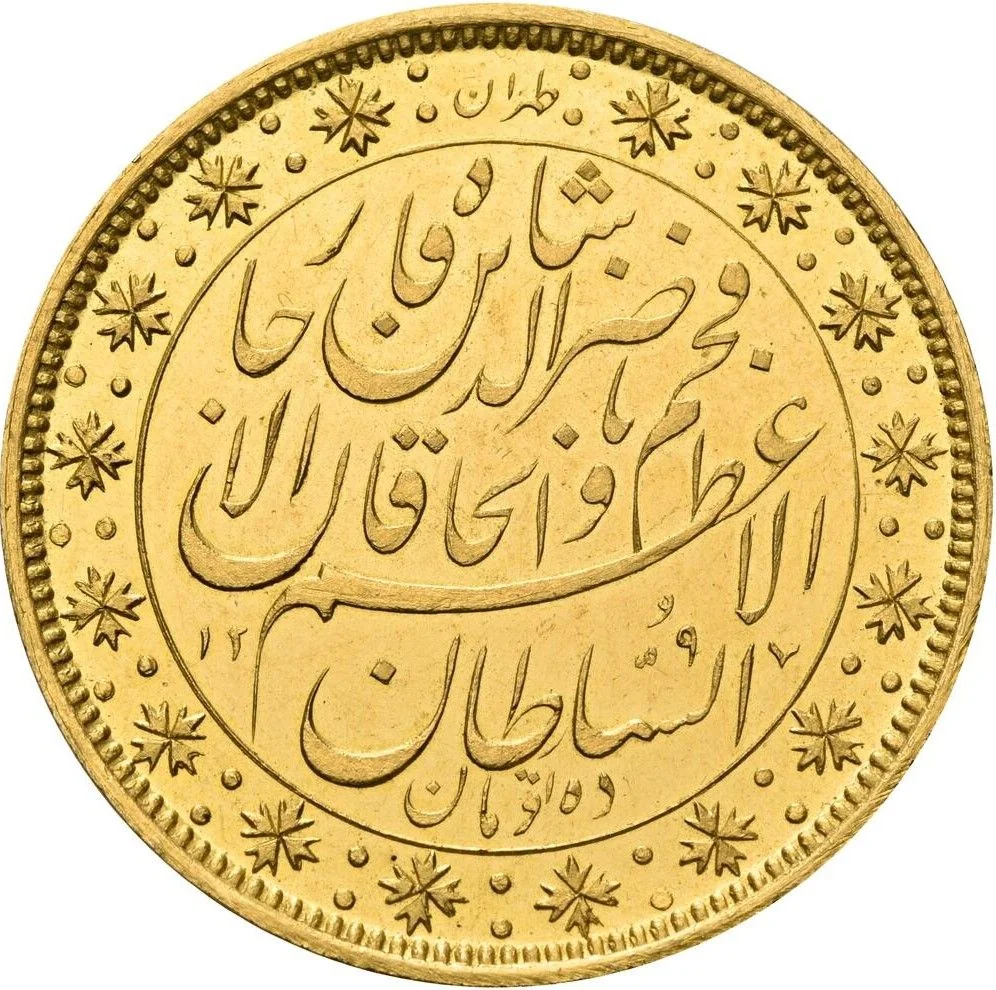
Obverse
Description:
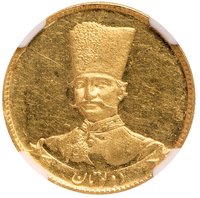
Bust of Nasir al-Din Qajar, three-quarter left view.
Reverse
Description:
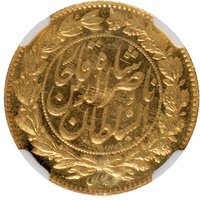
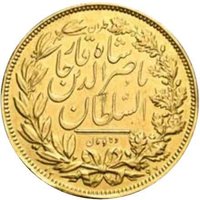
Inscription encircled by sixteen cruciform leaves.
Inscription:
طهران
السُّلطان الاعظـــــم و الخاقان الافخم ناصرالدین شاه قاجار
۱۳۱۱
ده تومان
السُّلطان الاعظـــــم و الخاقان الافخم ناصرالدین شاه قاجار
۱۳۱۱
ده تومان
Translation:
The Greatest Sultan and the Most Noble Khagan, Naser al-Din Shah Qajar
1311
Ten Tomans
1311
Ten Tomans
Script: Persian (nastaliq)
Edge
Reeded
Mints
| Name | Mark |
|---|---|
| Tehran | طهران |
Mintings
| Year | Mint Mark | Mintage | Quality | Collection |
|---|---|---|---|---|
| 1880 | — | — | ||
| 1894 | — | — |
Historical background
In the late 19th century, Iran's monetary system was a chaotic and fragmented reflection of its political and economic weakness. The country lacked a unified national currency, leading to a complex circulation of domestic and foreign coins. The primary silver coin was the kran, but its weight and purity varied by region and mint. Concurrently, the gold toman (worth 10 krans) was used for larger transactions, while a plethora of copper shahis and puls facilitated small-scale trade. This multiplicity, combined with the widespread practice of clipping and debasement by provincial authorities, created chronic instability and hindered commerce.
This disarray was exacerbated by intense foreign economic interference, particularly from Russia and Great Britain, whose spheres of influence dominated the north and south of Iran, respectively. Both powers aggressively promoted their own currencies—the Russian silver ruble and the British gold sovereign and Indian silver rupee—which circulated freely, often at rates more stable than Iranian coins. This "currency imperialism" undermined Iran's monetary sovereignty, as foreign coins came to dominate large-scale trade and state reserves, effectively tying segments of the Iranian economy to external powers and further destabilizing the local currency's value.
The Qajar government, fiscally strained and with limited central control, made ineffective attempts at reform. A major step was the establishment of the Imperial Bank of Persia in 1889, granted a British concession with the exclusive right to issue banknotes. However, these notes failed to gain public trust and circulated only in limited commercial circles. The fundamental problems of metallic coin shortages, widespread counterfeiting, and lack of a centralized mint persisted. Thus, by 1880, Iran's currency situation remained a tangled web of metallic and nascent paper money, characterized by severe inflation, erratic exchange rates, and a profound loss of economic autonomy, setting the stage for the monetary crises of the coming decades.
This disarray was exacerbated by intense foreign economic interference, particularly from Russia and Great Britain, whose spheres of influence dominated the north and south of Iran, respectively. Both powers aggressively promoted their own currencies—the Russian silver ruble and the British gold sovereign and Indian silver rupee—which circulated freely, often at rates more stable than Iranian coins. This "currency imperialism" undermined Iran's monetary sovereignty, as foreign coins came to dominate large-scale trade and state reserves, effectively tying segments of the Iranian economy to external powers and further destabilizing the local currency's value.
The Qajar government, fiscally strained and with limited central control, made ineffective attempts at reform. A major step was the establishment of the Imperial Bank of Persia in 1889, granted a British concession with the exclusive right to issue banknotes. However, these notes failed to gain public trust and circulated only in limited commercial circles. The fundamental problems of metallic coin shortages, widespread counterfeiting, and lack of a centralized mint persisted. Thus, by 1880, Iran's currency situation remained a tangled web of metallic and nascent paper money, characterized by severe inflation, erratic exchange rates, and a profound loss of economic autonomy, setting the stage for the monetary crises of the coming decades.
✨ Legendary