

1 Cent – Liberia
Liberia

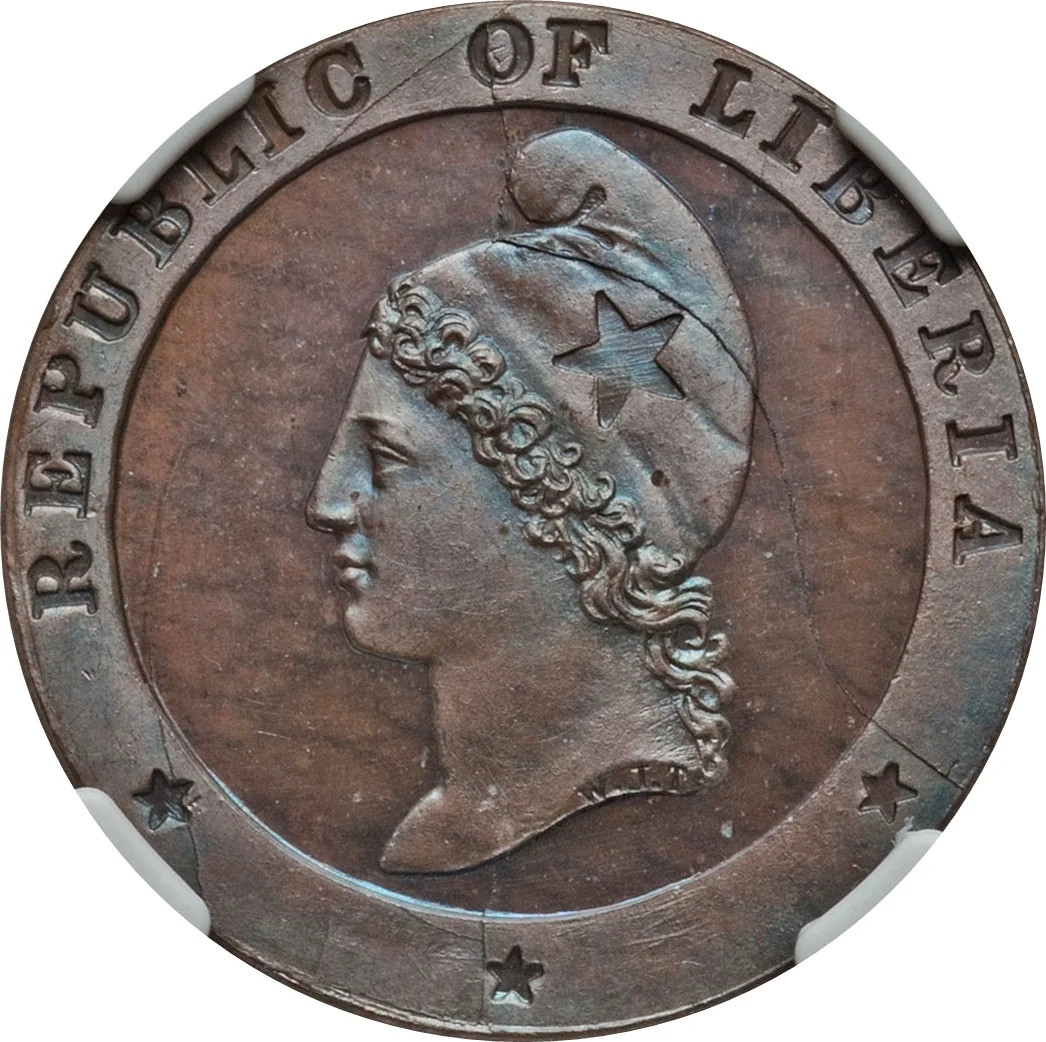
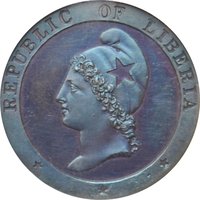
Obverse
Description:
Left-facing capped head in circle, stars beneath.
Inscription:
REPUBLIC OF LIBERIA
W.J.T.
W.J.T.
Script: Latin
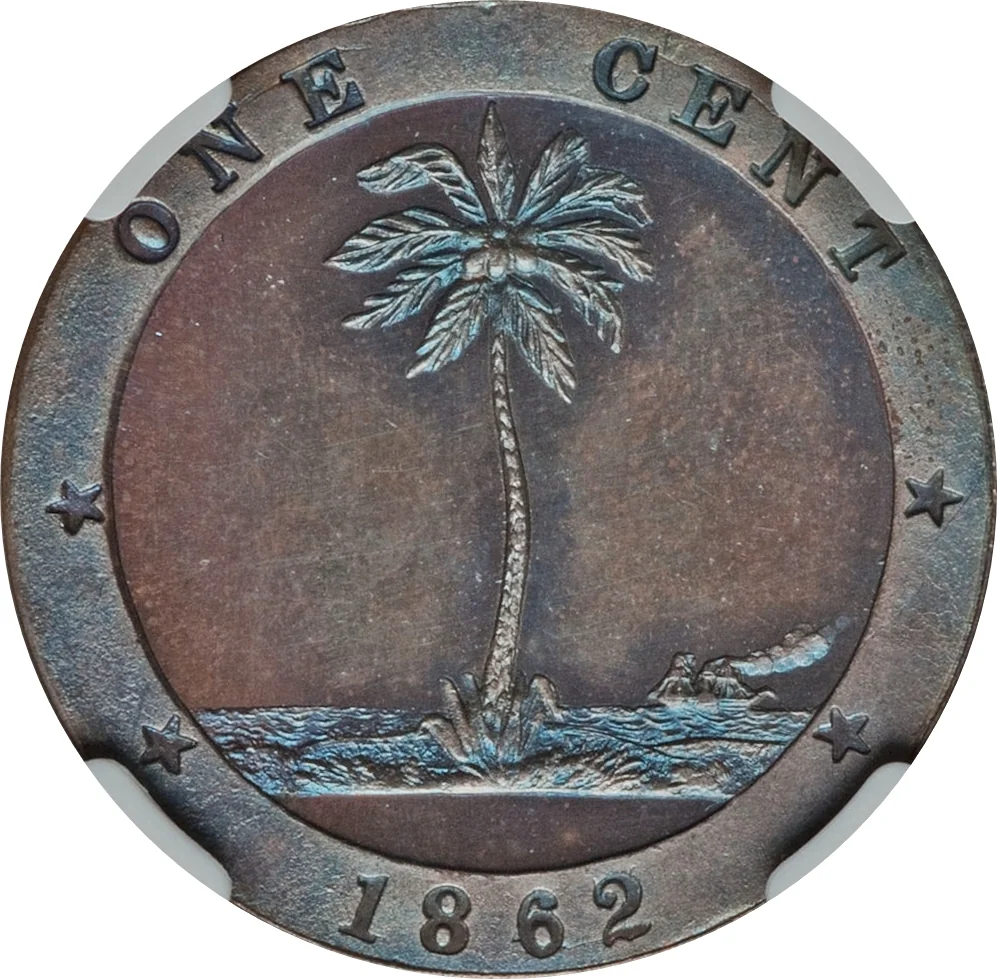
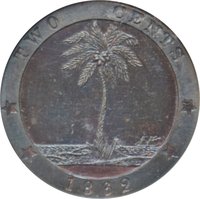
Reverse
Description:
Palm tree encircled by stars, date, and value.
Inscription:
ONE CENT
1862
1862
Script: Latin
Edge
Categories
| Plant> Tree |
| Symbol> Phrygian cap |
Mints
| Name | Mark |
|---|---|
| W.J. Taylor | — |
Mintings
| Year | Mint Mark | Mintage | Quality | Collection |
|---|---|---|---|---|
| 1862 | — | — | ||
| 1862 | — | — | Proof |
Historical background
In 1862, Liberia, a young republic founded by freed American slaves, faced a complex and challenging currency situation. The nation lacked a unified, sovereign monetary system. In practice, a confusing mix of foreign coins, particularly British gold sovereigns and silver coins, circulated alongside U.S. dollars and even barter goods. This reliance on foreign currency made the economy vulnerable to external fluctuations and hindered the government's ability to control its own money supply and facilitate domestic trade.
The Liberian government had attempted to establish a national currency, authorizing the issuance of Liberian dollars in the 1840s. However, these notes and limited coinage struggled to gain public trust and widespread acceptance. A lack of sufficient specie (gold and silver) to back the currency, combined with economic instability and counterfeiting, led to severe depreciation. By 1862, the Liberian dollar was worth only a fraction of its face value, making foreign hard currency the preferred medium for any significant transaction.
This monetary chaos reflected Liberia's broader struggles as a nascent state. With a fragile agricultural export economy and limited international recognition, securing financial stability was a profound difficulty. The currency situation of 1862 underscored the gap between political independence and economic sovereignty, forcing the republic to function within a monetary sphere dominated by the very colonial powers from which it had sought to distinguish itself.
The Liberian government had attempted to establish a national currency, authorizing the issuance of Liberian dollars in the 1840s. However, these notes and limited coinage struggled to gain public trust and widespread acceptance. A lack of sufficient specie (gold and silver) to back the currency, combined with economic instability and counterfeiting, led to severe depreciation. By 1862, the Liberian dollar was worth only a fraction of its face value, making foreign hard currency the preferred medium for any significant transaction.
This monetary chaos reflected Liberia's broader struggles as a nascent state. With a fragile agricultural export economy and limited international recognition, securing financial stability was a profound difficulty. The currency situation of 1862 underscored the gap between political independence and economic sovereignty, forcing the republic to function within a monetary sphere dominated by the very colonial powers from which it had sought to distinguish itself.
⭐ Rare