

20 cents (Parliament House) – Australia
Add to wishlist
Non-circulating coins
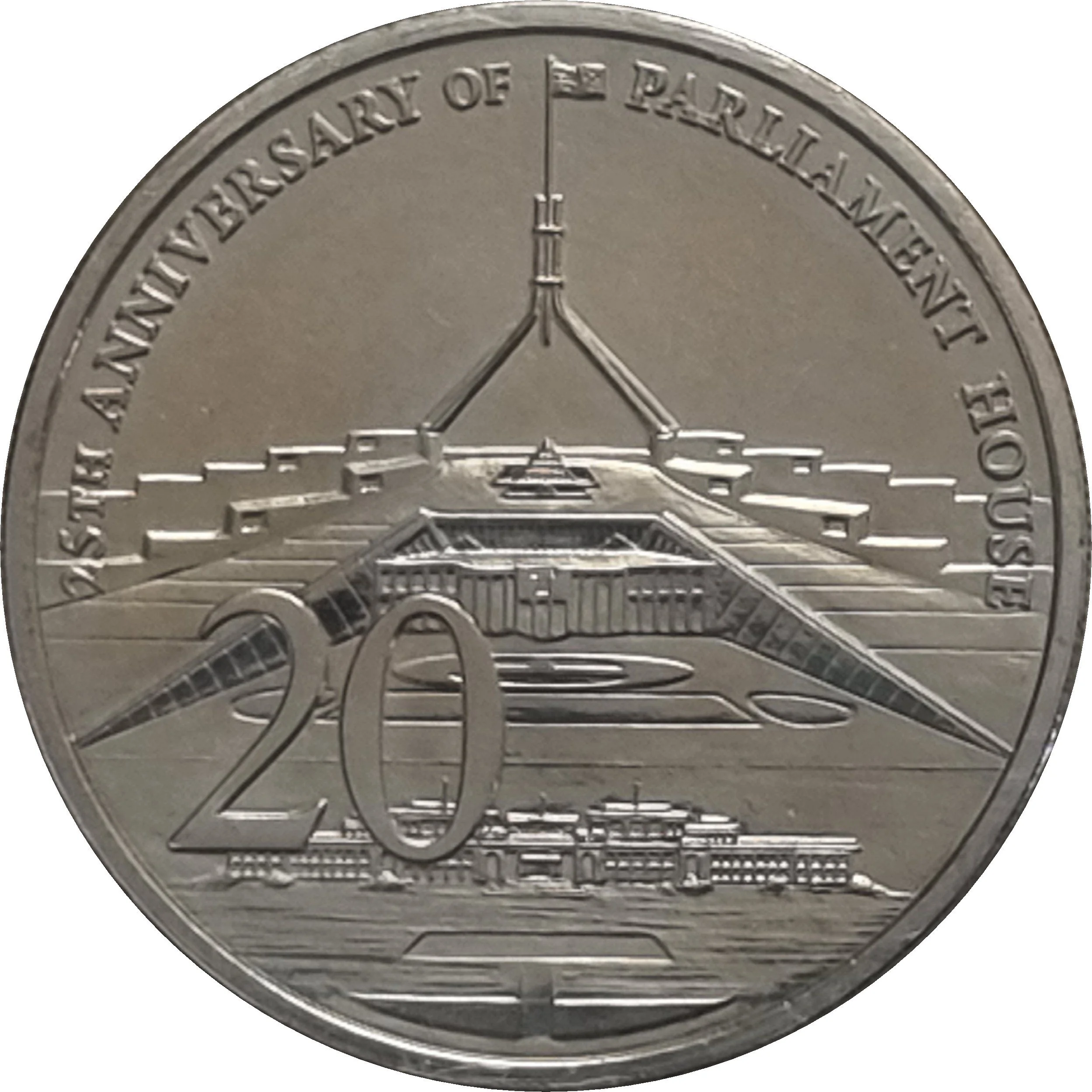
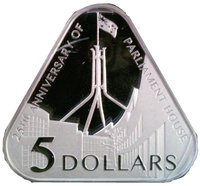
Commemoration: 25th Anniversary of Parliament House
Australia
Context
Material
Diameter: 28.52 mm
Weight: 11.31 g
Thickness: 2.5 mm
Shape: Round
Composition: Copper-nickel
Technique: Milled
Alignment: Medal alignment
flip
References
KM: #
Numista: #60282
Value
Exchange value: 0.20 AUD
Inflation-adjusted value: 0.28 AUD
Obverse
Description:
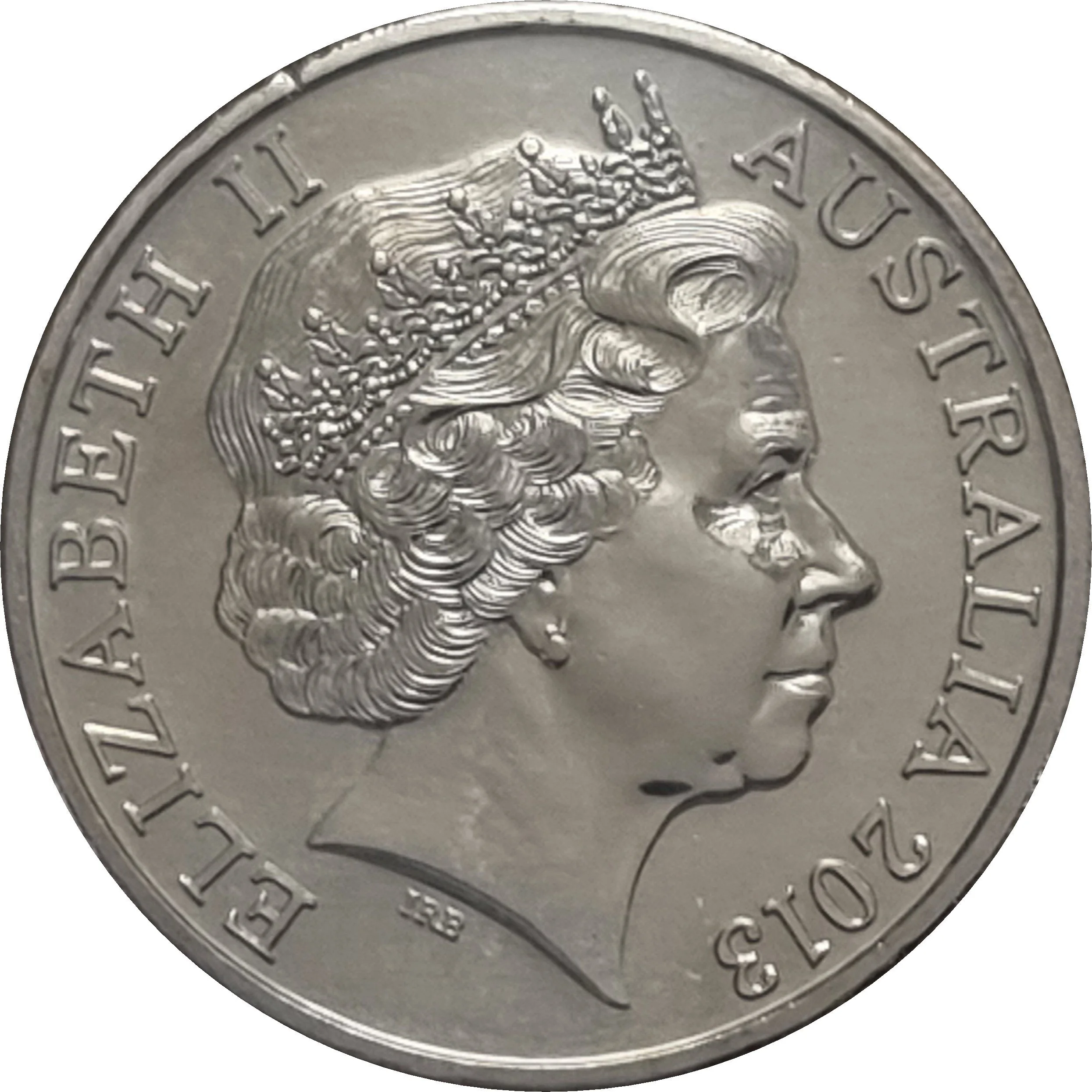
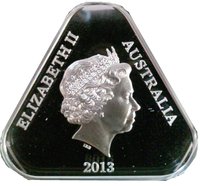
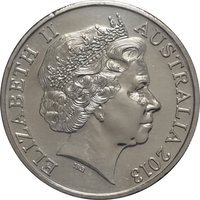
Queen Elizabeth IV, facing right, wearing the Girls of Great Britain and Ireland Tiara.
Inscription:
ELIZABETH II
AUSTRALIA 2013
IRB
AUSTRALIA 2013
IRB
Script: Latin
Designer: Ian Rank-Broadley
Reverse
Edge
Reeded
Categories
| Person> Politician |
Mints
| Name | Mark |
|---|---|
| Royal Australian Mint | — |
Mintings
| Year | Mint Mark | Mintage | Quality | Collection |
|---|---|---|---|---|
| 2013 | — | 15,169 | BU |
Historical background
In 2013, the Australian dollar (AUD) was characterised by sustained strength and volatility, trading at historically high levels against major currencies. For much of the year, it remained well above parity with the US dollar, a position it had held since 2010, driven by the "commodities boom" linked to Chinese demand for Australian iron ore and coal. This high currency, often termed the "Aussie battler" for its resilience, created a significant two-speed economy: it benefited consumers through cheaper imports but placed intense pressure on export-oriented, manufacturing, tourism, and education sectors, which struggled with international competitiveness.
The Reserve Bank of Australia (RBA), under Governor Glenn Stevens, actively sought to manage the situation. Concerned about the uneven economic impact and below-trend growth, the RBA continued an interest rate cutting cycle that had begun in late 2011, lowering the cash rate to a record-low 2.5% by August 2013. A key tactic was the use of "open mouth operations," with Stevens famously stating the AUD was "uncomfortably high" and that he expected further depreciation. The RBA's explicit guidance was that the inflation outlook "may provide some scope for further easing," which, combined with shifting global dynamics, aimed to gently talk down the currency.
By the final quarter of 2013, the currency's peak had passed, beginning a long-awaited depreciation. The AUD fell from above US$1.05 in early 2013 to around US$0.89 by year's end. This shift was triggered by the US Federal Reserve's announcement of "tapering" its quantitative easing program, which strengthened the US dollar, and by increasing market expectations that the commodities supercycle was moderating as Chinese growth showed signs of rebalancing. Thus, 2013 marked a pivotal transition year where the high-dollar era peaked and then decisively turned, setting the stage for a more export-friendly exchange rate environment in the years that followed.
The Reserve Bank of Australia (RBA), under Governor Glenn Stevens, actively sought to manage the situation. Concerned about the uneven economic impact and below-trend growth, the RBA continued an interest rate cutting cycle that had begun in late 2011, lowering the cash rate to a record-low 2.5% by August 2013. A key tactic was the use of "open mouth operations," with Stevens famously stating the AUD was "uncomfortably high" and that he expected further depreciation. The RBA's explicit guidance was that the inflation outlook "may provide some scope for further easing," which, combined with shifting global dynamics, aimed to gently talk down the currency.
By the final quarter of 2013, the currency's peak had passed, beginning a long-awaited depreciation. The AUD fell from above US$1.05 in early 2013 to around US$0.89 by year's end. This shift was triggered by the US Federal Reserve's announcement of "tapering" its quantitative easing program, which strengthened the US dollar, and by increasing market expectations that the commodities supercycle was moderating as Chinese growth showed signs of rebalancing. Thus, 2013 marked a pivotal transition year where the high-dollar era peaked and then decisively turned, setting the stage for a more export-friendly exchange rate environment in the years that followed.
⭐ Rare