

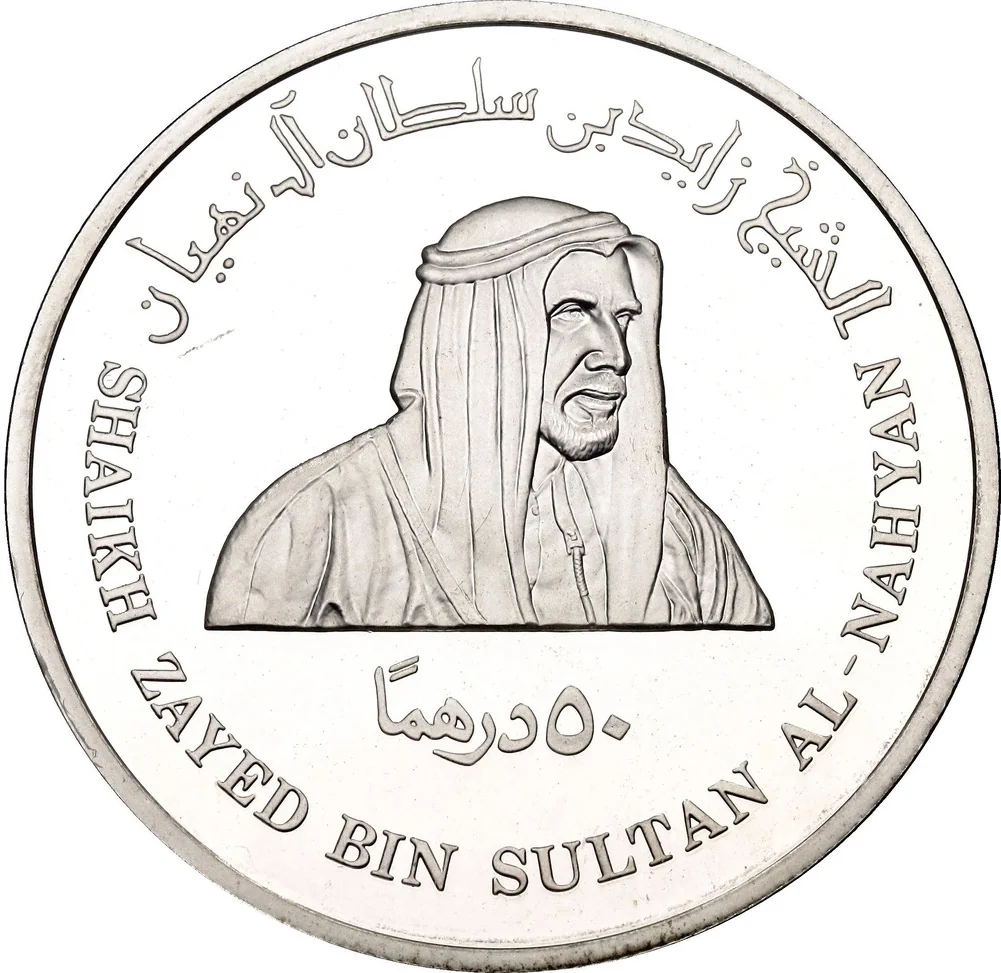
50 dirhams – United Arab Emirates
Add to wishlist
Non-circulating coins
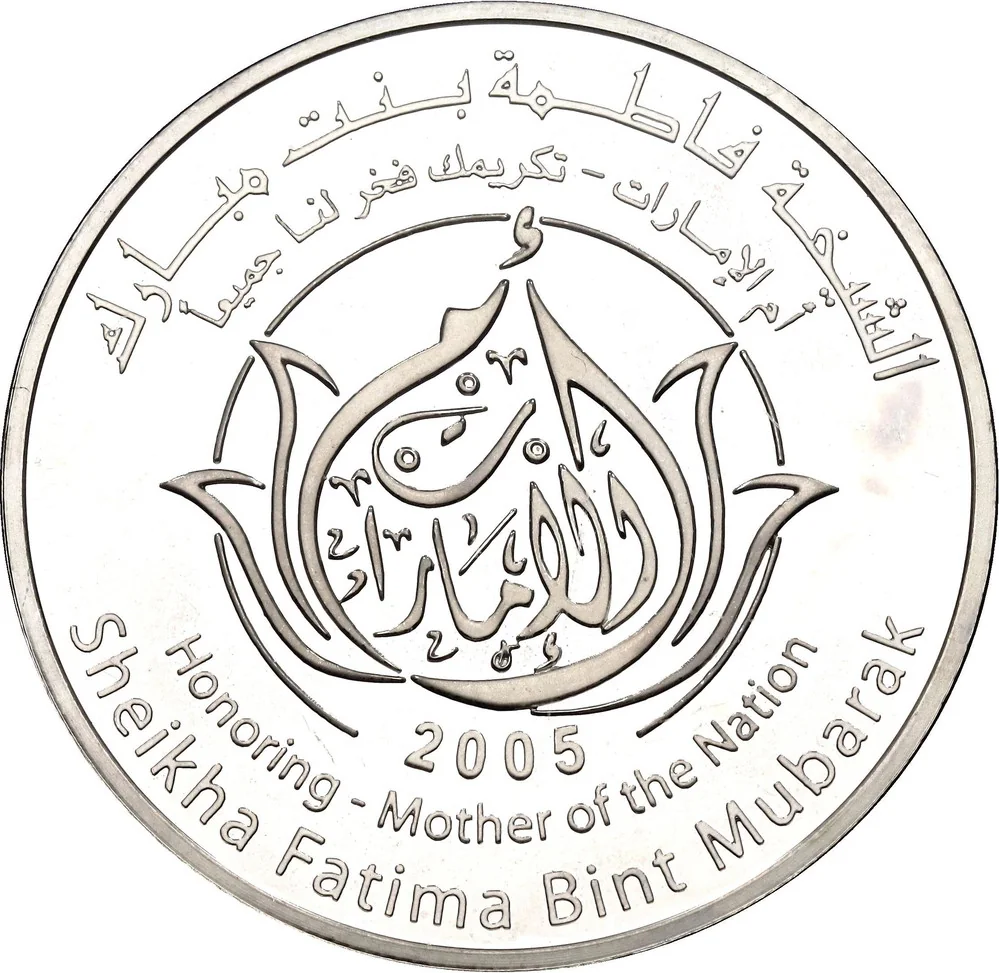
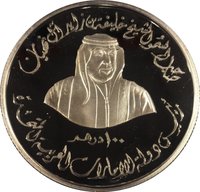
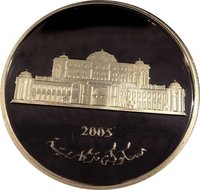
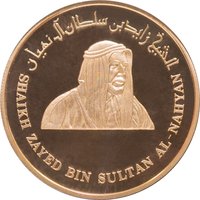
Commemoration: The Official Bestowing of Her Highness Sheikha Fatima Bint Mubarak a New Title of "Mother of the Nation"
United Arab Emirates
Context
Year: 2005
Issuer: United Arab Emirates
Ruler: Khalifa bin Zayed Al Nahyan
Currency:
(since 1973)
Total mintage: 2,000
Material
References
KM: #
Numista: #60265
Value
Exchange value: 50 AED
Bullion value: $93.81
Obverse
Reverse
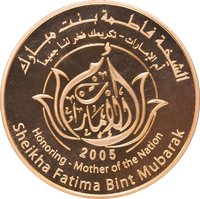
Description:
Logo: words in a blossom.
Inscription:
الشيخة فاطمة بنت مبارك
أم الإمارات - تكريمك فخر لنا جميعاً
[أم الإمارات]
2005
Honoring - Mother of the Nation
Sheikha Fatima Bint Mubarak
أم الإمارات - تكريمك فخر لنا جميعاً
[أم الإمارات]
2005
Honoring - Mother of the Nation
Sheikha Fatima Bint Mubarak
Translation:
Mother of the UAE - Your honoring is a pride for us all
[Mother of the UAE]
2005
Honoring - Mother of the Nation
Sheikha Fatima Bint Mubarak
[Mother of the UAE]
2005
Honoring - Mother of the Nation
Sheikha Fatima Bint Mubarak
Language: Arabic
Edge
Reeded
Mintings
| Year | Mint Mark | Mintage | Quality | Collection |
|---|---|---|---|---|
| 2005 | — | 2,000 | Proof |
Historical background
In 2005, the currency situation in the United Arab Emirates was defined by its long-standing and firm peg of the UAE dirham (AED) to the United States dollar (USD). Established in the late 1970s, this fixed exchange rate was set at approximately AED 3.6725 per USD 1. This policy provided crucial stability for the UAE's oil-dependent economy, as global oil prices were (and still are) denominated in dollars, insulating government revenues from exchange rate volatility and fostering a predictable environment for trade and foreign investment, which was vital for the nation's rapid diversification and construction boom.
The dollar peg, however, also meant the UAE imported the monetary policy of the US Federal Reserve. Throughout 2005, as the Fed continued a cycle of raising interest rates to combat inflation, the UAE Central Bank was compelled to follow suit to maintain the peg's credibility. This created a domestic policy tension: while necessary for the currency anchor, higher interest rates increased borrowing costs, potentially cooling the overheated real estate and construction sectors. Furthermore, a weakening US dollar against other major currencies during this period meant the dirham also depreciated in relative terms, contributing to imported inflation and raising the cost of living, particularly for expatriates sending remittances to non-dollar countries.
Despite these pressures, 2005 was a year of unwavering commitment to the peg from UAE authorities, viewed as a cornerstone of economic stability. The debate about its long-term suitability, however, was gaining academic and financial market attention. With the impending launch of the Gulf Cooperation Council (GCC) single currency, initially planned for 2010, there was speculative discussion about whether the UAE might eventually re-peg to a currency basket. Nevertheless, for 2005, the monetary landscape was one of stability under the dollar peg, even as the economic costs of that policy became more apparent amidst the nation's extraordinary growth.
The dollar peg, however, also meant the UAE imported the monetary policy of the US Federal Reserve. Throughout 2005, as the Fed continued a cycle of raising interest rates to combat inflation, the UAE Central Bank was compelled to follow suit to maintain the peg's credibility. This created a domestic policy tension: while necessary for the currency anchor, higher interest rates increased borrowing costs, potentially cooling the overheated real estate and construction sectors. Furthermore, a weakening US dollar against other major currencies during this period meant the dirham also depreciated in relative terms, contributing to imported inflation and raising the cost of living, particularly for expatriates sending remittances to non-dollar countries.
Despite these pressures, 2005 was a year of unwavering commitment to the peg from UAE authorities, viewed as a cornerstone of economic stability. The debate about its long-term suitability, however, was gaining academic and financial market attention. With the impending launch of the Gulf Cooperation Council (GCC) single currency, initially planned for 2010, there was speculative discussion about whether the UAE might eventually re-peg to a currency basket. Nevertheless, for 2005, the monetary landscape was one of stability under the dollar peg, even as the economic costs of that policy became more apparent amidst the nation's extraordinary growth.
✨ Legendary