

1 krugerrand – South Africa
Add to wishlist
South Africa
Context
Years: 1967–2025
Issuer: South Africa
Period:
(since 1961)
Currency:
(since 1967)
Total mintage: 49,321,389
Material
References
KM: #
Numista: #6002
Value
Bullion value: $4752.07
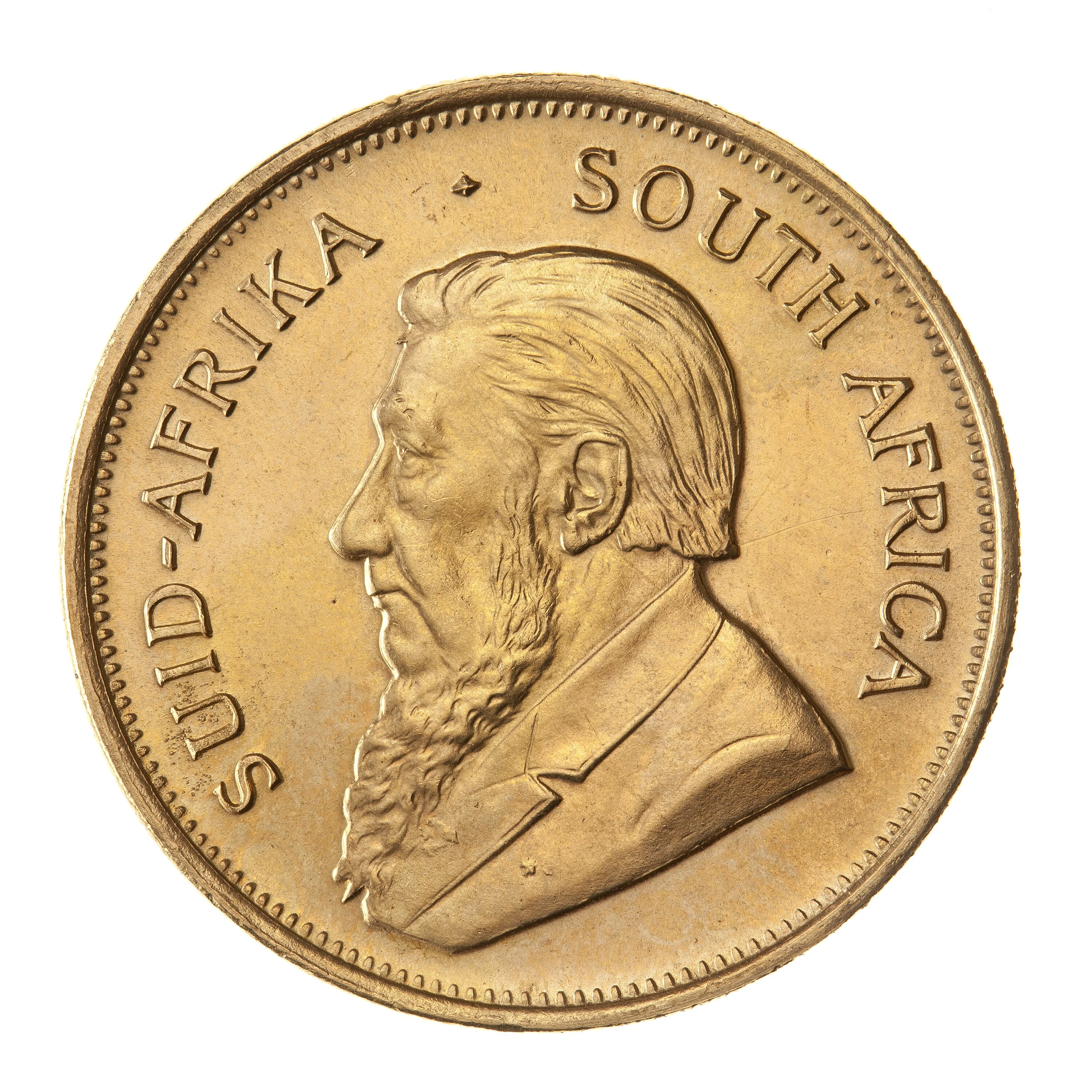
Obverse
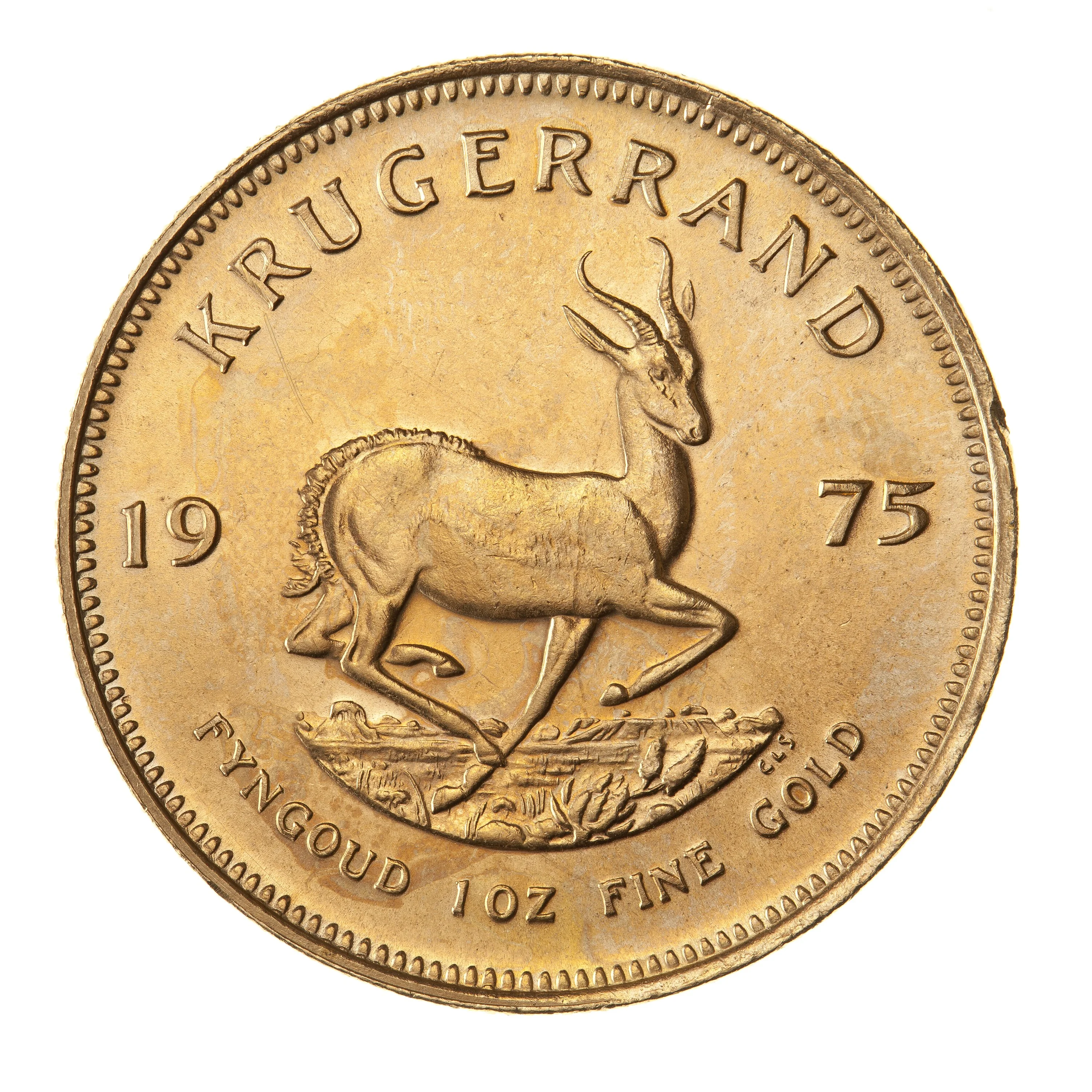
Reverse
Description:
Springbok walking right splits date.
Inscription:
KRUGERRAND
19 74
CLS
FYNGOUD 1 OZ FINE GOLD
19 74
CLS
FYNGOUD 1 OZ FINE GOLD
Script: Latin
Engraver: Coert Laurens Steynberg
Edge
Reeded
Categories
| Person> Politician |
| Animal> Cow |
Mints
| Name | Mark |
|---|---|
| Pretoria | — |
| South African Mint | — |
| Gold Reef City Mint | GRC |
Mintings
| Year | Mint Mark | Mintage | Quality | Collection |
|---|---|---|---|---|
| 1967 | — | 40,000 | ||
| 1967 | — | 10,000 | Proof | |
| 1968 | — | 8,956 | Proof | |
| 1968 | — | 21,044 | ||
| 1969 | — | 10,000 | Proof | |
| 1969 | — | 20,000 | ||
| 1970 | — | 211,018 | ||
| 1970 | — | 10,000 | Proof | |
| 1971 | — | 550,200 | ||
| 1971 | — | 6,000 | Proof | |
| 1972 | — | 6,625 | Proof | |
| 1972 | — | 543,700 | ||
| 1973 | — | 859,300 | ||
| 1973 | — | 10,000 | Proof | |
| 1974 | — | 3,203,000 | ||
| 1974 | — | 6,352 | Proof | |
| 1975 | — | 4,803,925 | ||
| 1975 | — | 5,600 | Proof | |
| 1976 | — | 3,004,945 | ||
| 1976 | — | 6,600 | Proof | |
| 1977 | — | 3,331,344 | ||
| 1977 | — | 8,500 | Proof | |
| 1978 | — | 6,012,293 | ||
| 1978 | — | 10,000 | Proof | |
| 1979 | — | 4,940,755 | ||
| 1979 | — | 11,800 | Proof | |
| 1980 | — | 3,049,396 | ||
| 1980 | — | 12,000 | Proof | |
| 1981 | — | 3,185,827 | ||
| 1981 | — | 12,900 | Proof | |
| 1982 | — | 2,668,506 | ||
| 1982 | — | 16,960 | Proof | |
| 1983 | — | 3,349,061 | ||
| 1983 | — | 19,100 | Proof | |
| 1984 | — | 2,055,689 | ||
| 1984 | — | 14,000 | Proof | |
| 1985 | — | 10,224 | Proof | |
| 1985 | — | 864,995 | ||
| 1986 | — | 21,040 | Proof | |
| 1987 | — | 99,798 | ||
| 1987 | — | 10,196 | Proof | |
| 1987 | GRC | 1,650 | Proof | |
| 1988 | — | 614,673 | ||
| 1988 | — | 5,074 | Proof | |
| 1988 | GRC | 1,220 | Proof | |
| 1989 | — | 194,319 | ||
| 1989 | — | 5,070 | Proof | |
| 1989 | GRC | 987 | Proof | |
| 1990 | — | 391,393 | ||
| 1990 | — | 3,032 | Proof | |
| 1990 | GRC | 1,066 | Proof | |
| 1991 | — | 283,184 | ||
| 1991 | — | 2,181 | Proof | |
| 1991 | GRC | 426 | Proof | |
| 1992 | — | 1,803 | ||
| 1992 | — | 2,067 | Proof | |
| 1993 | — | 162,340 | ||
| 1993 | — | 3,963 | Proof | |
| 1994 | — | 129,530 | ||
| 1994 | — | 1,761 | Proof | |
| 1995 | — | 1,678 | Proof | |
| 1995 | — | 58,630 | ||
| 1996 | — | 9,874 | ||
| 1996 | — | 2,188 | Proof | |
| 1997 | — | 1,663 | Proof | |
| 1997 | SS | 72 | Proof | |
| 1998 | — | 6,276 | ||
| 1998 | — | 2,000 | Proof | |
| 1999 | — | 25,265 | ||
| 1999 | — | 2,787 | Proof | |
| 2000 | — | 31,739 | ||
| 2000 | — | 3,188 | Proof | |
| 2001 | — | 33,406 | ||
| 2001 | — | 5,168 | Proof | |
| 2001 | CW | 395 | Proof | |
| 2002 | — | 89,230 | ||
| 2002 | — | 2,931 | Proof | |
| 2002 | RSA | 600 | Proof | |
| 2003 | — | 2,136 | Proof | |
| 2003 | — | 81,862 | ||
| 2003 | CUL | 500 | Proof | |
| 2004 | — | 39,838 | ||
| 2004 | — | 2,338 | Proof | |
| 2005 | — | 41,657 | ||
| 2005 | — | 2,970 | Proof | |
| 2005 | 100 | 375 | Proof | |
| 2006 | — | 205,405 | ||
| 2006 | — | 1,969 | Proof | |
| 2007 | — | 177,238 | ||
| 2007 | — | 2,321 | Proof | |
| 2007 | 40 | 395 | Proof | |
| 2008 | — | 741,233 | ||
| 2008 | — | 2,243 | Proof | |
| 2009 | — | — | ||
| 2009 | — | 2,500 | Proof | |
| 2010 | — | 613,870 | ||
| 2010 | — | 2,500 | Proof | |
| 2011 | — | 722,938 | ||
| 2011 | — | — | Proof | |
| 2012 | — | 716,295 | ||
| 2012 | — | — | Proof | |
| 2013 | — | 833,261 | ||
| 2013 | — | — | Proof | |
| 2014 | — | — | ||
| 2014 | — | — | Proof | |
| 2014 | 20 | — | Proof | |
| 2015 | — | — | ||
| 2015 | — | — | Proof | |
| 2016 | — | — | ||
| 2016 | — | — | Proof | |
| 2017 | — | — | ||
| 2017 | — | 1,967 | Proof | |
| 2018 | — | — | ||
| 2018 | — | — | Proof | |
| 2019 | — | — | ||
| 2019 | — | — | Proof | |
| 2020 | — | — | ||
| 2020 | — | — | Proof | |
| 2021 | — | — | ||
| 2021 | — | — | Proof | |
| 2022 | — | — | ||
| 2022 | — | — | Proof | |
| 2023 | — | — | ||
| 2023 | — | 1,000 | Proof | |
| 2024 | — | — | ||
| 2024 | — | — | Proof | |
| 2025 | — | 100 | Proof |
Historical background
In 1967, South Africa’s currency situation was defined by its political isolation and a robust, resource-driven economy. The country operated under a fixed exchange rate system, with the South African Rand (ZAR) pegged to the British Pound Sterling. This link reflected historical economic ties to the United Kingdom, a major trading partner, and provided a measure of stability. However, the international condemnation of the apartheid regime, formalized following the Sharpeville Massacre of 1960, was beginning to strain financial relationships and limit access to foreign capital, creating underlying pressures.
The year itself was marked by a significant event: the devaluation of the Pound Sterling in November 1967. As a currency pegged to the Pound, the Rand was automatically devalued by the same 14.3%, moving from R2 = £1 to R1.71 = £1. This was not a voluntary economic decision by South Africa but a consequential effect of its peg. The devaluation provided a short-term boost to the country's key mining sectors (gold and other minerals), as their Rand-denominated export revenues increased, thereby strengthening the country's foreign exchange reserves.
Despite this incidental benefit, the long-term currency outlook was challenging. International sanctions and disinvestment campaigns were gaining momentum, threatening future balance of payments stability. Furthermore, the government's increasing expenditure on security and apartheid infrastructure, coupled with a policy of financial self-sufficiency, meant the economy was becoming more inward-looking. Thus, while the 1967 devaluation was an external shock that offered some export advantages, it occurred within a context of growing economic isolation that would shape South Africa's monetary policy for decades to come.
The year itself was marked by a significant event: the devaluation of the Pound Sterling in November 1967. As a currency pegged to the Pound, the Rand was automatically devalued by the same 14.3%, moving from R2 = £1 to R1.71 = £1. This was not a voluntary economic decision by South Africa but a consequential effect of its peg. The devaluation provided a short-term boost to the country's key mining sectors (gold and other minerals), as their Rand-denominated export revenues increased, thereby strengthening the country's foreign exchange reserves.
Despite this incidental benefit, the long-term currency outlook was challenging. International sanctions and disinvestment campaigns were gaining momentum, threatening future balance of payments stability. Furthermore, the government's increasing expenditure on security and apartheid infrastructure, coupled with a policy of financial self-sufficiency, meant the economy was becoming more inward-looking. Thus, while the 1967 devaluation was an external shock that offered some export advantages, it occurred within a context of growing economic isolation that would shape South Africa's monetary policy for decades to come.
🌱 Common