

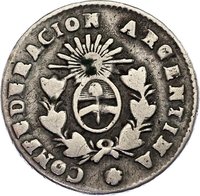
Obverse
Description:
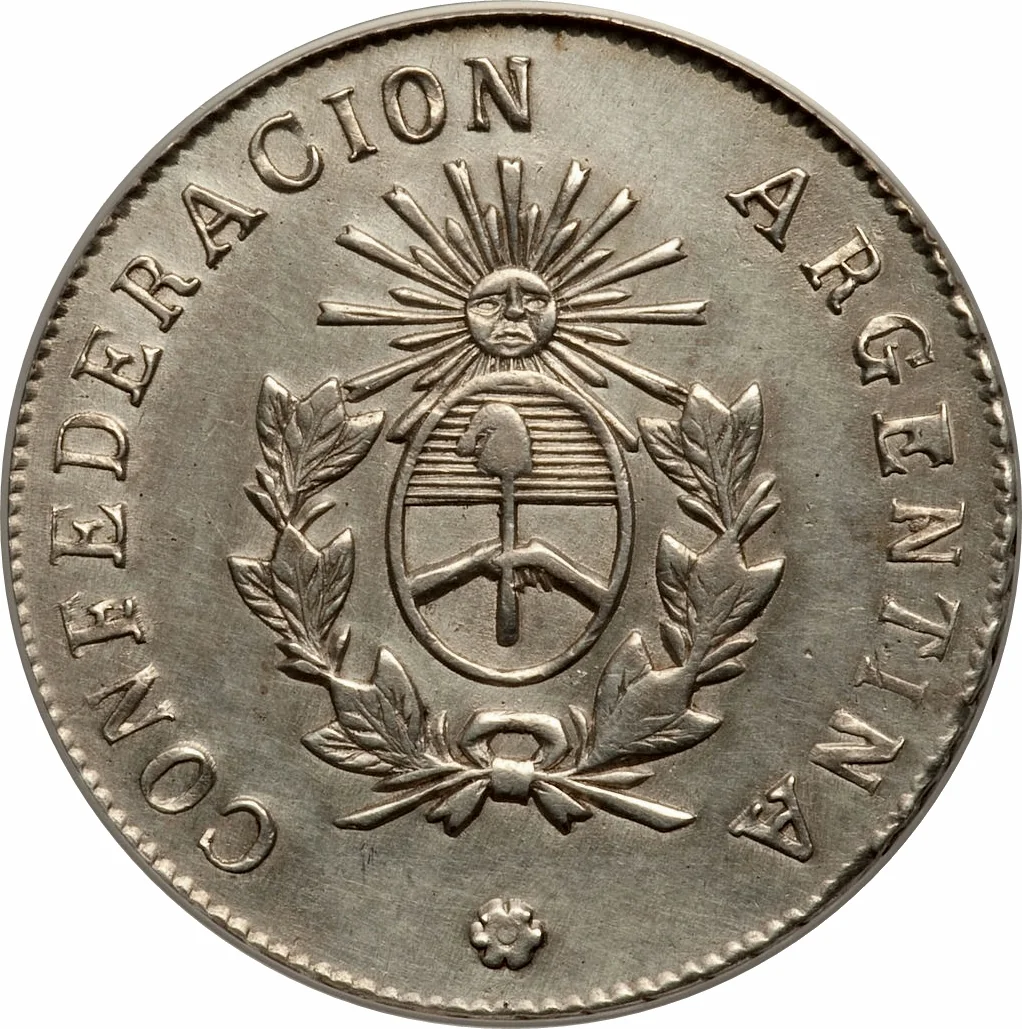
Coat of arms within a wreath, beneath a radiant sun.
Inscription:
CONFEDERACION ARGENTINA
Translation:
Argentine Confederation
Script: Latin
Language: Spanish
Engraver: José Barros (B)
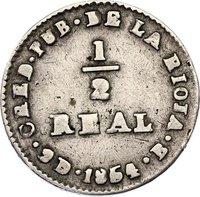
Reverse
Description:
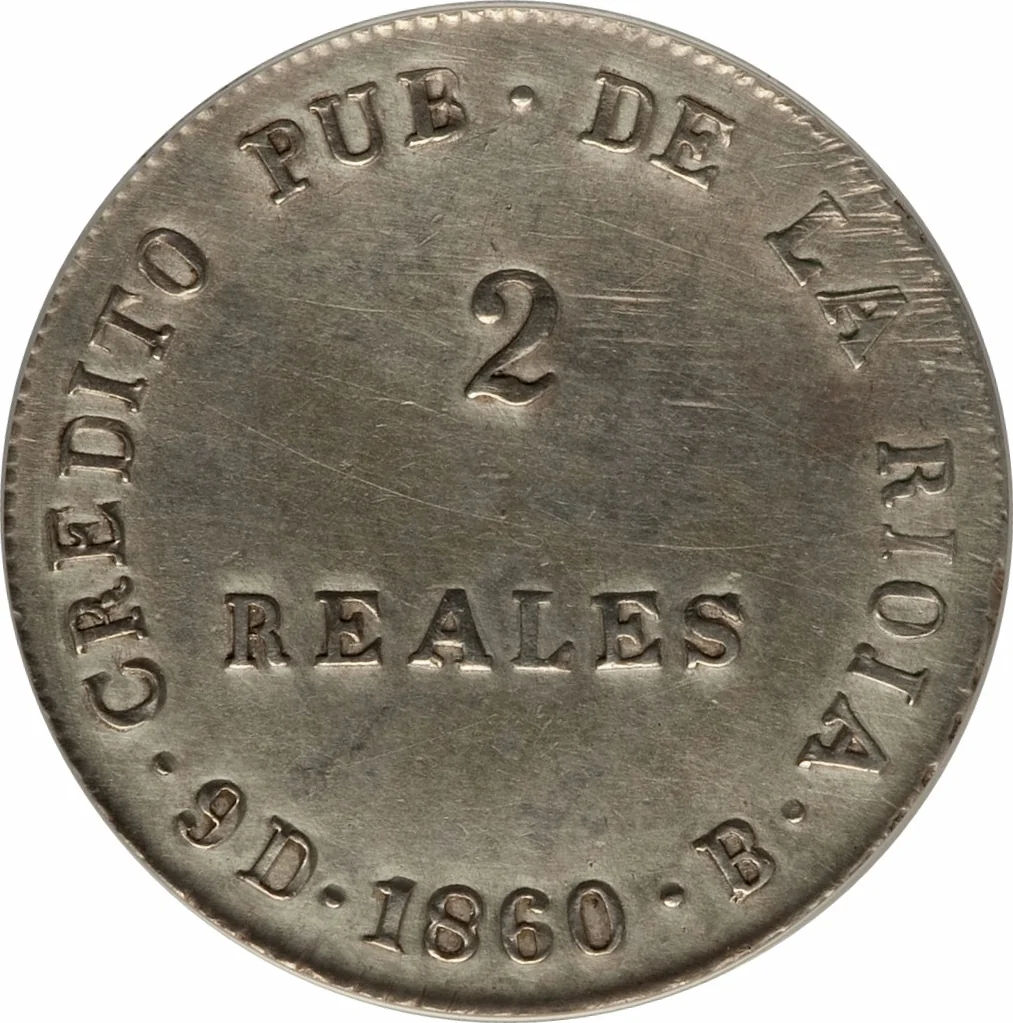
Value, date
Inscription:
·CREDITO PUB·DE LA RIOJA·
2
REALES
9D·1860·B
2
REALES
9D·1860·B
Script: Latin
Engraver: José Barros (B)
Edge
Categories
| Symbol> Wreath |
| Symbol> Hand |
| Symbols> Coat of Arms |
| Symbol> Phrygian cap |
| Symbol> Sun |
Mintings
| Year | Mint Mark | Mintage | Quality | Collection |
|---|---|---|---|---|
| 1860 | — | — |
Historical background
In the 1860s, La Rioja, a province in the interior of Argentina, was embroiled in a profound monetary and economic crisis that reflected the nation's broader struggles with unification and central authority. Following the fall of the Argentine Confederation and the strengthening of the State of Buenos Aires, the country remained politically fragmented. La Rioja, under the caudillo Ángel Vicente "El Chacho" Peñaloza, was a bastion of Federalist resistance against the centralizing Unitarians of Buenos Aires. This political conflict had direct economic consequences, as the province was largely cut off from the more dynamic port economy and faced constant military expenditure, leading to severe fiscal strain.
The currency situation was one of chaotic decentralization. With no national mint or uniform monetary system, La Rioja, like other interior provinces, issued its own paper money to finance its government and militias. These billetes or vales, often hastily printed and backed only by the promise of the provincial treasury, rapidly depreciated in value. Simultaneously, a multitude of currencies circulated: the strong silver pesos of Buenos Aires, older Spanish and Bolivian coins, and the debased paper notes of other provinces. This created a complex and unreliable monetary environment where the value of money was highly localized and subject to the fluctuating fortunes of the ongoing civil wars.
By 1860, this system was nearing collapse within La Rioja. The over-issuance of paper to cover deficits led to rampant inflation, eroding the purchasing power of ordinary citizens and soldiers. Trade was severely hampered, as merchants had to constantly negotiate exchange rates between different forms of money of uncertain worth. The monetary chaos was both a symptom and a cause of deep poverty, isolating the province economically and making it increasingly dependent on a subsistence economy, even as its leaders fought to maintain political autonomy in the face of Buenos Aires's growing dominance.
The currency situation was one of chaotic decentralization. With no national mint or uniform monetary system, La Rioja, like other interior provinces, issued its own paper money to finance its government and militias. These billetes or vales, often hastily printed and backed only by the promise of the provincial treasury, rapidly depreciated in value. Simultaneously, a multitude of currencies circulated: the strong silver pesos of Buenos Aires, older Spanish and Bolivian coins, and the debased paper notes of other provinces. This created a complex and unreliable monetary environment where the value of money was highly localized and subject to the fluctuating fortunes of the ongoing civil wars.
By 1860, this system was nearing collapse within La Rioja. The over-issuance of paper to cover deficits led to rampant inflation, eroding the purchasing power of ordinary citizens and soldiers. Trade was severely hampered, as merchants had to constantly negotiate exchange rates between different forms of money of uncertain worth. The monetary chaos was both a symptom and a cause of deep poverty, isolating the province economically and making it increasingly dependent on a subsistence economy, even as its leaders fought to maintain political autonomy in the face of Buenos Aires's growing dominance.
💎 Extremely Rare