

1 Butut – The Gambia
Circulating commemorative coins
Commemoration: F.A.O.
Gambia
Context
Years: 1974–1985
Country: Gambia 
Issuer: The Gambia
Period:
(since 1970)
Currency:
(since 1971)
Total mintage: 30,562,000
Material
References
KM: #Click to copy to clipboard14
Numista: #5959
Value
Exchange value: 0.01 GMD
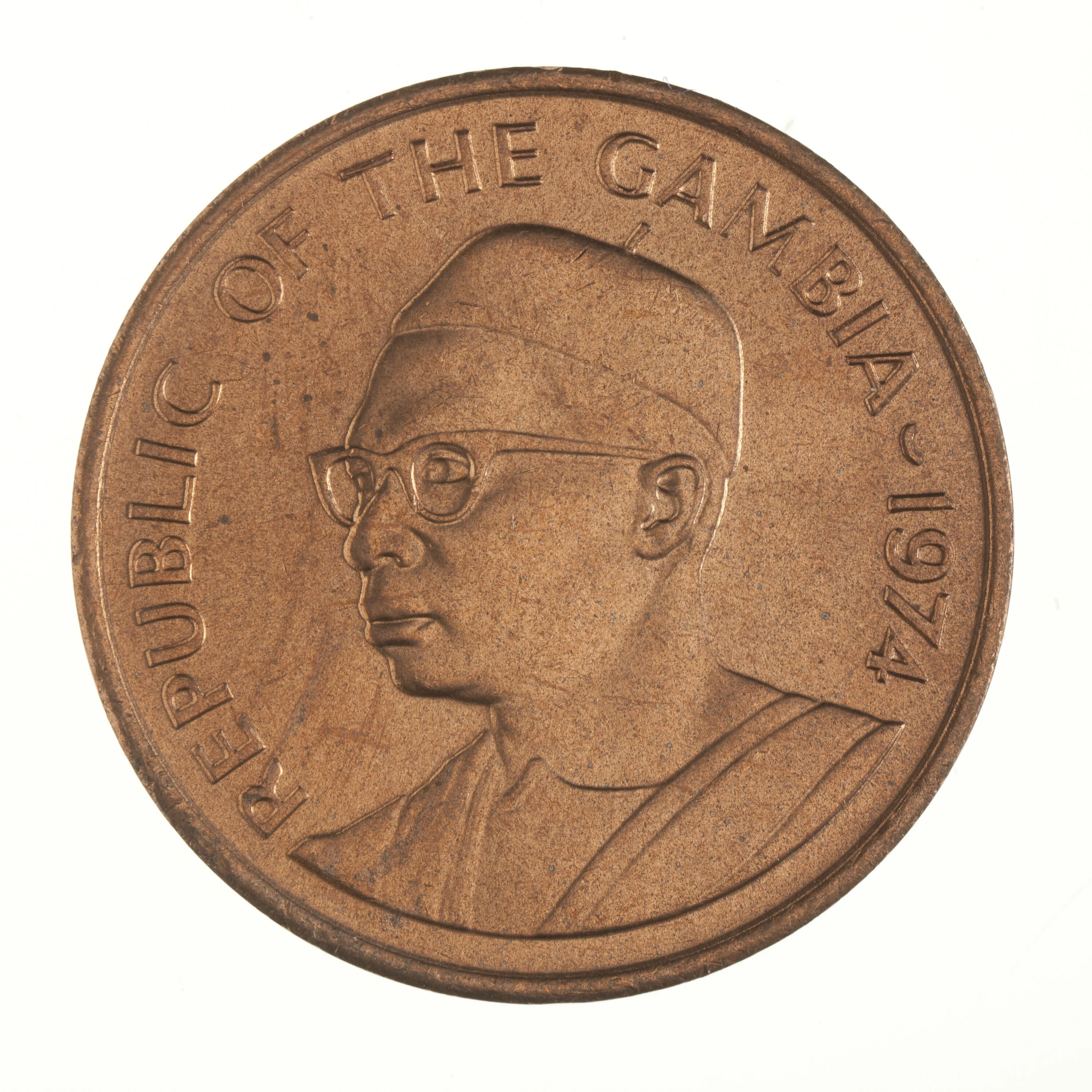
Obverse
Description:
Sir Dawda Jawara
Inscription:
REPUBLIC OF THE GAMBIA - 1974
Script: Latin
Engraver: Michael Rizzello
Reverse
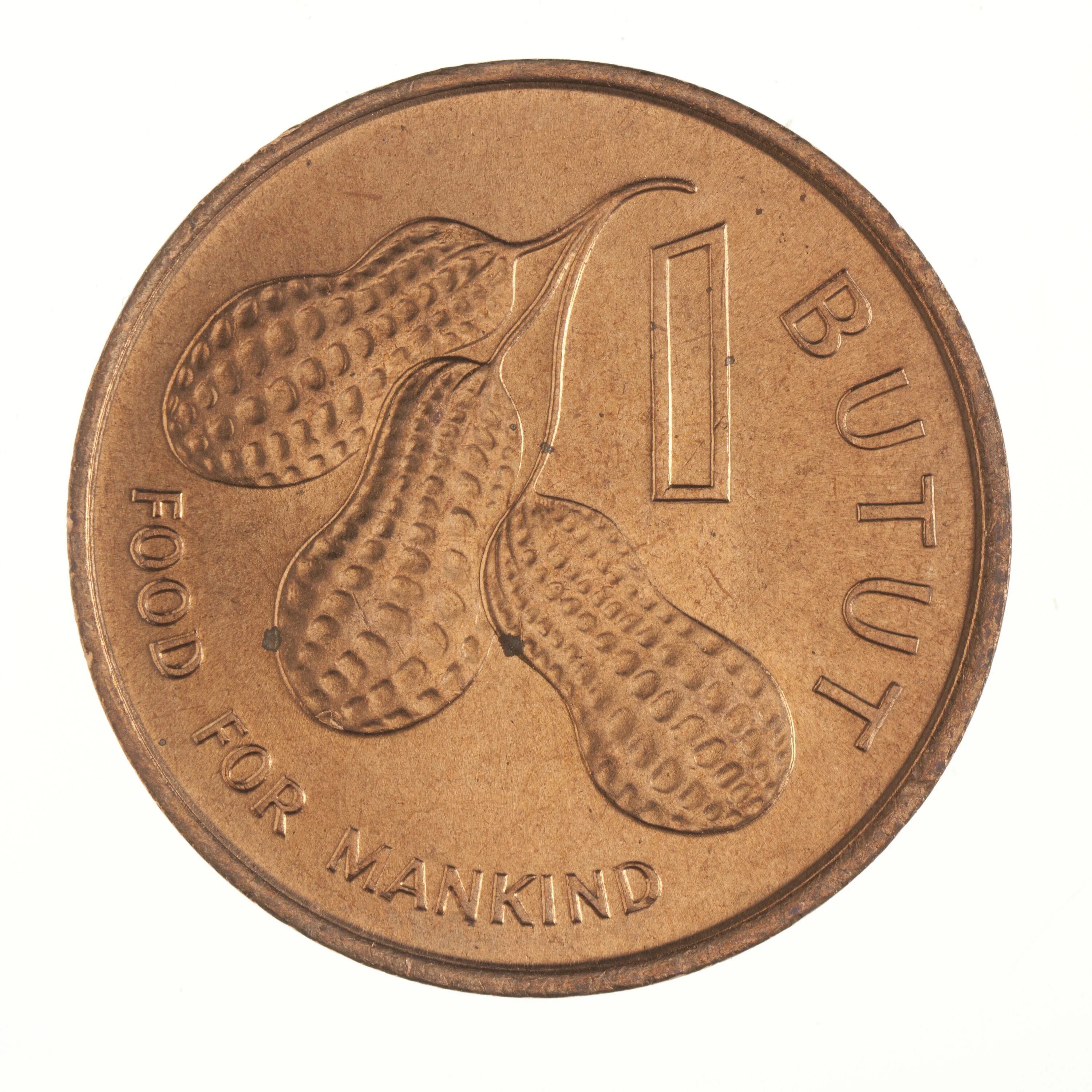
Description:
Peanuts are edible seeds from a legume plant.
Inscription:
1 BUTUT
FOOD FOR MANKIND
FOOD FOR MANKIND
Script: Latin
Engraver: Michael Rizzello
Edge
Plain
Categories
| Organization> FAO |
Mints
| Name | Mark |
|---|---|
| Royal Mint | — |
Mintings
| Year | Mint Mark | Mintage | Quality | Collection |
|---|---|---|---|---|
| 1974 | — | 26,062,000 | ||
| 1985 | — | 4,500,000 |
Historical background
In 1974, The Gambia's currency situation was defined by its recent transition to full monetary independence. Since gaining political independence from Britain in 1965, the country had used the Gambian pound, which was pegged at par to the British pound sterling and issued by the Gambia Currency Board. However, in 1971, The Gambia established its own central bank and introduced a new decimal currency, the dalasi, which replaced the pound at a rate of 1 Gambian pound = 5 dalasis. By 1974, the dalasi was still a very young currency, and the nation was in the early stages of managing its own monetary policy.
The broader economic context was challenging. The Gambia's economy was overwhelmingly dependent on a single cash crop—groundnuts (peanuts)—which accounted for the vast majority of its export earnings. This made the currency vulnerable to fluctuations in global commodity prices and weather-dependent harvests. Furthermore, the 1973 global oil crisis had triggered worldwide inflation and balance of payments difficulties, putting pressure on the new dalasi. The government's primary focus was on maintaining stability and building confidence in its nascent financial system.
Consequently, in 1974, The Gambia maintained a conservative and fixed exchange rate regime. The dalasi was pegged to a basket of currencies, heavily weighted toward the British pound sterling, reflecting the country's enduring trade and financial links with the United Kingdom. This peg provided a crucial anchor for price stability and international transactions. There was no major devaluation or currency crisis that year; instead, the period was characterized by the cautious stewardship of a new national currency within a fragile and externally vulnerable economy.
The broader economic context was challenging. The Gambia's economy was overwhelmingly dependent on a single cash crop—groundnuts (peanuts)—which accounted for the vast majority of its export earnings. This made the currency vulnerable to fluctuations in global commodity prices and weather-dependent harvests. Furthermore, the 1973 global oil crisis had triggered worldwide inflation and balance of payments difficulties, putting pressure on the new dalasi. The government's primary focus was on maintaining stability and building confidence in its nascent financial system.
Consequently, in 1974, The Gambia maintained a conservative and fixed exchange rate regime. The dalasi was pegged to a basket of currencies, heavily weighted toward the British pound sterling, reflecting the country's enduring trade and financial links with the United Kingdom. This peg provided a crucial anchor for price stability and international transactions. There was no major devaluation or currency crisis that year; instead, the period was characterized by the cautious stewardship of a new national currency within a fragile and externally vulnerable economy.
🌱 Very Common