

50 Paras – Yugoslavia
Context
Year: 1995
Issuer: Yugoslavia
Period:
(1992—2003)
Currency:
(1994—2003)
Demonetized: Yes
Total mintage: 19,193,000
Material
References
KM: #Click to copy to clipboard163a
Numista: #11108
Value
Exchange value: 0.50 YUM
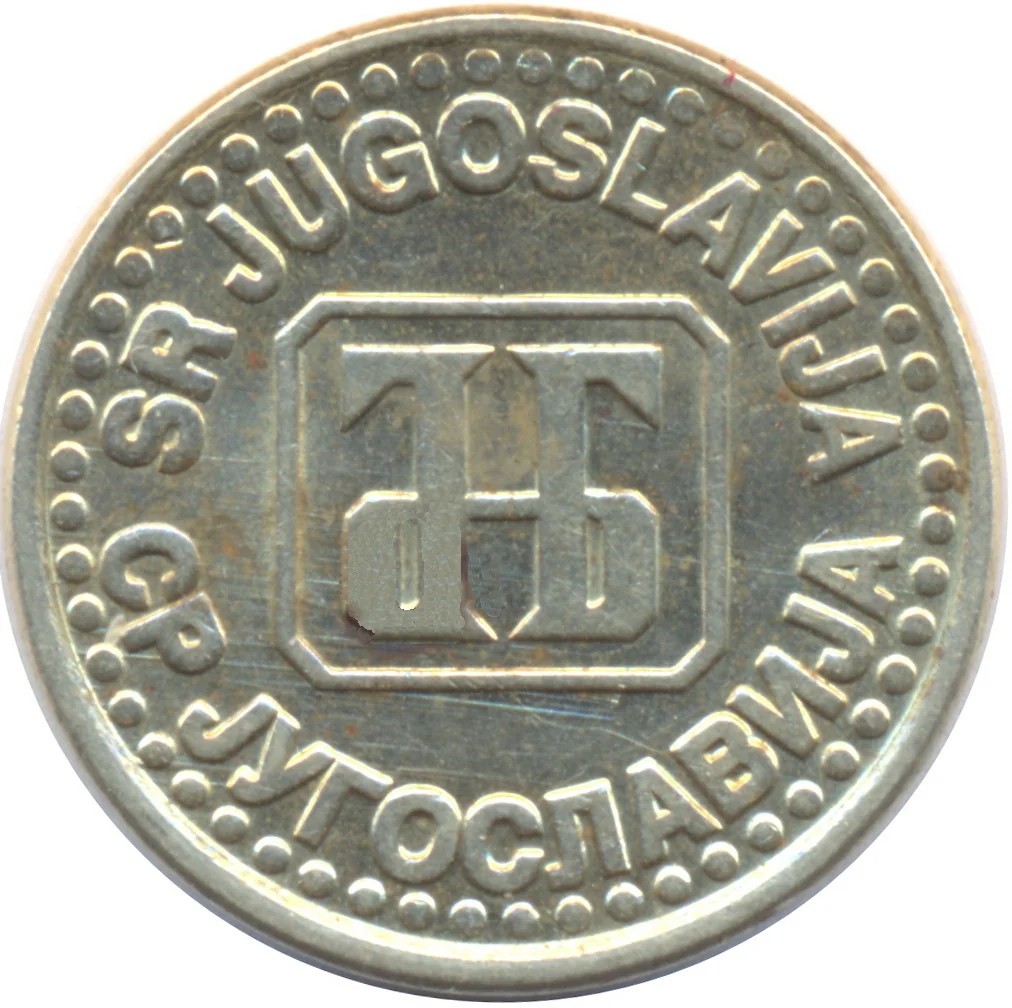
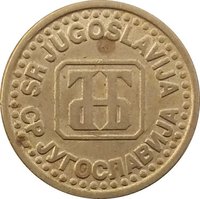
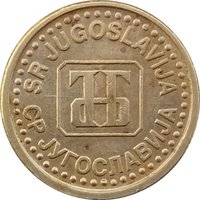
Obverse
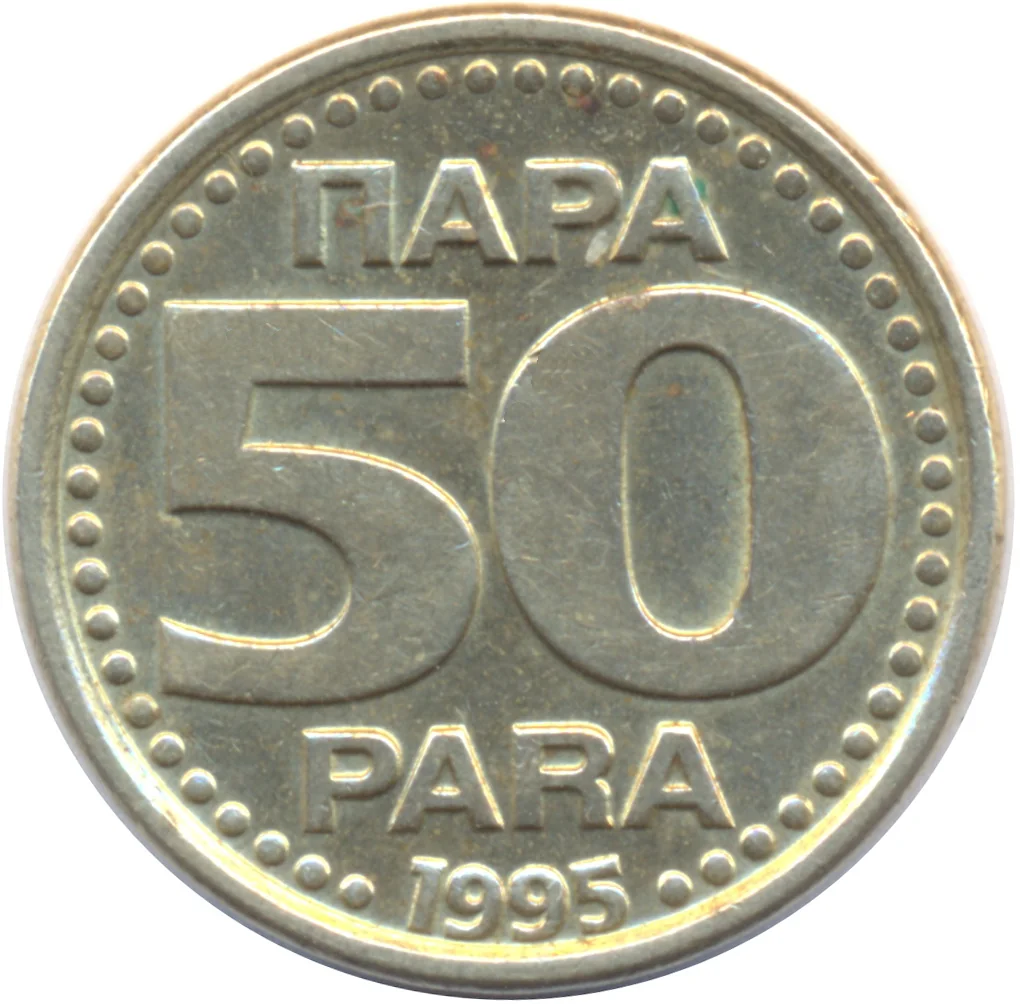
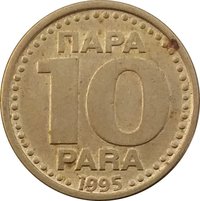
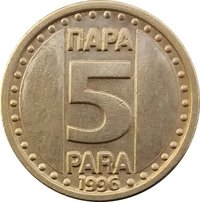
Reverse
Edge
Plain
Mintings
| Year | Mint Mark | Mintage | Quality | Collection |
|---|---|---|---|---|
| 1995 | — | 19,193,000 |
Historical background
By 1995, the currency situation in the Federal Republic of Yugoslavia (consisting of Serbia and Montenegro) was one of extreme instability and hyperinflation, marking the final, catastrophic phase of a multi-year economic collapse. The national currency, the Yugoslav dinar, had become virtually worthless due to a vicious cycle triggered by international sanctions, the devastation of war, a collapse in industrial production, and the government's recourse to printing money to cover massive deficits. This process peaked in 1994 with one of the worst hyperinflations in history, rendering the dinar unusable for daily transactions.
In response to this crisis, the government implemented a radical monetary reform in January 1994, introducing the "novi dinar" (new dinar) pegged 1:1 to the Deutsche Mark. This bold move, orchestrated by Dragoslav Avramović, initially succeeded in halting hyperinflation and restoring a degree of monetary stability—a period known as the "Avramović miracle." However, by 1995, this stability was unraveling. The underlying economic problems—sanctions, a lack of foreign exchange, and persistent budget shortfalls—remained unresolved. The National Bank of Yugoslavia was forced to finance the government's spending by creating money, which began to erode the hard currency peg and stoke renewed inflationary pressures.
Consequently, the currency regime in 1995 was a fragile and dual system. While the novi dinar remained the official currency, its credibility was waning. In practice, the population and businesses increasingly relied on the Deutsche Mark as a stable alternative for savings and significant transactions, a process known as "markization." This de facto dollarization (in this case, "Deutsche Mark-ization") reflected a profound loss of confidence in state institutions and the national currency, leaving the economy vulnerable and setting the stage for further monetary crises in the years to follow.
In response to this crisis, the government implemented a radical monetary reform in January 1994, introducing the "novi dinar" (new dinar) pegged 1:1 to the Deutsche Mark. This bold move, orchestrated by Dragoslav Avramović, initially succeeded in halting hyperinflation and restoring a degree of monetary stability—a period known as the "Avramović miracle." However, by 1995, this stability was unraveling. The underlying economic problems—sanctions, a lack of foreign exchange, and persistent budget shortfalls—remained unresolved. The National Bank of Yugoslavia was forced to finance the government's spending by creating money, which began to erode the hard currency peg and stoke renewed inflationary pressures.
Consequently, the currency regime in 1995 was a fragile and dual system. While the novi dinar remained the official currency, its credibility was waning. In practice, the population and businesses increasingly relied on the Deutsche Mark as a stable alternative for savings and significant transactions, a process known as "markization." This de facto dollarization (in this case, "Deutsche Mark-ization") reflected a profound loss of confidence in state institutions and the national currency, leaving the economy vulnerable and setting the stage for further monetary crises in the years to follow.
🌱 Common