


Obverse
Description:
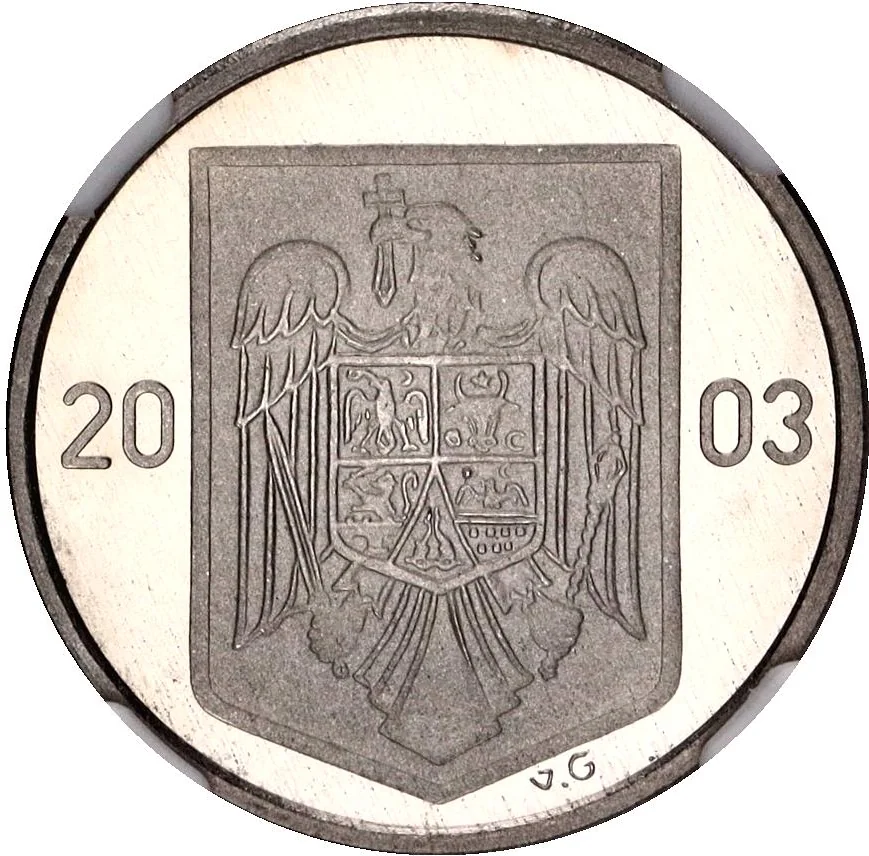
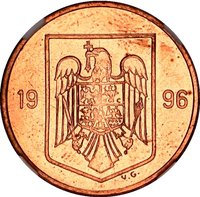
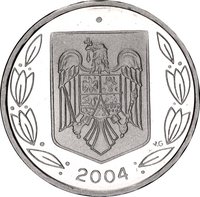
Romania's 1992 coat of arms features an eagle holding a shield divided into five sections, representing its historic provinces: Wallachia (golden eagle), Moldavia (aurochs), Oltenia and Banat (lion and bridge), Dobrogea (dolphins), and Transylvania (black eagle, seven castles, sun, and moon).
Inscription:
19 93
V.G
V.G
Script: Latin
Reverse
Description:
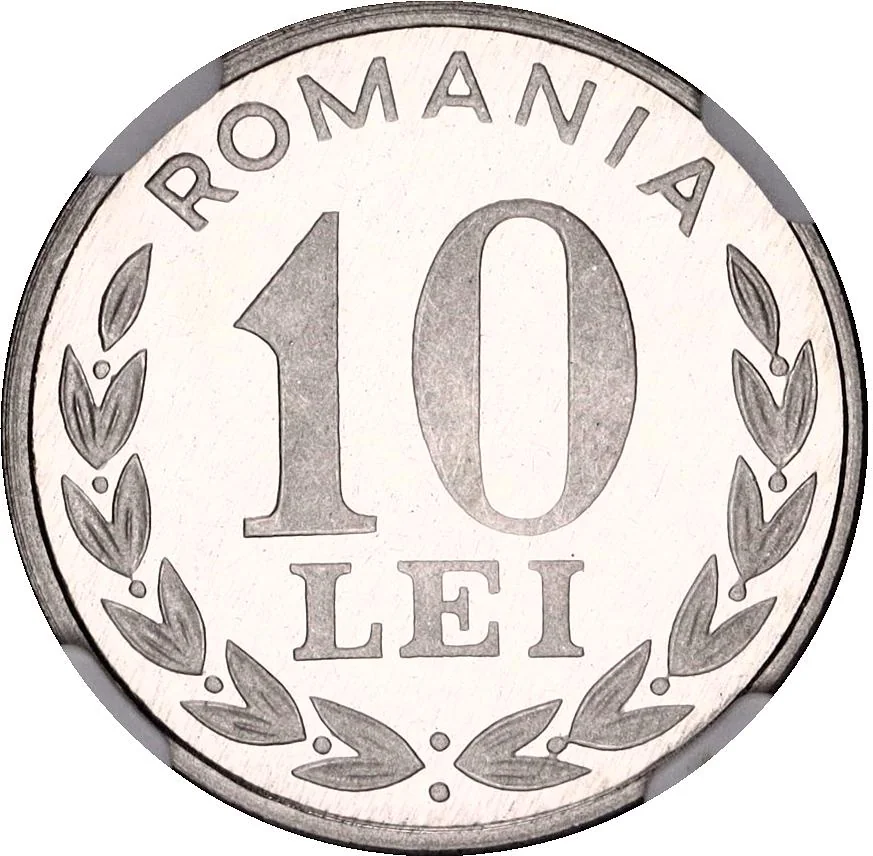
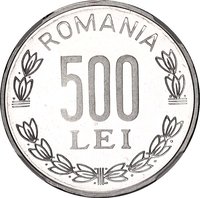
10 LEI face value with ROMANIA between olive branches.
Inscription:
ROMANIA
10
LEI
10
LEI
Script: Latin
Edge
Plain
Categories
| Symbols> Coat of Arms |
Mints
| Name | Mark |
|---|---|
| State Mint | — |
Mintings
| Year | Mint Mark | Mintage | Quality | Collection |
|---|---|---|---|---|
| 1993 | — | 6,000,000 | ||
| 1994 | — | 7,000,000 | ||
| 1995 | — | 30,000,000 | ||
| 1996 | — | 5,000 | ||
| 2000 | — | 4,500 | Proof | |
| 2002 | — | 1,500 | Proof | |
| 2003 | — | 2,000 | Proof |
Historical background
In 1993, Romania was navigating the turbulent aftermath of the 1989 revolution, grappling with the profound challenges of transitioning from a centrally planned communist economy to a market-oriented system. The currency situation was a critical component of this difficult shift. The national currency, the leu (ROL), was severely weakened by the legacy of Ceaușescu-era economic mismanagement, which included massive foreign debt repayment that had crippled domestic production. The early 1990s saw high inflation, significant currency depreciation, and the emergence of a large black market for foreign exchange, particularly US dollars and German marks, which were seen as stable stores of value compared to the rapidly eroding leu.
The government, under Prime Minister Nicolae Văcăroiu, attempted to stabilize the economy through a partial liberalization program. However, 1993 was characterized by a dual exchange rate system: an official rate set by the National Bank of Romania (BNR) and a much higher, fluctuating free market rate. This disparity created distortions, encouraged corruption, and hampered legitimate foreign trade and investment. Inflation remained rampant, exceeding 200% annually, which continuously devalued the leu and eroded public savings and wages, causing widespread social hardship.
Ultimately, the currency instability of 1993 highlighted the incomplete nature of Romania's economic reforms at the time. The situation underscored the urgent need for a more coherent stabilization package, which would later materialize in the mid-1990s with tighter fiscal discipline, accelerated privatization, and the eventual unification of exchange rates. The year thus represented a painful but necessary phase in the leu's journey toward convertibility and the country's slow integration into the global market economy.
The government, under Prime Minister Nicolae Văcăroiu, attempted to stabilize the economy through a partial liberalization program. However, 1993 was characterized by a dual exchange rate system: an official rate set by the National Bank of Romania (BNR) and a much higher, fluctuating free market rate. This disparity created distortions, encouraged corruption, and hampered legitimate foreign trade and investment. Inflation remained rampant, exceeding 200% annually, which continuously devalued the leu and eroded public savings and wages, causing widespread social hardship.
Ultimately, the currency instability of 1993 highlighted the incomplete nature of Romania's economic reforms at the time. The situation underscored the urgent need for a more coherent stabilization package, which would later materialize in the mid-1990s with tighter fiscal discipline, accelerated privatization, and the eventual unification of exchange rates. The year thus represented a painful but necessary phase in the leu's journey toward convertibility and the country's slow integration into the global market economy.

🌱 Very Common