

10 euro cents – Vatican City
Add to wishlist
Vatican City
Context
Material
References
KM: #
Numista: #58570
Value
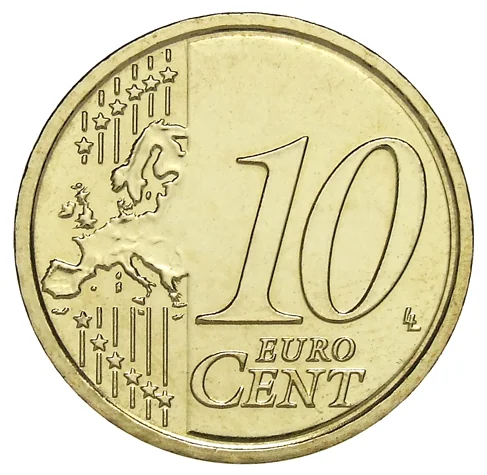
Exchange value: 0.10 EUR
Obverse
Description:
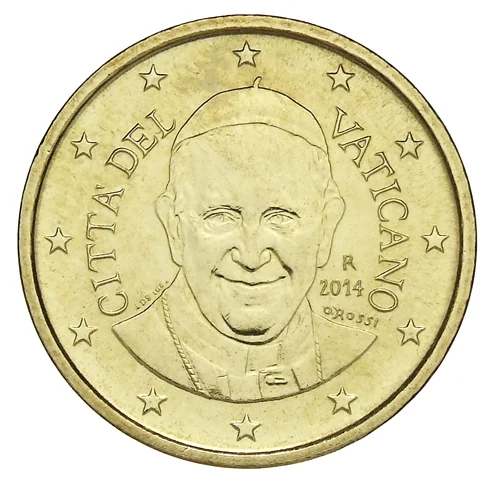
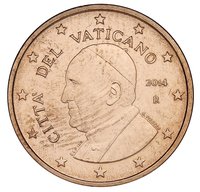
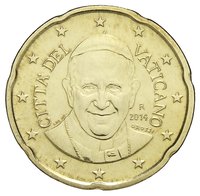
Pope Francis's portrait is encircled by "CITTA' DEL VATICANO" and the twelve European stars.
Inscription:
CITTA' DEL VATICANO
R
2015
LDS INC.
O.ROSSI
R
2015
LDS INC.
O.ROSSI
Translation:
Vatican City
R
2015
LDS INC.
O.ROSSI
R
2015
LDS INC.
O.ROSSI
Script: Latin
Language: Italian
Engravers: Orietta Rossi, Luciana De Simoni
Reverse
Edge
Indented (40 indentations)
Categories
| Map |
| Person> Religious figure |
Mints
| Name | Mark |
|---|---|
| Rome | R |
Mintings
Historical background
In 2014, Vatican City's currency situation was defined by its unique status as a monetary enclave within the Eurozone. Since 2002, following a monetary convention with Italy and the European Union, the euro has been the official currency of the Vatican City State. The Holy See minted its own euro coins, which are legal tender throughout the Eurozone and highly sought after by collectors. These coins feature the image of the reigning Pope (Pope Francis, from 2013) and are produced in limited, agreed-upon quantities set by the European Commission to prevent any risk of disrupting the broader monetary market.
However, 2014 was a significant year as it marked the final stage of a major financial reform drive initiated under Pope Benedict XVI and accelerated by Pope Francis. The Vatican was working diligently to align its financial institutions with international anti-money laundering (AML) and counter-terrorist financing standards. This followed years of scrutiny from bodies like the Council of Europe’s MONEYVAL committee, which had previously identified serious deficiencies. Key actions in 2014 included the establishment of a new financial regulatory authority (AIF) with enhanced powers and the first prosecutions within the Vatican’s own courts for financial crimes.
Consequently, while the physical currency in circulation was the stable and widely accepted euro, the broader "currency situation" was one of institutional transition. The focus was not on exchange rates or inflation, but on building credible financial transparency and oversight around the management of funds that flowed through the city-state. This effort was crucial for maintaining its ability to use the euro and operate within the global financial system, moving beyond past scandals toward a more accountable economic framework.
However, 2014 was a significant year as it marked the final stage of a major financial reform drive initiated under Pope Benedict XVI and accelerated by Pope Francis. The Vatican was working diligently to align its financial institutions with international anti-money laundering (AML) and counter-terrorist financing standards. This followed years of scrutiny from bodies like the Council of Europe’s MONEYVAL committee, which had previously identified serious deficiencies. Key actions in 2014 included the establishment of a new financial regulatory authority (AIF) with enhanced powers and the first prosecutions within the Vatican’s own courts for financial crimes.
Consequently, while the physical currency in circulation was the stable and widely accepted euro, the broader "currency situation" was one of institutional transition. The focus was not on exchange rates or inflation, but on building credible financial transparency and oversight around the management of funds that flowed through the city-state. This effort was crucial for maintaining its ability to use the euro and operate within the global financial system, moving beyond past scandals toward a more accountable economic framework.
🌱 Common