

1 rupee – Madras Presidency
Add to wishlist
India
Context
Year: 1830
Islamic (Hijri) Year:: 1172
Country: India
Issuer: Madras Presidency
Currency:
(1691—1835)
Demonetized: Yes
Material
References
KM: #
Numista: #58341
Value
Bullion value: $29.56
Obverse
Description:
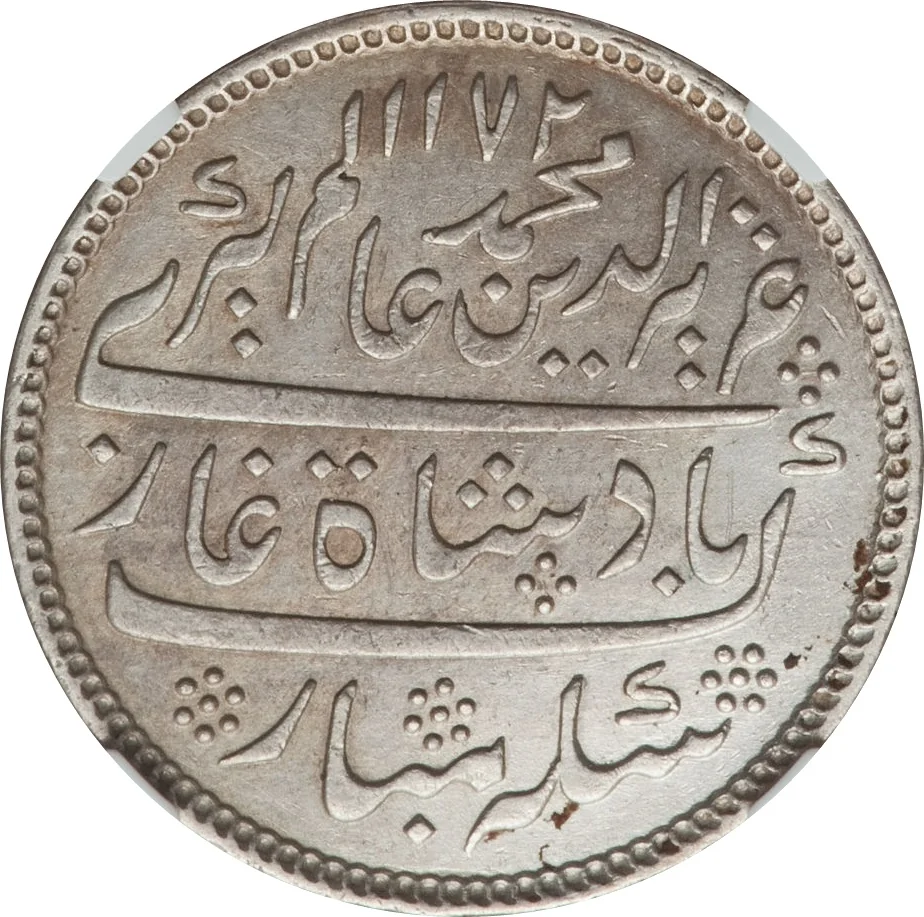
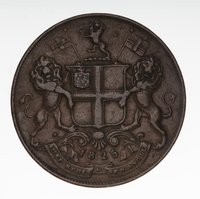
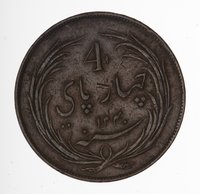
Persian legend: "1172 Sikka Mubarak, Badshah ghazi Aziz-ud-din Muhammad, Alamgir" within a toothed border.
Inscription:
١١۷٢
محمد عالم كير
عزيز الدين
باد شاه غازي
سكه مبارك
محمد عالم كير
عزيز الدين
باد شاه غازي
سكه مبارك
Translation:
Muhammad Alamgir
Aziz al-Din
Badshah Ghazi
Blessed Coin
Aziz al-Din
Badshah Ghazi
Blessed Coin
Language: Persian
Reverse
Description:
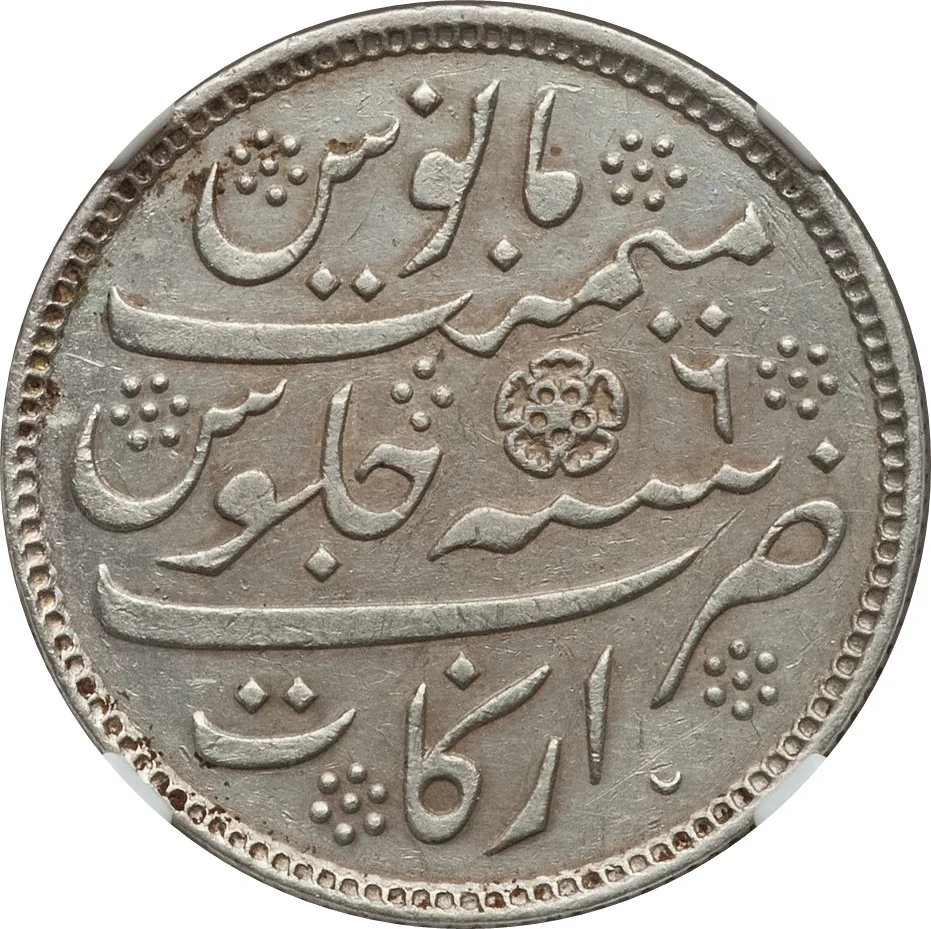
Persian legend: "Zarb Arcat sanat 6 julus maimanat manus" within a toothed border.
Inscription:
ممنت مانوس
سنه ٦ جلوس
ضرب اركات
سنه ٦ جلوس
ضرب اركات
Translation:
In the year 6 of the reign
Minted at Arcot
Minted at Arcot
Language: Arabic
Edge
Reeded
Mintings
| Year | Mint Mark | Mintage | Quality | Collection |
|---|---|---|---|---|
| 1830 | — | — | Proof | |
| 1830 | — | — |
Historical background
In 1830, the currency situation in the Madras Presidency was characterised by significant complexity and instability, stemming from a multi-currency system with no fixed exchange rates. The primary circulating coins included the gold Star Pagoda (a relic of earlier regimes), the silver Rupee (increasingly dominant under the EIC), and a plethora of lower-denomination copper and silver coins, such as fanams and cash. Crucially, the Presidency lacked a single standard; the rupee was not yet the sole legal tender, and the exchange rates between gold, silver, and copper coins fluctuated with market prices for bullion, causing confusion and facilitating fraud in everyday trade.
This monetary chaos was a major impediment to both commerce and administration. The East India Company's government collected revenue in rupees but also had to contend with other coins in circulation, leading to cumbersome calculations and losses in conversion. The problem was exacerbated by a shortage of small change, which forced the use of cut and fragmented coins, further degrading the system's reliability. Merchants and the public faced constant uncertainty, as the value of money in one's pocket could change from one district to another or from one month to the next, stifling economic activity.
Recognising this as a crisis, the Company authorities had already begun moves toward reform. The Coinage Act of 1835, which would establish the British Indian rupee as the uniform standard across all presidencies, was on the horizon. Therefore, 1830 represents a pivotal moment just prior to major systematisation. The Presidency was caught in the difficult transition from a traditional, fragmented monetary economy to a modern, uniform currency system imposed by colonial authority, with all the attendant confusion of a dying monetary order.
This monetary chaos was a major impediment to both commerce and administration. The East India Company's government collected revenue in rupees but also had to contend with other coins in circulation, leading to cumbersome calculations and losses in conversion. The problem was exacerbated by a shortage of small change, which forced the use of cut and fragmented coins, further degrading the system's reliability. Merchants and the public faced constant uncertainty, as the value of money in one's pocket could change from one district to another or from one month to the next, stifling economic activity.
Recognising this as a crisis, the Company authorities had already begun moves toward reform. The Coinage Act of 1835, which would establish the British Indian rupee as the uniform standard across all presidencies, was on the horizon. Therefore, 1830 represents a pivotal moment just prior to major systematisation. The Presidency was caught in the difficult transition from a traditional, fragmented monetary economy to a modern, uniform currency system imposed by colonial authority, with all the attendant confusion of a dying monetary order.
💎 Extremely Rare