
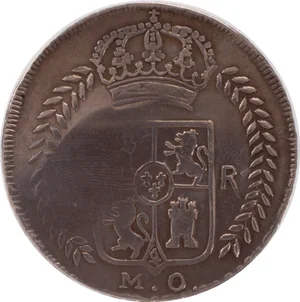
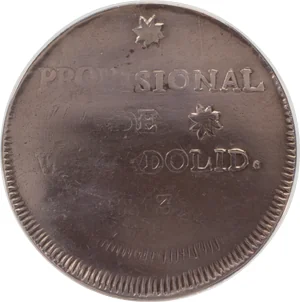
In 1813, the Municipality of Valladolid, like much of Spain, was embroiled in the Peninsular War (1808-1814), a period of profound monetary chaos and fragmentation. The French occupation forces, having withdrawn from the city after the Battle of Vitoria in June 1813, left behind an economy crippled by war requisitions and a currency system in disarray. The occupying authorities had previously imposed the use of French coinage and issued their own paper money, while the legitimate Spanish government, operating from Cádiz, continued to assert the validity of the traditional
real and
peso. This created a situation where multiple, competing currencies circulated with little public trust, their values fluctuating wildly based on the political and military fortunes of the day.
The primary challenge for Valladolid’s local economy was a severe shortage of reliable specie (coinage). Pre-war silver and gold coins had been heavily hoarded, exported, or confiscated, leading to a reliance on inferior and often fraudulent substitutes. Alongside the remnants of French money, the municipality had to contend with a flood of
vales reales (royal bonds), which had been issued by the Spanish crown since the 1780s and had drastically depreciated, functioning as a de facto, unstable paper currency. Furthermore, local authorities and even military commanders sometimes issued their own emergency tokens or promissory notes to pay for supplies, adding yet another layer of complexity and insecurity to everyday transactions.
Consequently, the year 1813 in Valladolid was marked by a desperate struggle for monetary stability amidst the broader struggle for national liberation. Prices were highly unstable, trade was hampered by uncertainty, and the populace suffered from inflation and a lack of small change for basic market purchases. The situation began a slow path toward normalization only with the full French retreat and the subsequent efforts of the returning Spanish monarchy under Ferdinand VII to reassert a unified national currency, a process that would take years to resolve the deep-seated financial wounds of the war.