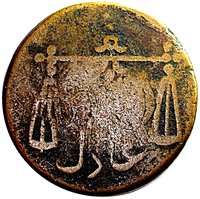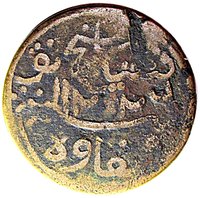

In 1811, the Sultanate of Pontianak, a Malay state on the west coast of Borneo, operated within a complex and multi-layered currency environment. The local economy was fundamentally tied to the regional trade networks of the Malay Archipelago, where the Spanish silver dollar (also known as the "piece of eight") served as the dominant international currency. These coins, alongside other silver currencies like Dutch ducatons and Mexican dollars, were essential for larger transactions, external trade, and state finances, circulating widely in the port city.
Alongside this imported silver, traditional commodity monies remained vital for everyday local commerce. The most important of these was the
pitis, small coins often made of tin or lead, which were minted locally by the Sultanate itself. These coins facilitated daily market exchanges among the indigenous population. Furthermore, in upriver and interior trade, established barter systems and other commodity standards, such as bundles of rice or measures of gold dust, continued to hold significant economic and cultural value, creating a dual monetary system.
This period was one of transition and uncertainty. While Pontianak was a Dutch protectorate, the year 1811 saw the Napoleonic Wars directly impact the region with the British invasion of Java, seizing control from the Dutch. This political shift likely caused disruptions in the flow of Dutch currency and trade, potentially increasing reliance on Spanish silver and local coinage. Thus, the monetary landscape of Pontianak in 1811 was characterized by this coexistence of international specie, local minted coinage, and traditional commodities, all set against a backdrop of geopolitical instability that threatened to disrupt the established economic order.