

Iran
Context
Material
Diameter: 13 mm
Weight: 2.52 g
Silver weight: 2.52 g
Thickness: 1.1 mm
Shape: Irregular round
Composition: Silver
Magnetic: No
Technique: Hammered
Alignment: Coin alignment
flip
References
KM: #Click to copy to clipboard823.13
Numista: #57432
Value
Bullion value: $7.26
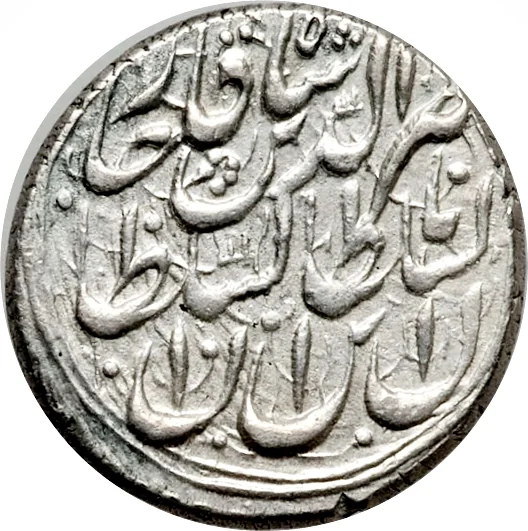
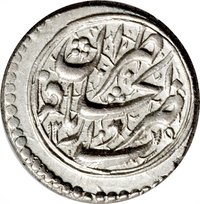
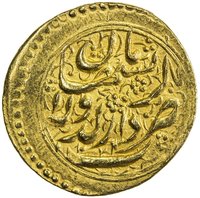
Obverse
Description:
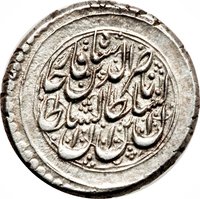
Sultan, son of Sultan Naser al-Din Shah Qajar.
Inscription:
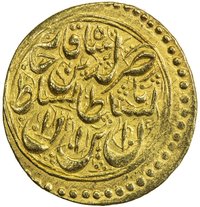
السلطان ابن السّلطان ناصرالدّین شاه قاجار
Translation:
The Sultan, Son of the Sultan, Nasser al-Din Shah Qajar
Language: Arabic
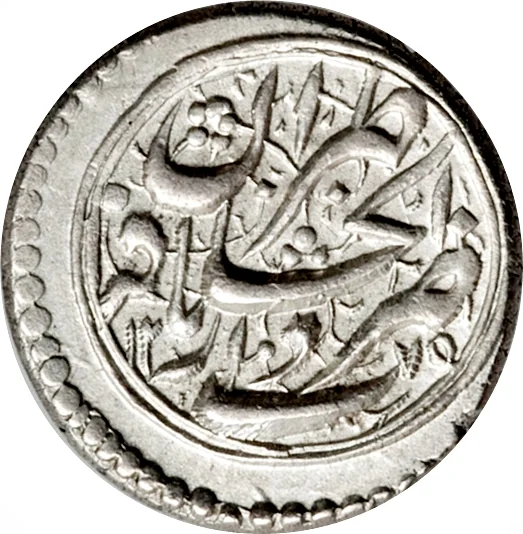
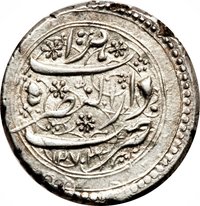
Reverse
Edge
Plain
Mintings
| Year | Mint Mark | Mintage | Quality | Collection |
|---|---|---|---|---|
| 1854 | — | — | ||
| 1855 | — | — | ||
| 1859 | — | — | ||
| 1860 | — | — | ||
| 1861 | — | — | ||
| 1862 | — | — |
Historical background
In 1854, Iran's monetary system was a complex and fragmented reflection of its weak central authority and economic integration into global trade networks. The country operated on a bimetallic standard, with silver qirāns and gold tomans as the primary units of account (one toman equaling ten qirāns). However, the actual coinage in circulation was a chaotic mix of domestic and foreign currencies. Domestically minted coins, such as the silver ʿabbāsi and copper shāhis, varied widely in weight and purity due to decentralized minting operations controlled by provincial governors and tribal khans. This lack of standardization eroded public trust and hampered commerce.
The situation was further complicated by the heavy influx of foreign silver, particularly Russian rubles and Maria Theresa thalers, which circulated freely due to their reliable silver content. These foreign coins often traded at a premium over their Iranian counterparts, leading to Gresham's Law in practice: "bad money drives out good." The government in Tehran, under Naser al-Din Shah Qajar, struggled to control the money supply. Chronic budget deficits, driven by royal extravagance and military expenses, were frequently addressed by debasing the coinage—reducing the silver content in new mintings to create short-term revenue, which only accelerated inflation and further undermined the currency's credibility.
This monetary instability was symptomatic of broader 19th-century challenges. Iran's economy was increasingly pressured by European imperial interests, with Russia and Britain exerting significant political and commercial influence. The state's inability to reform its fiscal and monetary systems left it vulnerable, as internal trade suffered from exchange uncertainty and external trade balances were difficult to manage. Thus, the currency situation of 1854 was not merely a financial issue but a clear indicator of the Qajar dynasty's diminishing control over the national economy and its subordination to global economic forces beyond its command.
The situation was further complicated by the heavy influx of foreign silver, particularly Russian rubles and Maria Theresa thalers, which circulated freely due to their reliable silver content. These foreign coins often traded at a premium over their Iranian counterparts, leading to Gresham's Law in practice: "bad money drives out good." The government in Tehran, under Naser al-Din Shah Qajar, struggled to control the money supply. Chronic budget deficits, driven by royal extravagance and military expenses, were frequently addressed by debasing the coinage—reducing the silver content in new mintings to create short-term revenue, which only accelerated inflation and further undermined the currency's credibility.
This monetary instability was symptomatic of broader 19th-century challenges. Iran's economy was increasingly pressured by European imperial interests, with Russia and Britain exerting significant political and commercial influence. The state's inability to reform its fiscal and monetary systems left it vulnerable, as internal trade suffered from exchange uncertainty and external trade balances were difficult to manage. Thus, the currency situation of 1854 was not merely a financial issue but a clear indicator of the Qajar dynasty's diminishing control over the national economy and its subordination to global economic forces beyond its command.
💎 Extremely Rare