

Iran
Context
Material
References
KM: #Click to copy to clipboard828.2
Numista: #57418
Value
Bullion value: $7.26
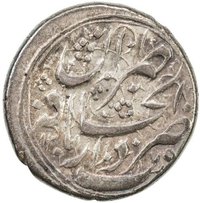
Obverse
Description:
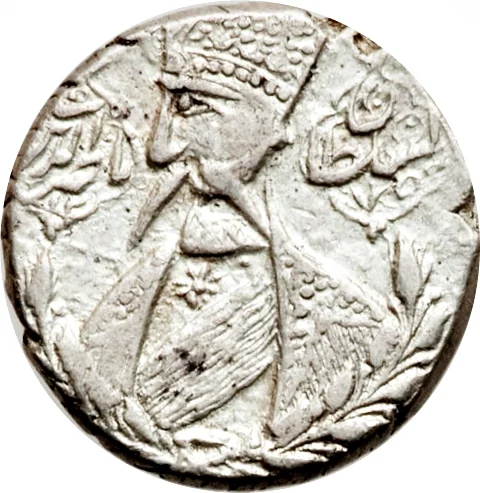
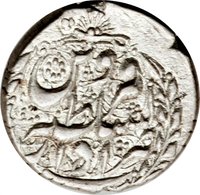
Crowned portrait of Nasar al-Din with olive leaves.
Inscription:
السلطان ناصرالدین شاه
Translation:
The Sultan Nasir al-Din Shah
Language: Arabic
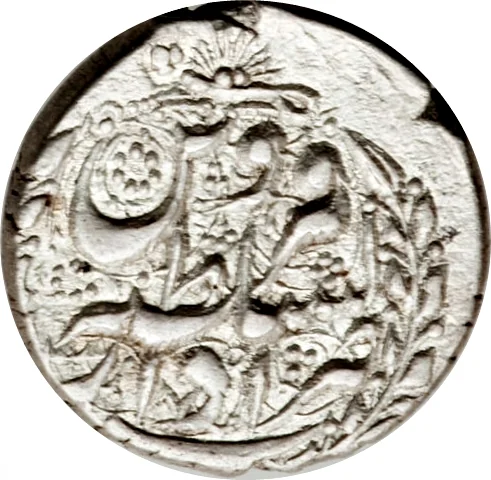
Reverse
Edge
Plain
Mints
| Name | Mark |
|---|---|
| Qazwin | — |
Mintings
| Year | Mint Mark | Mintage | Quality | Collection |
|---|---|---|---|---|
| 1858 | — | — | ||
| 1859 | — | — |
Historical background
In 1858, Iran's currency system was a complex and fragmented reflection of its weakened Qajar state, caught between a traditional silver-based economy and the pressures of global trade. The primary unit was the silver qiran (also kran), but its value and physical composition were highly unstable due to chronic debasement by the government. The royal mint operated as a major source of revenue, frequently reducing the silver content in coins to finance court expenditures and military campaigns, leading to severe inflation and a loss of public trust. Concurrently, a bewildering variety of European gold and silver coins, particularly Russian rubles and British sovereigns, circulated in major trading cities, their value fluctuating daily against the unreliable qiran.
This monetary chaos was exacerbated by the absence of a central bank or standardized national currency. Provincial rulers and powerful merchants often issued their own copper coins (puls) for local use, while large transactions in the bazaar relied on intangible units of account like the toman (worth 10 qirans). The system created a lucrative but exploitative business for money changers (sarrafs), who navigated the dizzying exchange rates. Furthermore, the government's increasing trade deficits with Europe, particularly Britain and Russia, drained the country of silver bullion, further straining the metallic currency base.
The situation in 1858 was not yet one of modern reform but of deepening crisis. While Naser al-Din Shah's grand vizier, Mirza Aqa Khan Nuri, was grappling with administrative and financial challenges, no effective central monetary policy existed. The currency disorder acted as a significant brake on economic development, discouraging foreign investment and complicating tax collection. It formed a critical part of the broader "Imperial Question" — the struggle of the Qajar state to maintain sovereignty and solvency in the face of internal decay and the encroaching financial and political influence of European powers, setting the stage for later, more concerted reform attempts in the 1870s and 1880s.
This monetary chaos was exacerbated by the absence of a central bank or standardized national currency. Provincial rulers and powerful merchants often issued their own copper coins (puls) for local use, while large transactions in the bazaar relied on intangible units of account like the toman (worth 10 qirans). The system created a lucrative but exploitative business for money changers (sarrafs), who navigated the dizzying exchange rates. Furthermore, the government's increasing trade deficits with Europe, particularly Britain and Russia, drained the country of silver bullion, further straining the metallic currency base.
The situation in 1858 was not yet one of modern reform but of deepening crisis. While Naser al-Din Shah's grand vizier, Mirza Aqa Khan Nuri, was grappling with administrative and financial challenges, no effective central monetary policy existed. The currency disorder acted as a significant brake on economic development, discouraging foreign investment and complicating tax collection. It formed a critical part of the broader "Imperial Question" — the struggle of the Qajar state to maintain sovereignty and solvency in the face of internal decay and the encroaching financial and political influence of European powers, setting the stage for later, more concerted reform attempts in the 1870s and 1880s.
✨ Legendary