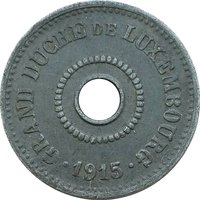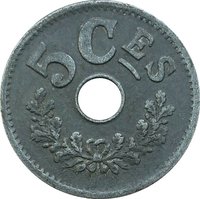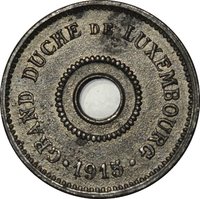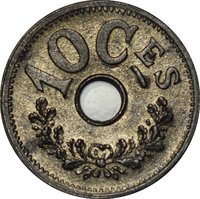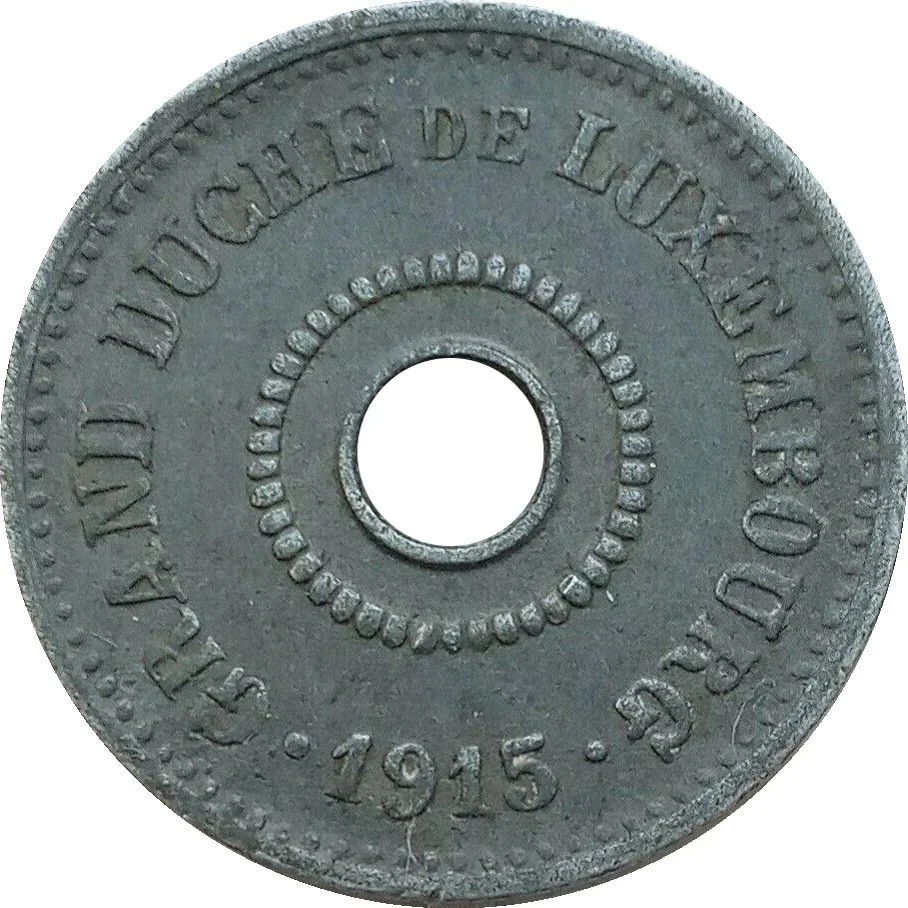
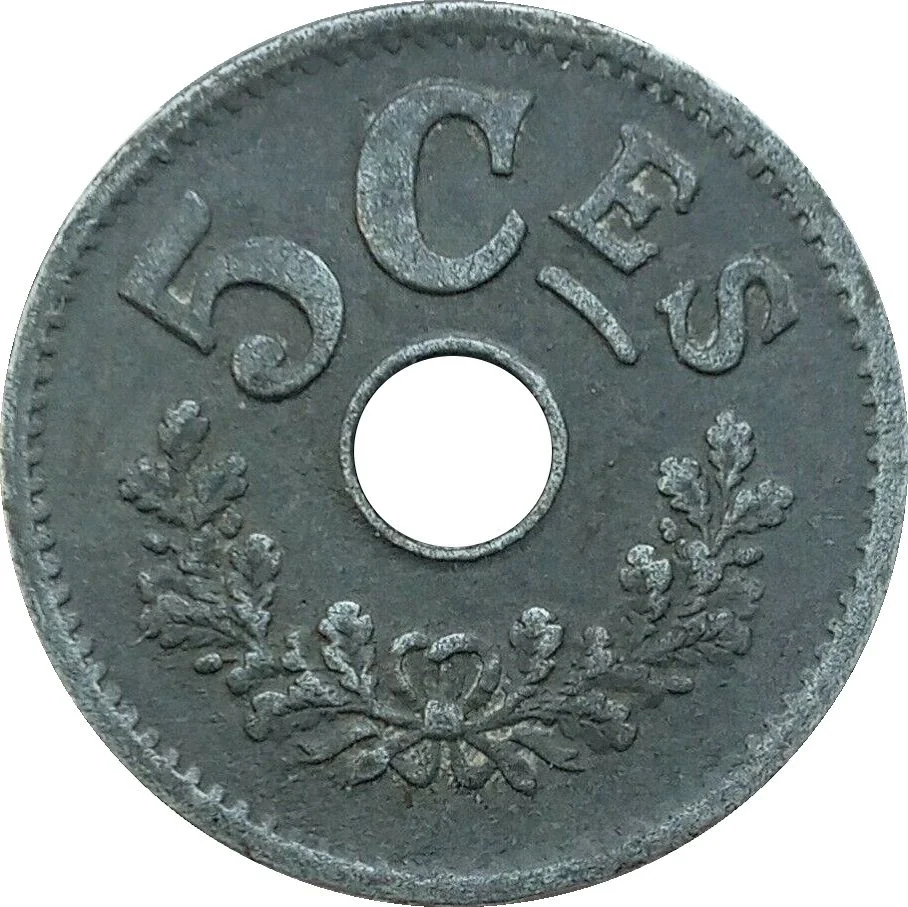
In 1915, the Grand Duchy of Luxembourg found itself in a precarious and complex monetary situation due to its occupation by the German Empire during the First World War. Although officially neutral, Luxembourg's strategic importance led to its full military occupation in August 1914. Consequently, the German Mark was declared legal tender alongside the existing Luxembourg franc, which was historically pegged to and interchangeable with the Belgian franc. This created a dual-currency system where both currencies circulated, but with the occupying German authorities aggressively promoting the use of their own Mark for all official and military payments.
The forced introduction of the German Mark led to significant inflation and economic distortion. The Luxembourg franc, still trusted by the population, began to disappear from circulation as people hoarded it, anticipating a return to normalcy after the war—a phenomenon known as Gresham's Law, where "bad money drives out good." Meanwhile, the flood of Marks, used to finance the occupation and extract resources, decreased in purchasing power, causing prices for essential goods to rise sharply. This was exacerbated by wartime shortages and blockades, which led to a severe decline in living standards.
Administratively, the Luxembourg government, under the control of the German civilian administration headed by
Polizeidirektor von Tessmar, had limited power to manage the economy. While it attempted to issue small-denomination paper money (bons de caisse) to alleviate a coin shortage, its monetary sovereignty was effectively suspended. The fundamental instability of 1915 stemmed from this loss of control, as the currency system became a tool of occupation policy, leaving the population financially vulnerable and dependent on the fluctuating value of an imposed wartime currency.