

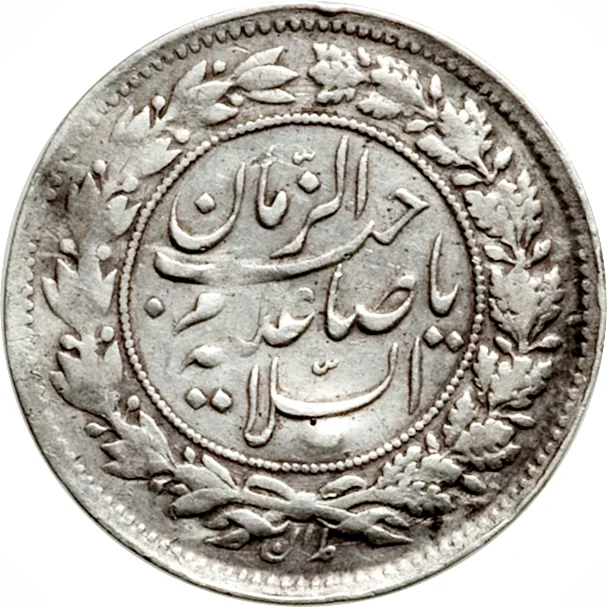
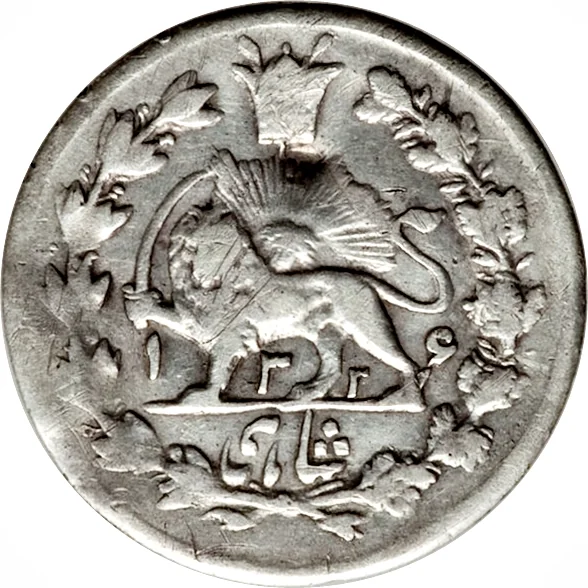
1 white shahi – Iran
Add to wishlist
Circulating commemorative coins
Commemoration: Sahib Al-Zaman birth year
Iran
Context
Year: 1908
Islamic (Hijri) Year:: 1326
Issuer: Iran
Ruler: Mohammad Ali Shah
Currency:
(1825—1932)
Demonetized: Yes
Material
References
KM: #
Numista: #57376
Value
Bullion value: $1.51
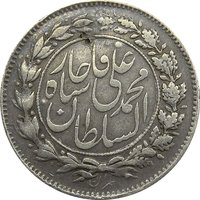
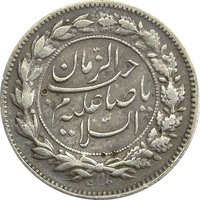
Obverse
Reverse
Edge
Reeded
Mintings
| Year | Mint Mark | Mintage | Quality | Collection |
|---|---|---|---|---|
| 1908 | — | — |
Historical background
In 1908, Iran's currency system was a complex and unstable reflection of the nation's broader political and economic fragility. The country operated on a bimetallic standard, with the primary silver unit being the kran and the gold unit the toman (equal to 10 krans). However, the actual monetary landscape was chaotic, characterized by a severe shortage of specie, a proliferation of debased and counterfeit coins from hundreds of local and provincial mints, and a heavy reliance on foreign currencies like the Russian ruble and British pound sterling in major trade centers. This lack of uniform, trusted coinage severely hampered domestic commerce and made the state's finances precarious.
The root of this monetary disorder lay in the Qajar dynasty's weakness and foreign domination. Decades of concession-granting to European powers had drained silver from the country, while the government, facing chronic budget deficits and indebted to both Russia and Britain, resorted to debasing the coinage to raise short-term revenue. This practice destroyed public confidence in the currency and fueled inflation. Furthermore, the Anglo-Russian Convention of 1907, which formally divided Iran into spheres of influence, had just been signed, exacerbating economic instability and further undermining the central government's authority to implement monetary reform.
This chaotic currency situation was both a cause and a symptom of the Constitutional Revolution (1905-1911), which was ongoing in 1908. The economic grievances of merchants (bazaaris) and the general public against financial corruption and foreign control were central drivers of the revolution. In June 1908, the pivotal event of the year occurred when Mohammad Ali Shah bombarded the parliament (Majlis) with Russian-officered Cossack Brigade support, temporarily suppressing the constitutionalists. This political rupture further destabilized the economy, delaying any coherent monetary policy and ensuring that currency disorder would remain a critical issue for the struggling constitutional government when it eventually regained control.
The root of this monetary disorder lay in the Qajar dynasty's weakness and foreign domination. Decades of concession-granting to European powers had drained silver from the country, while the government, facing chronic budget deficits and indebted to both Russia and Britain, resorted to debasing the coinage to raise short-term revenue. This practice destroyed public confidence in the currency and fueled inflation. Furthermore, the Anglo-Russian Convention of 1907, which formally divided Iran into spheres of influence, had just been signed, exacerbating economic instability and further undermining the central government's authority to implement monetary reform.
This chaotic currency situation was both a cause and a symptom of the Constitutional Revolution (1905-1911), which was ongoing in 1908. The economic grievances of merchants (bazaaris) and the general public against financial corruption and foreign control were central drivers of the revolution. In June 1908, the pivotal event of the year occurred when Mohammad Ali Shah bombarded the parliament (Majlis) with Russian-officered Cossack Brigade support, temporarily suppressing the constitutionalists. This political rupture further destabilized the economy, delaying any coherent monetary policy and ensuring that currency disorder would remain a critical issue for the struggling constitutional government when it eventually regained control.
✨ Legendary