

1000 dinars – Iran
Add to wishlist
Iran
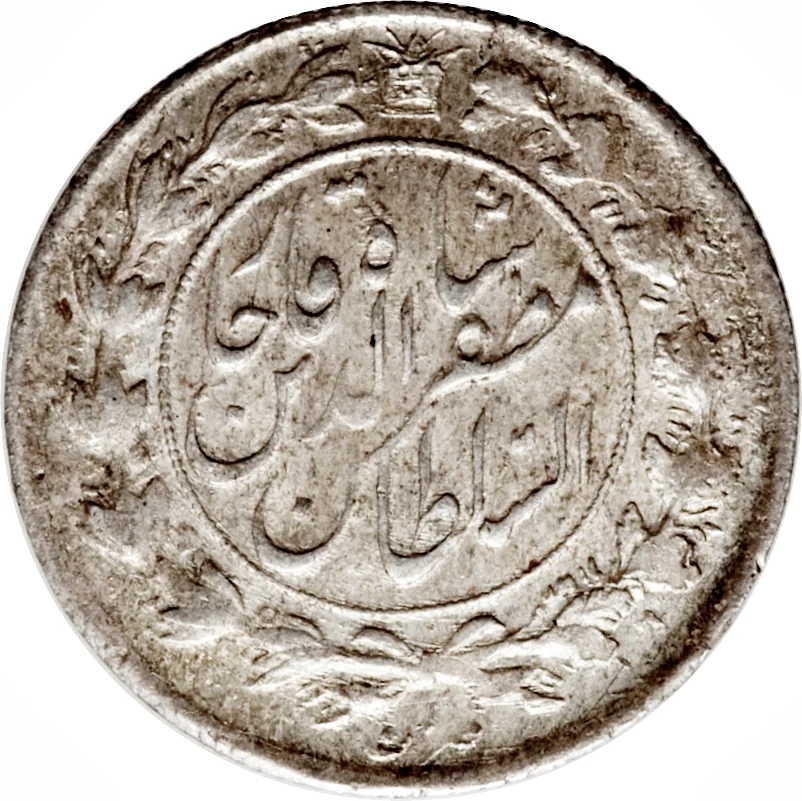
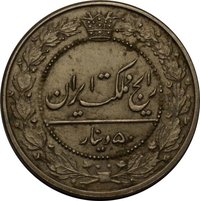
Obverse
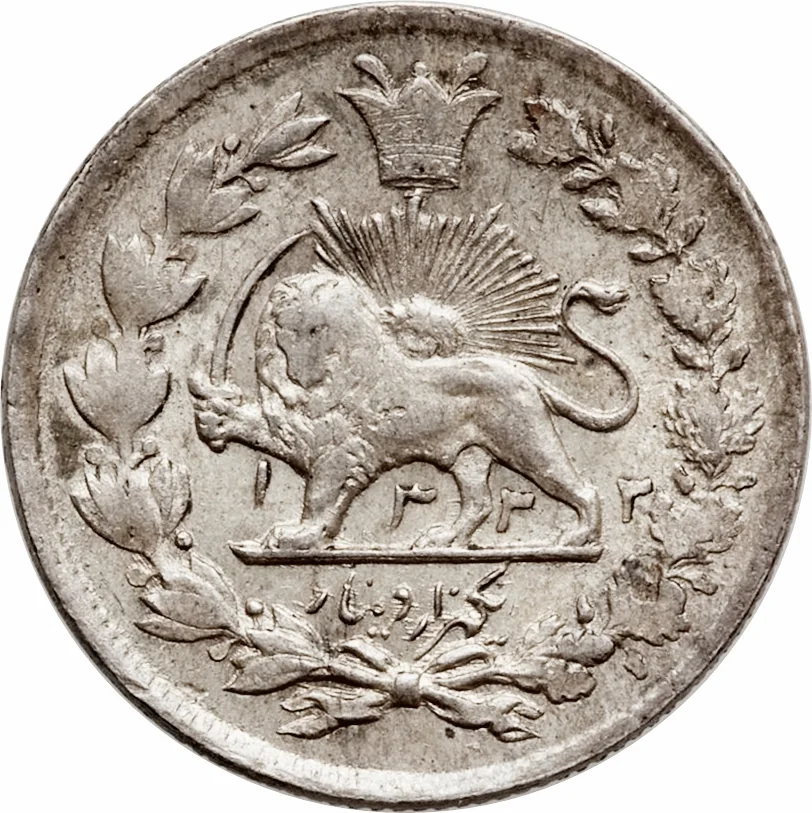
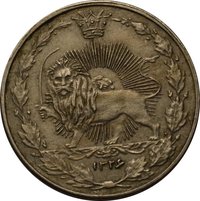
Reverse
Description:
Crowned lion.
Inscription:
۱۳٢٢
يکهزار دینار
يکهزار دینار
Translation:
One Thousand Dinars, 1322
Languages: Arabic Numerals, Persian
Edge
Mintings
| Year | Mint Mark | Mintage | Quality | Collection |
|---|---|---|---|---|
| 1900 | — | — | ||
| 1901 | — | — | ||
| 1902 | — | — | ||
| 1904 | — | — |
Historical background
At the dawn of the 20th century, Iran’s monetary system was in a state of profound disarray, a reflection of the country’s political fragility and economic subjugation. The national currency, the silver qiran (also spelled kran), was the official unit, but its value and circulation were undermined by several critical factors. Most damaging was the chronic shortage of silver, leading the government to repeatedly debase the coinage by reducing its silver content. This resulted in a wide discrepancy between the heavily devalued qirans in general circulation and full-weight "imperial" qirans, causing confusion, loss of public trust, and rampant counterfeiting.
Compounding this instability was the lack of a central bank and the influential presence of foreign currencies, particularly the Russian ruble and the British pound sterling. These currencies, backed by their respective imperial powers, circulated freely within their spheres of influence in northern and southern Iran, often preferred for large transactions due to their relative stability. This monetary fragmentation mirrored the broader "Great Game" rivalry, effectively ceding control over parts of Iran’s economy to foreign powers and further eroding the authority of the Qajar state, which struggled to finance its expenditures beyond minting ever more depreciated coinage.
The cumulative effect was an economy plagued by severe inflation, unpredictable exchange rates, and a cumbersome system where major transactions often required weighing bags of coins rather than counting them. This chaotic currency situation stifled domestic trade, discouraged foreign investment outside colonial spheres, and placed a heavy burden on the peasantry and merchants. It became a powerful symbol of the Qajar dynasty’s inability to modernize and assert sovereignty, setting the stage for later 20th-century reforms, including the eventual establishment of the Imperial Bank of Persia and the introduction of the rial as the new monetary unit in 1932.
Compounding this instability was the lack of a central bank and the influential presence of foreign currencies, particularly the Russian ruble and the British pound sterling. These currencies, backed by their respective imperial powers, circulated freely within their spheres of influence in northern and southern Iran, often preferred for large transactions due to their relative stability. This monetary fragmentation mirrored the broader "Great Game" rivalry, effectively ceding control over parts of Iran’s economy to foreign powers and further eroding the authority of the Qajar state, which struggled to finance its expenditures beyond minting ever more depreciated coinage.
The cumulative effect was an economy plagued by severe inflation, unpredictable exchange rates, and a cumbersome system where major transactions often required weighing bags of coins rather than counting them. This chaotic currency situation stifled domestic trade, discouraged foreign investment outside colonial spheres, and placed a heavy burden on the peasantry and merchants. It became a powerful symbol of the Qajar dynasty’s inability to modernize and assert sovereignty, setting the stage for later 20th-century reforms, including the eventual establishment of the Imperial Bank of Persia and the introduction of the rial as the new monetary unit in 1932.
✨ Legendary