

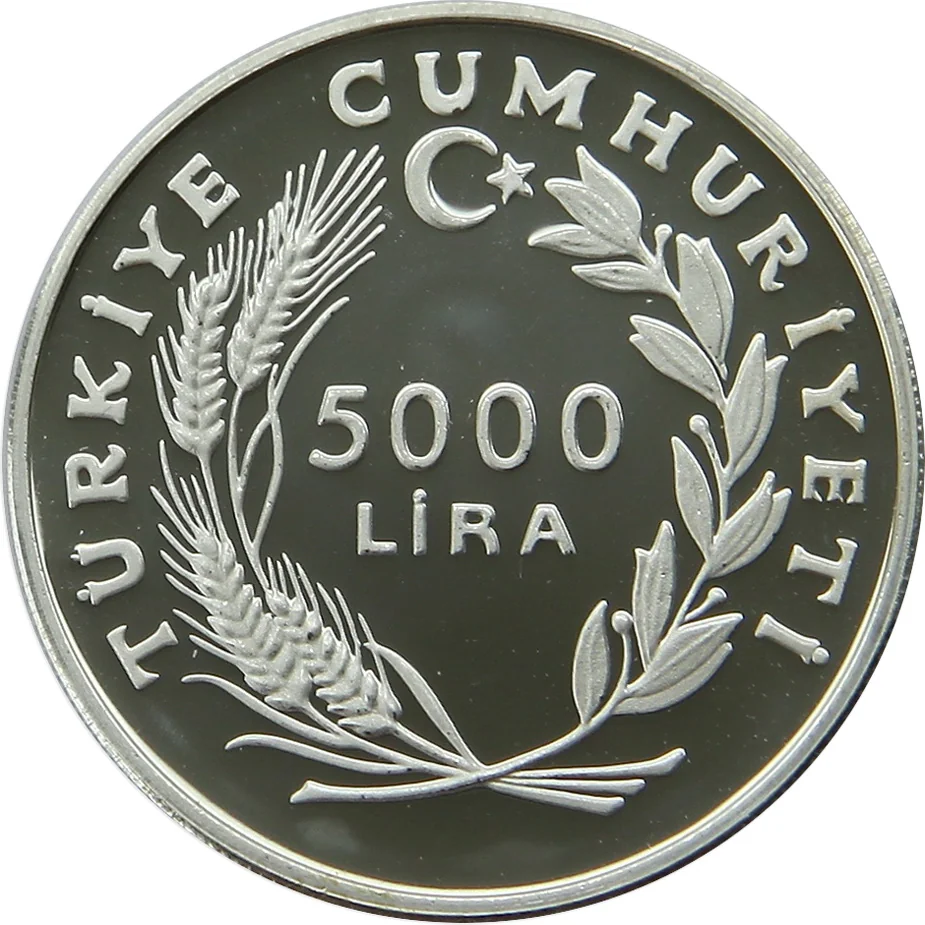
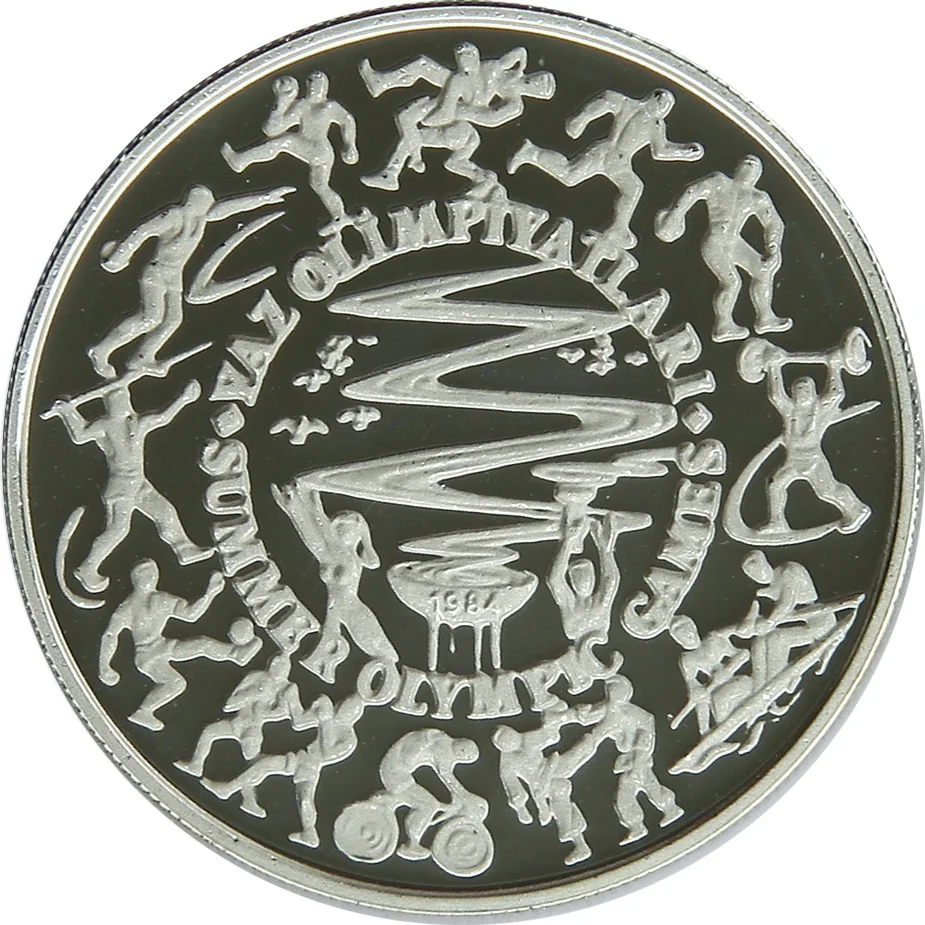
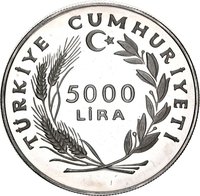
5000 Lira – Turkey
Non-circulating coins
Commemoration: 1984 Summer Olympics Games
Turkey
Context

Material
References
KM: #Click to copy to clipboard970
Numista: #57206
Value
Exchange value: 5000 TRL
Bullion value: $61.33
Inflation-adjusted value: 1795820358.35 TRL
Obverse
Reverse
Edge
Reeded
Mintings
| Year | Mint Mark | Mintage | Quality | Collection |
|---|---|---|---|---|
| 1984 | — | 5,343 | Proof |
Historical background
In 1984, Turkey was in the early stages of a profound economic transformation under the government of Prime Minister Turgut Özal, who had launched a sweeping liberalization program in 1980. The cornerstone of this policy shift was moving away from a heavily state-controlled, import-substitution industrialization model toward an export-oriented market economy. A critical component of this transition was the liberalization of the foreign exchange regime. Strict currency controls, a hallmark of the previous decades, were being systematically dismantled, allowing for greater convertibility of the Turkish Lira and encouraging foreign investment.
The currency situation was characterized by a managed devaluation and the official recognition of a dual-exchange rate system. The Central Bank set a daily official rate, but a more influential free market rate, determined by supply and demand in the newly authorized exchange bureaus, dictated real transactions. This period saw a significant and deliberate depreciation of the Lira to boost export competitiveness, with inflation remaining persistently high (around 40-50% annually), eroding domestic purchasing power. The government aimed to stabilize the currency through high real interest rates to attract capital, a challenging balancing act.
Overall, 1984 represented a year of cautious optimism within a painful adjustment. The liberalization of currency markets was a bold step intended to integrate Turkey into the global economy, curb the black market for foreign exchange, and provide the framework for growth. However, it also exposed the economy to volatility and set the stage for the chronic high inflation and bouts of currency instability that would challenge Turkey in the decades to follow, as the structural reforms in fiscal discipline and state-owned enterprises lagged behind financial liberalization.
The currency situation was characterized by a managed devaluation and the official recognition of a dual-exchange rate system. The Central Bank set a daily official rate, but a more influential free market rate, determined by supply and demand in the newly authorized exchange bureaus, dictated real transactions. This period saw a significant and deliberate depreciation of the Lira to boost export competitiveness, with inflation remaining persistently high (around 40-50% annually), eroding domestic purchasing power. The government aimed to stabilize the currency through high real interest rates to attract capital, a challenging balancing act.
Overall, 1984 represented a year of cautious optimism within a painful adjustment. The liberalization of currency markets was a bold step intended to integrate Turkey into the global economy, curb the black market for foreign exchange, and provide the framework for growth. However, it also exposed the economy to volatility and set the stage for the chronic high inflation and bouts of currency instability that would challenge Turkey in the decades to follow, as the structural reforms in fiscal discipline and state-owned enterprises lagged behind financial liberalization.

💎 Extremely Rare