

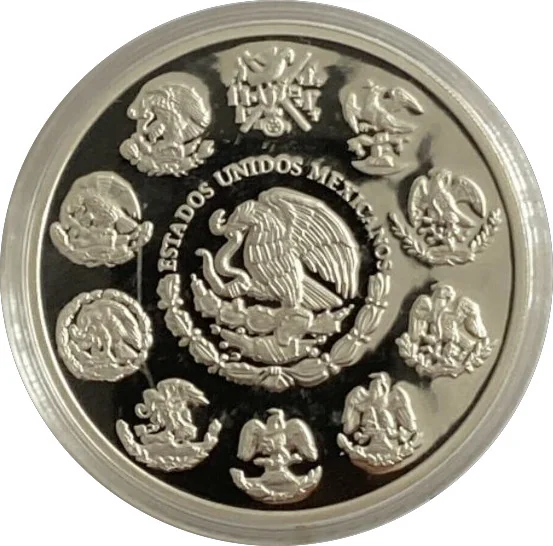
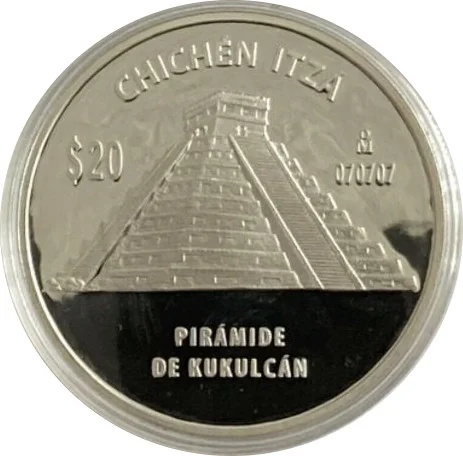
20 pesos – Mexico
Add to wishlist
Non-circulating coins
Commemoration: Chichén Itzá Series
Mexico
Context
Material
Diameter: 65 mm
Weight: 155.52 g
Silver Weight:: 155.36 g
Shape: Round
Composition: 99.9% Silver
Standard: Silver 5 ounces
Magnetic: No
Technique: Milled
Alignment: Coin alignment
flip
References
KM: #
Numista: #57117
Value
Exchange value: 20 MXN
Bullion value: $398.37
Inflation-adjusted value: 35.48 MXN
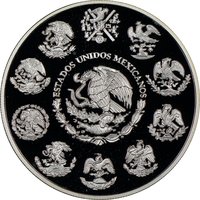
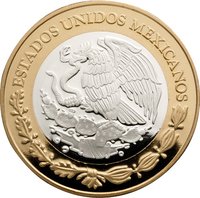
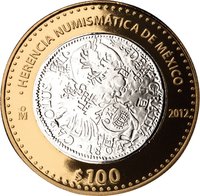
Obverse
Reverse
Edge
Mints
| Name | Mark |
|---|---|
| Mexican Mint | Mo |
Mintings
| Year | Mint Mark | Mintage | Quality | Collection |
|---|---|---|---|---|
| 2012 | Mo | 3,000 | Proof |
Historical background
In 2012, Mexico's currency situation was characterized by notable strength and stability, largely driven by robust capital inflows and favorable economic conditions. The Mexican peso (MXN) traded at its strongest level against the US dollar in nearly two years, averaging approximately 13.00 pesos per dollar for much of the year, a significant appreciation from levels above 14.00 seen during the 2008-2009 global financial crisis. This strength was underpinned by high global oil prices, strong foreign direct investment, and substantial portfolio investments attracted by Mexico's relatively solid economic growth and stable interest rates compared to other major economies.
This positive environment was supported by specific policy credibility and international perception. The Bank of Mexico (Banxico) maintained a disciplined inflation-targeting monetary policy, which fostered confidence among international investors. Furthermore, Mexico's economy was viewed as a relative safe haven during the European sovereign debt crisis, benefiting from its close ties to the recovering US economy. Significant sovereign debt issuances in international markets were met with strong demand, reinforcing the peso's position. The incoming administration of President-elect Enrique Peña Nieto, who won the July 2012 election, also generated optimism regarding potential structural reforms in energy and telecommunications, further buoying investor sentiment.
However, underlying vulnerabilities persisted beneath this strong facade. The economy remained heavily dependent on external factors, particularly US demand and remittances, as well as volatile commodity prices. There were concerns that the peso's appreciation could hurt export competitiveness, a crucial sector for the Mexican economy. As the year closed, markets began to exhibit increased volatility, with the peso weakening slightly towards 13.90 per dollar by December, as investors turned cautious ahead of the US "fiscal cliff" negotiations and awaited concrete policy actions from the new Mexican administration, hinting at the external sensitivities that would continue to influence the currency's trajectory.
This positive environment was supported by specific policy credibility and international perception. The Bank of Mexico (Banxico) maintained a disciplined inflation-targeting monetary policy, which fostered confidence among international investors. Furthermore, Mexico's economy was viewed as a relative safe haven during the European sovereign debt crisis, benefiting from its close ties to the recovering US economy. Significant sovereign debt issuances in international markets were met with strong demand, reinforcing the peso's position. The incoming administration of President-elect Enrique Peña Nieto, who won the July 2012 election, also generated optimism regarding potential structural reforms in energy and telecommunications, further buoying investor sentiment.
However, underlying vulnerabilities persisted beneath this strong facade. The economy remained heavily dependent on external factors, particularly US demand and remittances, as well as volatile commodity prices. There were concerns that the peso's appreciation could hurt export competitiveness, a crucial sector for the Mexican economy. As the year closed, markets began to exhibit increased volatility, with the peso weakening slightly towards 13.90 per dollar by December, as investors turned cautious ahead of the US "fiscal cliff" negotiations and awaited concrete policy actions from the new Mexican administration, hinting at the external sensitivities that would continue to influence the currency's trajectory.

✨ Legendary