

5 Rupees (Dandi March) – India
Circulating commemorative coins
Commemoration: 75th Anniversary Dandi March
India

Material
Diameter: 23 mm
Weight: 8.85 g
Shape: Round
Composition: Copper-nickel
Technique: Milled
Alignment: Medal alignment
flip
References
KM: #Click to copy to clipboard325
Numista: #5708
Value
Exchange value: 5 INR = $0.05
Inflation-adjusted value: 18.79 INR
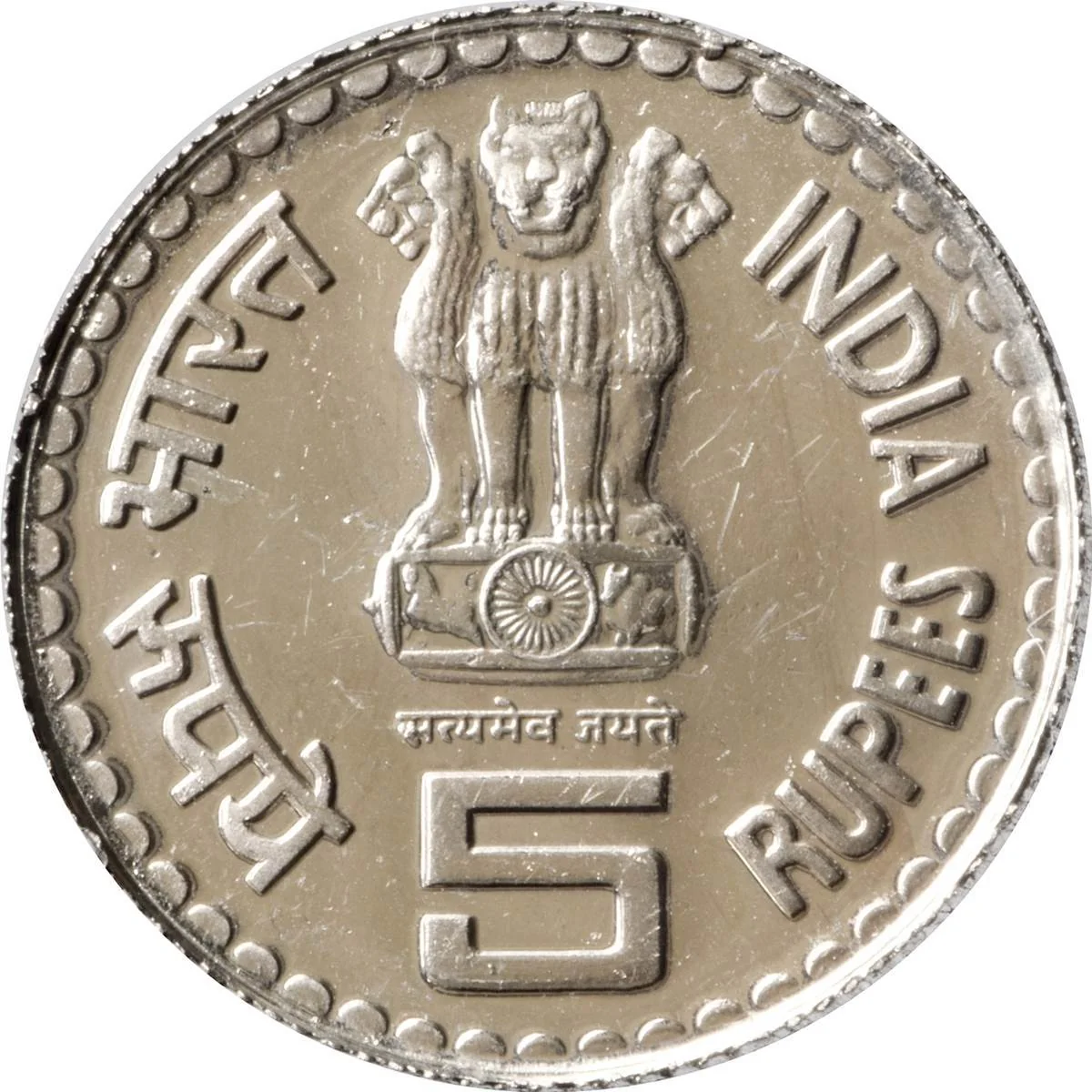
Obverse
Description:
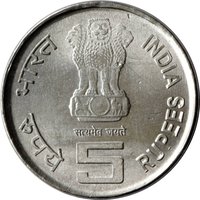
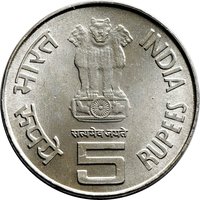
Ashoka Pillar's lion capital.
Inscription:
INDIA
5 RUPEES
5 RUPEES
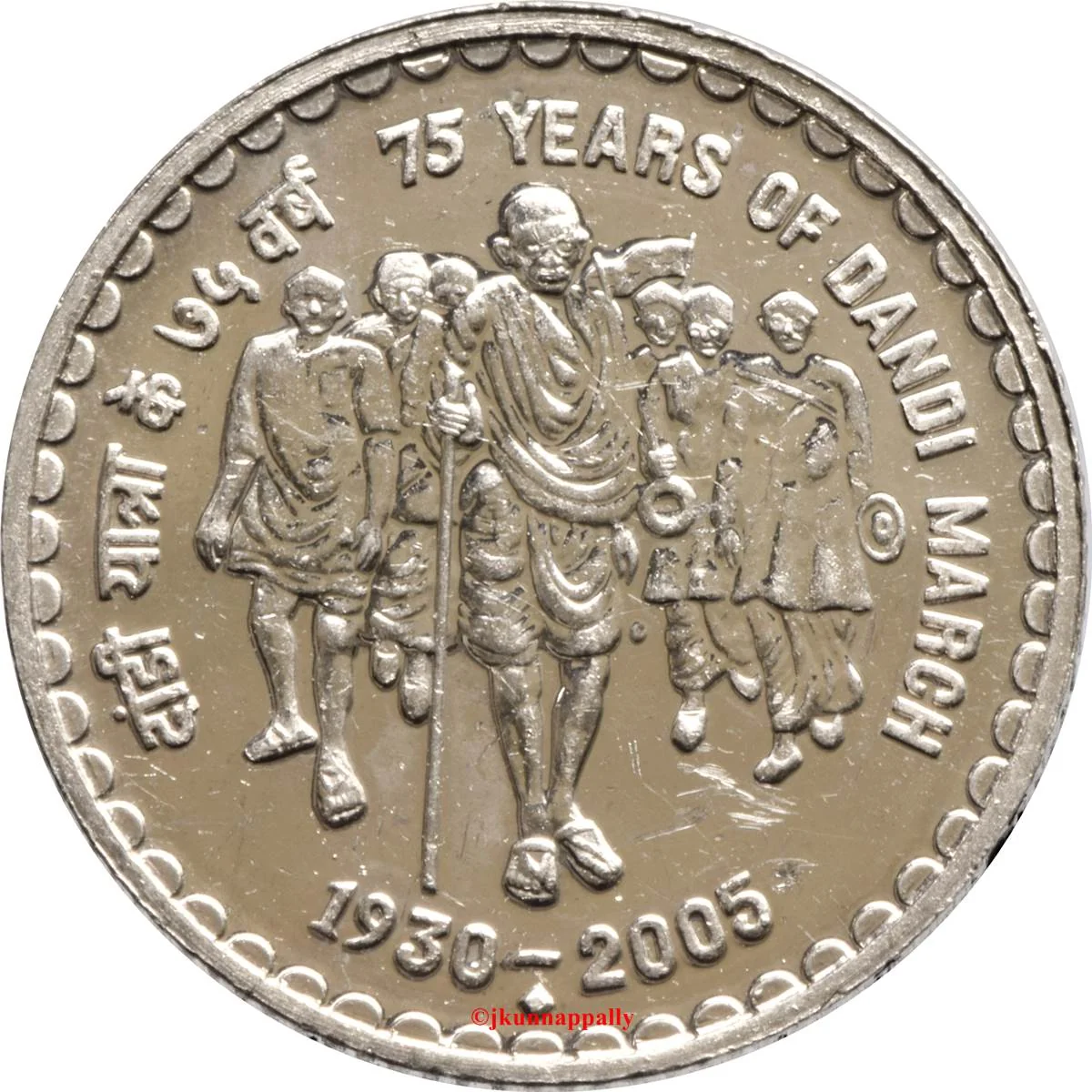
Reverse
Description:
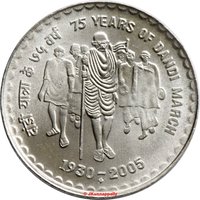
Gandhi leading marchers.
[dates]
[dates]
Inscription:
दांडी यात्रा के ७५ वर्ष
75 YEARS OF DANDI MARCH
1930 - 2005
75 YEARS OF DANDI MARCH
1930 - 2005
Translation:
75 Years of Dandi March
1930 - 2005
1930 - 2005
Language: Hindi
Edge
Security edge
Mintings
| Year | Mint Mark | Mintage | Quality | Collection |
|---|---|---|---|---|
| 2005 | ♦ | — | ||
| 2005 | M | — | Proof |
Historical background
In 2005, India's currency situation was characterized by a period of robust economic growth and relative stability for the Indian Rupee (INR), building upon the foundational reforms of the previous decade. The economy was expanding at over 8% annually, driven by strong services and industrial output, which bolstered foreign investor confidence. This led to significant capital inflows, both Foreign Direct Investment (FDI) and portfolio investments, creating upward pressure on the rupee. Consequently, the Reserve Bank of India (RBI) faced the challenge of managing appreciation to protect export competitiveness, intervening in foreign exchange markets to accumulate substantial foreign reserves, which crossed the $140 billion mark.
The macroeconomic framework was defined by a managed float exchange rate regime, where the RBI actively intervened to curb volatility without targeting a fixed level. Domestically, the focus was on containing inflation and modernizing the financial system. A key development was the gradual movement towards fuller capital account convertibility, spurred by the recommendations of the Tarapore Committee. This period also saw the continued consolidation and reduction of fiscal deficits, which contributed to macroeconomic stability and positive sentiment towards the rupee in the international market.
However, underlying vulnerabilities persisted. The current account deficit, though modest, was widening due to high global oil prices, as India was a major importer. Inflationary pressures, particularly from rising fuel and commodity costs, remained a concern for policymakers. Furthermore, the currency market was still developing depth, and the RBI's interventions to sterilize the impact of forex purchases on domestic liquidity were complex and ongoing. Thus, while 2005 was a year of strength and optimism for the rupee, it was a managed strength, requiring careful balancing between growth, stability, and integration into the global financial system.
The macroeconomic framework was defined by a managed float exchange rate regime, where the RBI actively intervened to curb volatility without targeting a fixed level. Domestically, the focus was on containing inflation and modernizing the financial system. A key development was the gradual movement towards fuller capital account convertibility, spurred by the recommendations of the Tarapore Committee. This period also saw the continued consolidation and reduction of fiscal deficits, which contributed to macroeconomic stability and positive sentiment towards the rupee in the international market.
However, underlying vulnerabilities persisted. The current account deficit, though modest, was widening due to high global oil prices, as India was a major importer. Inflationary pressures, particularly from rising fuel and commodity costs, remained a concern for policymakers. Furthermore, the currency market was still developing depth, and the RBI's interventions to sterilize the impact of forex purchases on domestic liquidity were complex and ongoing. Thus, while 2005 was a year of strength and optimism for the rupee, it was a managed strength, requiring careful balancing between growth, stability, and integration into the global financial system.
🌱 Fairly Common