

10 Pesos – Mexico
Non-circulating coins
Commemoration: Bicentennial of Benito Juárez birth
Mexico
Context
Material
Diameter: 40 mm
Weight: 31.1 g
Silver weight: 31.07 g
Shape: Round
Composition: 99.9% Silver
Standard: Silver ounce
Magnetic: No
Technique: Milled
Alignment: Coin alignment

flip
References
KM: #Click to copy to clipboard763
Numista: #57019
Value
Exchange value: 10 MXN = $0.58
Bullion value: $91.22
Inflation-adjusted value: 22.79 MXN
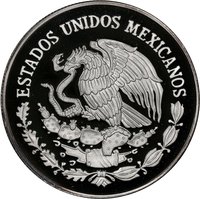
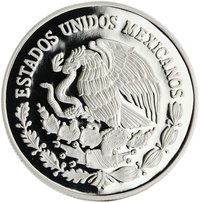
Obverse
Description:
National coat of arms.
Inscription:
ESTADOS UNIDOS MEXICANOS
Translation:
United Mexican States
Language: Spanish
Reverse
Description:
Benito Juárez bust. Surrounding legend, date, mint mark, value, and his signature below.
Inscription:
BICENTENARIO DEL NATALICIO DE BENITO JUAREZ GARCIA
Mo 2006
$10
Mo 2006
$10
Edge
Mintings
| Year | Mint Mark | Mintage | Quality | Collection |
|---|---|---|---|---|
| 2006 | — | — | Proof |
Historical background
In 2006, Mexico's currency situation was characterized by relative stability and strength, a notable contrast to the volatility of previous decades. The Mexican peso, which had experienced a severe devaluation during the 1994 "Tequila Crisis," had benefited from over a decade of prudent macroeconomic policies. Key factors included inflation targeting by the Bank of Mexico (Banxico), which had successfully brought inflation down to single digits, and a policy of accumulating substantial foreign exchange reserves, which acted as a buffer against external shocks. The peso traded in a relatively narrow band, around 10.5 to 11.0 per US dollar for much of the year, reflecting investor confidence.
This stability was underpinned by strong fundamentals, including robust oil exports at high global prices, which boosted government revenues and the current account. Furthermore, significant remittance inflows from Mexicans working abroad and steady foreign direct investment provided additional support. The administration of President Vicente Fox, concluding its term in 2006, had maintained fiscal discipline and supported the central bank's autonomy, fostering an environment of predictability for currency markets.
However, the latter half of 2006 introduced elements of uncertainty. The closely contested and contentious presidential election in July, ultimately won by Felipe Calderón of the PAN party, created short-term political volatility that led to some peso depreciation, pushing it briefly beyond 11.3 per dollar. Additionally, growing concerns about a slowdown in the US economy—Mexico's largest trading partner under NAFTA—began to weigh on the outlook. Thus, while the peso entered 2006 from a position of consolidated strength, it ended the year facing new headwinds from domestic political tensions and gathering global economic clouds.
This stability was underpinned by strong fundamentals, including robust oil exports at high global prices, which boosted government revenues and the current account. Furthermore, significant remittance inflows from Mexicans working abroad and steady foreign direct investment provided additional support. The administration of President Vicente Fox, concluding its term in 2006, had maintained fiscal discipline and supported the central bank's autonomy, fostering an environment of predictability for currency markets.
However, the latter half of 2006 introduced elements of uncertainty. The closely contested and contentious presidential election in July, ultimately won by Felipe Calderón of the PAN party, created short-term political volatility that led to some peso depreciation, pushing it briefly beyond 11.3 per dollar. Additionally, growing concerns about a slowdown in the US economy—Mexico's largest trading partner under NAFTA—began to weigh on the outlook. Thus, while the peso entered 2006 from a position of consolidated strength, it ended the year facing new headwinds from domestic political tensions and gathering global economic clouds.
✨ Legendary