

1 rupee (JayaPrakash Narayan) – India
Add to wishlist
Circulating commemorative coins
Commemoration: 100th Anniversary Birth of JayaPrakash Narayan
India
Material
Diameter: 25 mm
Weight: 4.95 g
Thickness: 1.5 mm
Shape: Round
Composition: Stainless steel
Technique: Milled
Alignment: Medal alignment
flip
References
KM: #
Numista: #5680
Value
Exchange value: 1 INR
Inflation-adjusted value: 4.22 INR
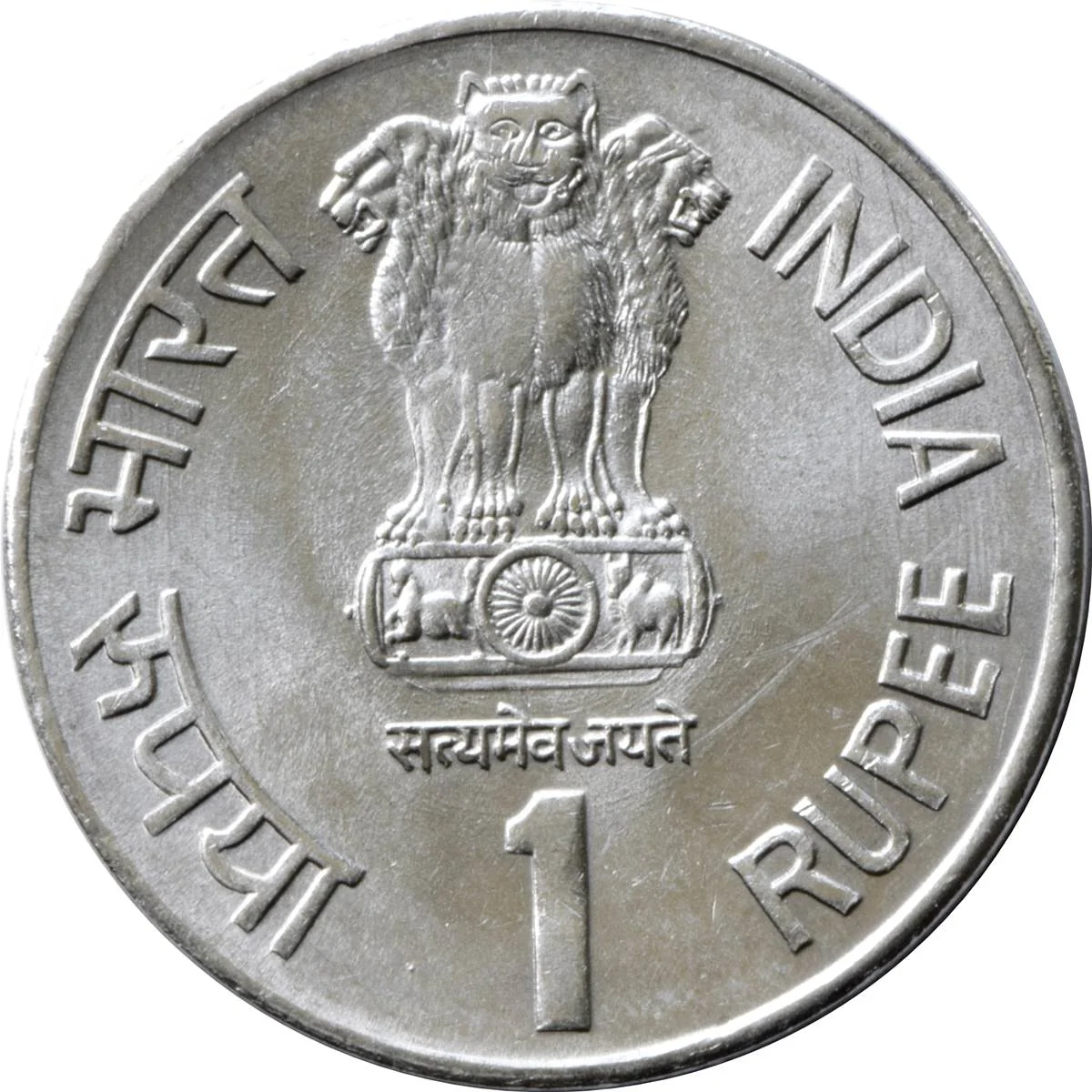
Obverse
Description:
Asoka lion with denomination.
Inscription:
भारत INDIA
सत्यमेव जयते
रुपया 1 RUPEE
सत्यमेव जयते
रुपया 1 RUPEE
Translation:
INDIA
Truth Alone Triumphs
1 RUPEE
Truth Alone Triumphs
1 RUPEE
Scripts: Devanagari, Latin
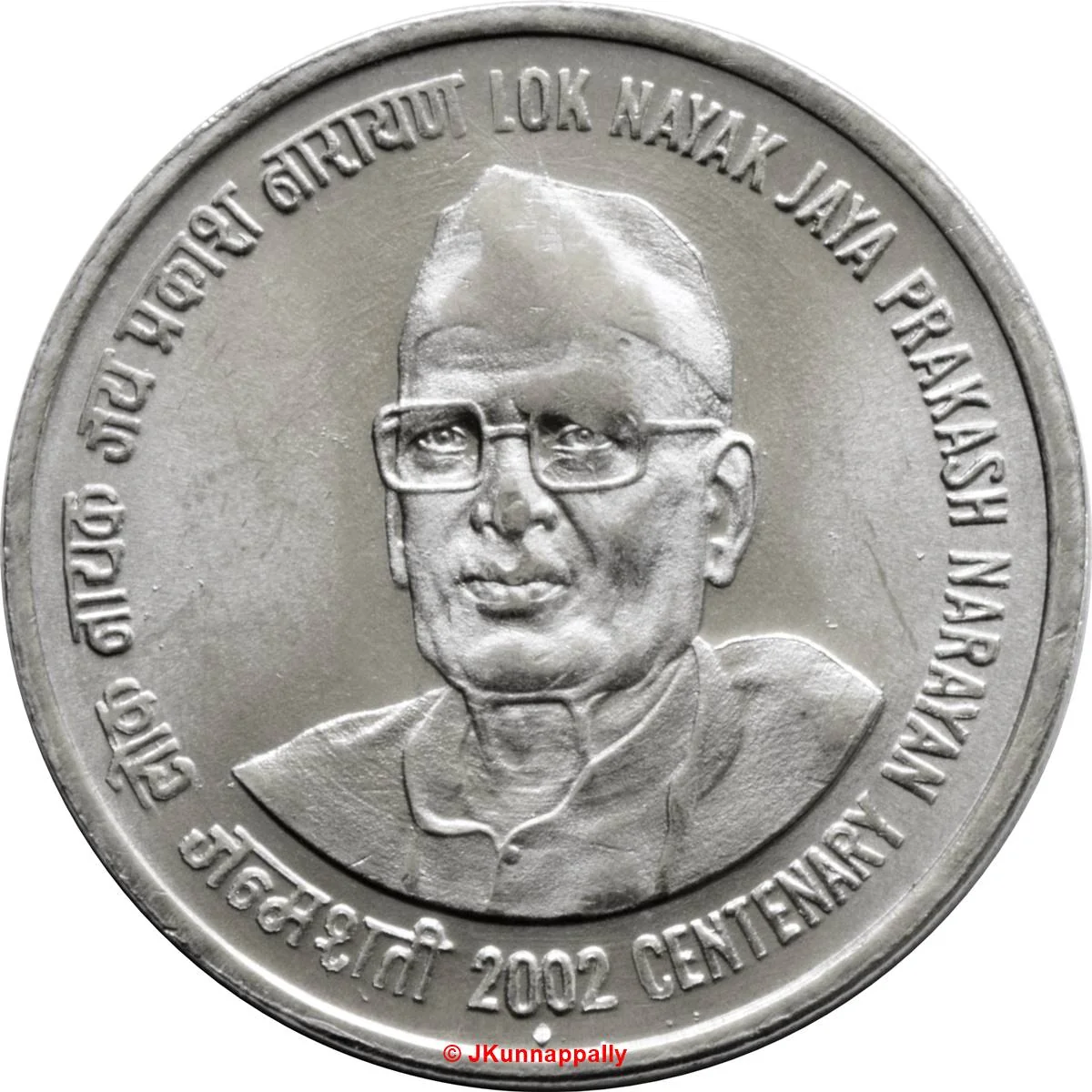
Reverse
Description:
Jayaprakash Narayan bust.
Inscription:
लोक नायक जय प्रकाश नारायण
LOK NAYAK JAYA PRAKASH NARAYAN
जन्मशती 2002 CENTENARY
LOK NAYAK JAYA PRAKASH NARAYAN
जन्मशती 2002 CENTENARY
Translation:
Lok Nayak Jaya Prakash Narayan
Centenary 2002
Centenary 2002
Scripts: Devanagari, Latin
Edge
Plain
Mints
| Name | Mark |
|---|---|
| Mumbai / Bombay | — |
| Hyderabad | ★ |
| Mumbai / Bombay | ♦ |
| Mumbai / Bombay | M |
Historical background
In 2002, India's currency landscape was characterized by a period of relative stability and consolidation following a decade of significant economic reforms. The Indian Rupee (INR) was on a managed float system, with its value broadly determined by market forces but with the Reserve Bank of India (RBI) actively intervening to curb excessive volatility. This year saw the rupee trading in a range of approximately 47 to 49 against the US dollar, reflecting a gentle depreciation pressure. This was largely influenced by global factors, including a strengthening dollar in the aftermath of the 9/11 attacks and heightened geopolitical tensions, as well as domestic concerns like a widening current account deficit and the fiscal impact of a severe drought.
The period was also notable for the continuing efforts to modernize the financial system and promote currency stability. The RBI maintained a focus on building foreign exchange reserves, which grew steadily throughout the year, providing a robust buffer against external shocks. This reserve accumulation was aided by strong inflows from software exports and remittances from non-resident Indians (NRIs). Furthermore, 2002 fell within a multi-year phase of "capital account convertibility" being a topic of careful debate, with authorities proceeding cautiously to liberalize controls on foreign investment while safeguarding against sudden capital flight.
Overall, 2002 represented a year of cautious management rather than dramatic change. The currency regime successfully navigated external uncertainties without a crisis, providing a stable platform for economic growth. The focus remained on maintaining macroeconomic stability, controlling inflation, and gradually integrating with the global economy—a steady approach that laid groundwork for the stronger growth and significant foreign investment inflows that would follow in the coming years.
The period was also notable for the continuing efforts to modernize the financial system and promote currency stability. The RBI maintained a focus on building foreign exchange reserves, which grew steadily throughout the year, providing a robust buffer against external shocks. This reserve accumulation was aided by strong inflows from software exports and remittances from non-resident Indians (NRIs). Furthermore, 2002 fell within a multi-year phase of "capital account convertibility" being a topic of careful debate, with authorities proceeding cautiously to liberalize controls on foreign investment while safeguarding against sudden capital flight.
Overall, 2002 represented a year of cautious management rather than dramatic change. The currency regime successfully navigated external uncertainties without a crisis, providing a stable platform for economic growth. The focus remained on maintaining macroeconomic stability, controlling inflation, and gradually integrating with the global economy—a steady approach that laid groundwork for the stronger growth and significant foreign investment inflows that would follow in the coming years.
🌱 Common